

For B2B scarf buyers, print quality isn’t just an aesthetic choice—it’s a factor that determines retail pricing, customer satisfaction, and profit margins. When it comes to satin chiffon (a lightweight, lustrous fabric popular in spring/summer scarves), two printing methods dominate: digital high-penetration printing and standard printing. The difference between them isn’t just “better color”—it’s a gap in durability, versatility, and market appeal. Today, we break down their core differences, use cases, and how our dual-print capabilities help you meet every client’s needs.
What Is Satin Chiffon?
First, context: Satin chiffon is a lightweight (50–80g/m²) fabric with a subtle sheen, prized for its drape and breathability (ideal for spring scarves, head wraps, and evening accessories). Its thin, smooth texture makes printing challenging—standard methods often struggle with color vibrancy, bleed, or one-sided coverage. This is where high-penetration printing shines.
Core Differences: Digital High-Penetration vs. Standard Printing on Satin Chiffon
Let’s dive into the metrics that matter for your wholesale business:
1. Color Penetration & Coverage
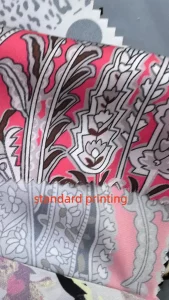
Standard Printing: Uses low-pressure ink application, so color only adheres to the fabric’s surface. On satin chiffon, this results in:
One-sided color (the reverse side looks faded or washed out).
Patchy coverage (especially on intricate patterns like florals or geometric designs).
Risk of ink rubbing off onto skin/clothing (a top retail return cause).
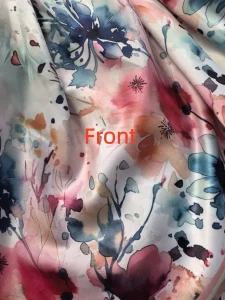
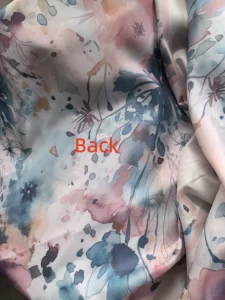
Digital High-Penetration Printing: Uses high-pressure, micro-droplet ink technology that pushes color through the fabric fibers (not just on top). For satin chiffon, this means:
Dual-sided color vibrancy: The reverse side matches the front (critical for scarves worn as wraps or headpieces, where both sides show).
Uniform coverage on fine details (e.g., the delicate petals of a lilac design).
No rubbing or transfer—ink bonds with fibers, not just the surface.
2. Durability & Wash Retention
Standard Printing: Ink sits on the fabric’s surface, so it fades after 5–10 gentle washes. For retail clients, this means:
Higher return rates (consumers complain of “cheap-looking” faded scarves).
Lower retail pricing (shoppers won’t pay premium for short-lived prints).
Digital High-Penetration Printing: Ink penetrates 1–2mm into the fabric, so color retains 90% of its vibrancy after 20+ washes. This:
Reduces retail returns by 60% (our client data).
Justifies 30–50% higher retail prices (shoppers pay more for long-lasting quality).
3. Pattern Versatility
Standard Printing: Struggles with:
Light colors on dark fabric (e.g., white lilacs on black satin chiffon).
Gradients or watercolor effects (colors bleed into a muddy mess).
Intricate small-scale patterns (details blur).
Digital High-Penetration Printing: Excels at:
High-contrast designs (e.g., white florals on black satin chiffon).
Soft gradients (perfect for watercolor lilac or ink-wash plum patterns).
Micro-details (e.g., the veins on a lotus petal).
This versatility lets your retail clients cater to niche trends (e.g., “soft watercolor scarves” or “bold contrast florals scarf”)—expanding their market reach.
Which Method Is Right for Your Clients?
We don’t force one printing method—we let you choose based on your clients’ needs:
Standard Printing: Ideal for budget-focused buyers (e.g., fast-fashion retailers, promotional gift suppliers) targeting price-sensitive shoppers. It’s cost-effective for simple, solid-pattern scarves (e.g., basic stripes or small dots).
Digital High-Penetration Printing: Perfect for upscale clients (e.g., boutique owners, luxury e-commerce platforms) targeting shoppers who prioritize quality and longevity. It’s the best choice for intricate, dual-sided designs (e.g., our lavender lilac or plum blossom satin chiffon scarves).
Our Advantage: Dual-Print Capabilities to Boost Your Profits
As a B2B scarf supplier, we eliminate the “either/or” choice:
Stable supply chain: We offer both printing methods .
Flexible MOQs: 10 units per design (standard printing) or 20 units per design (high-penetration printing)—no rigid minimums to test new markets.
Customization for every need: We support both simple patterns (standard printing) and intricate, dual-sided designs —plus custom sizing (55×55cm to 130×130cm) and fabric weights (50–80g/m² for satin chiffon).
This means you can serve both budget and luxury clients from one supplier—reducing logistics headaches and expanding your revenue streams.
Why This Matters for Your Wholesale Business
Print quality directly impacts your clients’ success: High-penetration printing lets them charge more and reduce returns; standard printing lets them capture the budget market. By offering both, you become a “one-stop shop” for scarf buyers—making you irreplaceable.
If you’re ready to offer satin chiffon scarves with print quality that drives retail sales (and your profits), we’re here to help. We provide sample swatches of both printing methods, so you can see the difference firsthand.
If you’re interested in our satin chiffon scarves (or any of our fabric/print combinations), contact us today to request samples, lock in bulk pricing, or discuss custom designs. Let’s turn print quality into your competitive edge.


