

Step-by-Step Embroidered Shawl Design Guide
If you source shawls for a boutique, put together collections for a label, or handle bulk orders for events, you know a great embroidered shawl stands out. It adds that special touch—elegant stitching on soft fabric that turns a simple wrap into something customers remember and buy. Creating those designs takes real skill though. The process mixes creativity with hands-on work, from picking the right pattern all the way to the final stitch.
In this guide we walk through the full steps to design and make embroidered shawls. We pull from practical industry know-how and typical factory flows so you can see what happens behind the scenes. Whether you want to tweak existing styles or start fresh custom runs, these details help you talk smarter with suppliers and get better results.
Why Embroidery Makes Shawls Special
Embroidery isn’t just decoration. It brings texture and depth that printing can’t match. Raised threads catch light differently. They feel luxurious under your fingers. Customers notice that. In wholesale, embroidered shawls often sell at higher margins because they look and feel premium. A basic floral stitch on silk blend can lift retail price 30-40% over a flat print. Boutiques love them for fall and winter lines. Corporate clients pick them for branded gifts too—logos stitched clean and lasting.
The catch? Good embroidery demands careful planning. Rush the design and you end up with puckered fabric or uneven stitches. Get it right and the piece becomes a standout.
Step 1: Start with Concept and Inspiration
Everything begins here. Grab a sketchpad or open design software. Look at trends, past sellers, and what your market wants.
Mood boards help a ton. Pin photos of vintage paisleys, modern geometrics, or delicate florals.
Think seasonal. Heavy wool bases with bold motifs work for winter. Lighter silk blends suit spring with airy vine patterns.
Customer feedback matters. One retailer noticed ethnic-inspired borders flew off shelves during holidays. They doubled down next season.
Real example: A brand wanted subtle company logos on pashmina shawls for employee gifts. They started simple—clean monogram in one color. That kept costs down and looked sharp.
Keep the end use in mind. Dense all-over embroidery feels heavier and costs more. Edge-only designs stay lighter and quicker to produce.
Step 2: Choose the Right Fabric Base
Fabric sets the tone for how embroidery behaves. Wrong choice and stitches pull or fade.
Common picks:
Polyester blends— Tough, affordable, great for beginners. Holds machine embroidery well without much puckering.
Wool or wool mixes— Warm, thick enough for detailed work. Absorbs threads nicely but needs careful tension.
Silk or silk blends— Smooth, shiny, high-end feel. Demands gentle handling; thin silk can wrinkle under heavy stitching.
Cashmere or pashmina— Super soft luxury. Best for finer threads and spaced-out patterns to avoid weighing it down.
From factory experience, silk blends strike a nice balance for most custom orders. They drape beautifully and take multi-color embroidery without issues. Test swatches first. Send small pieces to your supplier. See how the needle interacts before committing to hundreds.
Step 3: Create or Select the Design
Now the fun part—building the actual pattern.
Digital tools make this easier than ever. Software like Wilcom or Hatch lets you digitize artwork. Turn a photo of a peony into stitch-ready files.
Key tips:
Keep stitch count reasonable. Under 8,000-10,000 per shawl keeps production fast and prices sane.
Think scale. A tiny motif looks lost on a 70×200 cm shawl. Go bigger for impact.
Colors matter. Limit to 4-6 threads max for most machines. More means thread changes and higher labor.
Add variety. Mix satin stitches for shine, fill for density, running for outlines.
Industry trick: Start with vector files (AI or EPS). They scale perfectly. Hand-drawn sketches work too—factories often refine them.
One boutique owner shared this: They loved intricate mandalas but found them too slow and pricey at scale. Switched to simpler repeating borders. Sell-through jumped because pieces felt more wearable.
Step 4: Digitizing the Design
This step turns your artwork into machine instructions. Pros handle it best—digitizers decide stitch direction, density, underlay.
Poor digitizing shows up as:
Fabric puckering from tight fills
Jump stitches that leave loose threads
Uneven coverage
Good ones use pull compensation. They adjust for fabric stretch so circles stay round.
Many suppliers offer in-house digitizing. Send your file. They tweak and send a proof stitch-out on scrap fabric. Review it. Approve or revise. This saves headaches later.
Step 5: Sampling and Proofing
Never skip samples. Order one or two pieces first.
Check:
Stitch quality—clean edges, no gaps
Color match—threads look true under different lights
Drape—does the shawl hang right with added weight?
Fringe or hem—does embroidery align properly?
Adjust here. Change thread weight or reduce density if needed. A small tweak can drop production time 20% on big runs.
Real scenario: A client ordered samples with metallic gold thread on black wool. First batch looked dull. Switched to a higher-sheen thread. Final pieces popped and sold out fast.
Step 6: Production and Embroidery Execution
Once approved, full run starts.
Modern factories use multi-head machines. One setup stitches several shawls at once. For hand touches—like knotted fringes or bead accents—artisans step in.
Sequence usually goes:
Fabric cut to size
Hooping or framing to keep taut
Machine embroidery (most common for wholesale)
Trimming threads
Quality inspection
Finishing (fringe tying, edge stitching)
Hand embroidery happens for ultra-premium pieces. Slower—days per shawl—but unmatched detail.
Step 7: Finishing Touches and Quality Control
Last steps seal the deal.
Add fringes if desired—hand-tied for even look
Steam or press to smooth
Inspect every piece: missed stitches, color runs, alignment
Pack carefully—tissue, boxes, labels
Top suppliers run multiple QC checks. One bad piece can hurt your brand.
From wholesale experience, consistent finishing separates good suppliers from great ones. Fringes that tangle or hems that unravel kill reviews.
Why Choose She Believes as Your Shawl Supplier
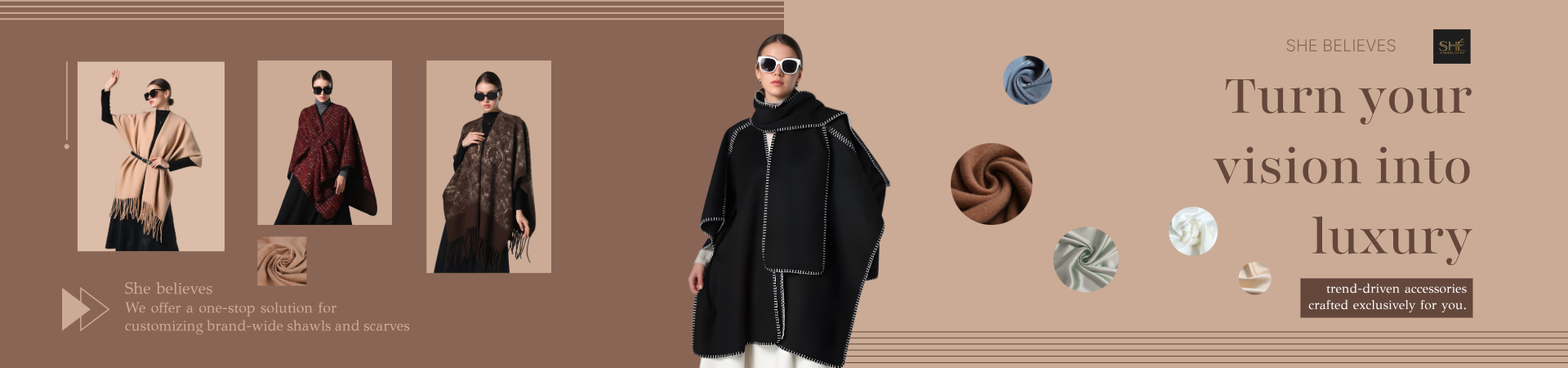
When you need reliable embroidered shawl designs turned into reality, Sie glaubt stands out as a solid partner. Based in Hangzhou, China, they run a vertically integrated setup—design through delivery all under one roof. They specialize in custom luxury shawls and scarves using fabrics like cashmere, pashmina, silk blends, and more. Low MOQs start around 15 pieces for many custom jobs. Turnarounds hit 20-30 days for made-to-order. They handle embroidery, printing, woven details, and full branding. Clients get fair wholesale prices, protected designs, and smooth logistics. Whether testing a new floral motif or scaling a logo-embroidered line, their flexible approach and quality focus make the process straightforward.
Schlussfolgerung
Designing embroidered shawls comes down to thoughtful steps—from fresh inspiration and smart fabric picks to precise digitizing and careful production. Follow this path and you end up with pieces that feel special, sell well, and build your reputation. The extra effort in sampling and QC pays off in fewer returns and happier customers. Ready to bring your next embroidered shawl idea to life? Connect with a capable supplier and start the conversation.
Häufig gestellte Fragen
What makes embroidered shawls different from printed ones in design?
Embroidered shawls give raised texture. They bring real depth that printing misses. Threads add shine and a nice touch. That usually lets you charge more at retail. It draws folks who want something you can feel.
How do I pick the best fabric for my embroidered shawl design?
Match it to your crowd and pattern. Polyester blends stay tough and cheap for basic runs. Silk mixes offer smooth drape and take fine work well. Wool fits heavier cold-weather ideas. Run samples every time. See how stitches land.
What’s a good starting point for embroidery design complexity?
Kick off simple—borders, repeating shapes, or logos under 10,000 stitches. They go fast. They cost less too. Master the easy stuff first. Then add shading or extra colors for pieces that pop.
Why is sampling so important in embroidered shawl production?
Samples catch problems early—wrinkles, wrong colors, stiff drape—before you make hundreds. A fast fix saves cash and time. You also get a true sense of the finished quality.
Can small orders still get custom embroidered shawl designs?
Sure thing. Plenty of places start custom work at 10-20 pieces per style. That works perfect for trying new ideas. Or running small branded batches. No need for huge upfront risks.


