

From Sketch to Sampler: How to Brief a Factory for a Truly Bespoke Women’s Wool Scarf Collection
You have the vision already. Picture a fresh line of women’s wool scarves. They feel incredibly soft, almost like your favorite old sweater. They drape nicely over a heavy winter coat. And they carry that special touch from your brand. Maybe it shows up in a gentle fringe that shifts with every move. Or the perfect weight sits right between warm and graceful.
But turning that idea into a full collection ready for production? That part trips up plenty of brands. The gap between a decent scarf and one that flies off the shelves usually comes down to one key step. You have to brief the factory in a clear way.
I have seen this happen many times. A brand shows up with mood boards and fabric samples. They feel excited yet a bit unsure on details. Six weeks pass. Then they look at the first samples. Something feels off about the way the fabric hangs or the depth of the color. Most times the real fix starts back at the briefing stage. Do it well. The rest of the process—sampling, making the bulk order, and shipping—goes a lot smoother than you might think.
Begin with the simple things that many people skip. Tell the factory exactly what kind of wool fits your customer. Do you want pure premium wool made with fine fibers? It should stay gentle and never cause any itch, even on sensitive skin. Or would a smart mix of wool and another fiber work better? It keeps the price reasonable while still giving that soft, airy feel. For winter lines, many shoppers reach for scarves around 120 grams. These hold in heat nicely without adding too much bulk. Size counts too. Something close to 180 cm by 30 cm wraps once or twice easily. It never drags on the floor.
One brand I remember wanted their women’s wool scarf collection to suit busy city days and relaxed weekend trips. They asked for strong anti-pilling performance. Their customers hated seeing tiny balls form after just a couple of wears. They also wanted tassels that stayed neat even after washing. Those small calls went right into the tech pack. It saved them from doing extra samples later.
Defining Your Design Language Early
Skip the vague request like “make it elegant.” Show the factory instead. Send clear reference photos, quick hand sketches, or even a real piece you already like from another category. Factories that do custom work perform better when they understand the whole story. They see your color palette, how big the patterns should be, and how the scarf needs to move with clothes.
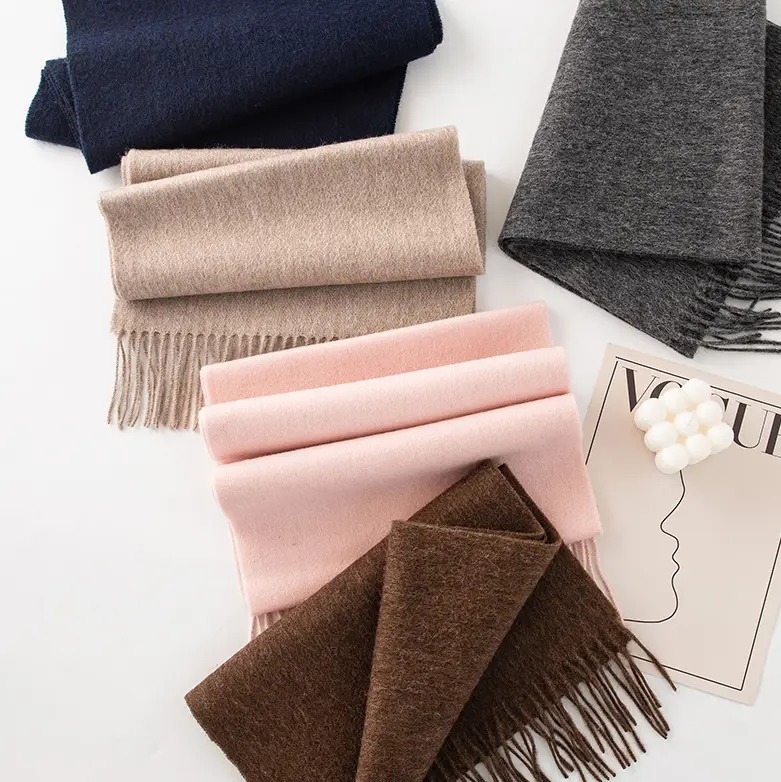
Consider the little touches that make a scarf feel truly special and made just for your line. Think about fringe length and how thick it looks. Decide on edge details—maybe a rolled hem or knotted tassels. Ask whether the wool should catch a bit of light or stay completely matte. For a women’s collection aimed at working professionals, deeper shades often win. Try charcoal, warm camel, or rich burgundy. These layer smoothly over blazers. Younger shoppers might prefer softer pastels or fun surprises like dusty rose paired with contrast stitching.
A strong brief includes a mood board. Mix in real lifestyle shots. Show the scarf tossed over a trench coat on a damp morning. Picture it draped loosely at a quiet café table. Or wrap it high for extra warmth on a blustery day. Factories study these images. They match the right yarn and tighten the weave so the finished piece moves exactly the way you imagined.
Material and Construction Choices That Actually Matter
Wool comes in lots of different forms. Small decisions here shape how the whole collection feels and performs. Longer fibers in premium wool usually create a smoother surface. They also hold up better against pilling. Some brands add a hint of cashmere to the blend. It gives an even more luxurious touch, especially in higher-priced options.
Construction details deserve their own clear section in the brief:
-
Weave type: A plain weave delivers clean lines. A light twill adds gentle texture.
-
Weight per square meter: Lighter weights suit fall transition pieces. Heavier ones handle deep winter cold.
-
Color fastness: This matters a lot if the scarves will sit against light-colored coats.
-
Finishing: Brushing creates extra softness. Shearing leaves a cleaner, neater surface.
Here is the honest part. Factories receive many briefs every week. The clearest ones stand out because they list exact tolerances. Say something like “tassel length between 8 and 10 cm, with no more than half a centimeter difference across the whole piece.” Or note “the scarf must hang straight and even when held from one end, without any twist.” Numbers like these cut down on back-and-forth messages a great deal.
Here is a useful tip from real experience. Ask for a small physical swatch of the exact base wool before you approve full samples. Run your fingers over it. You learn more from that quick touch than from any list of specs. If it feels slightly rough, you can request finer fibers or a different finishing step right away.
The Sampling Process—What to Expect and How to Guide It
After your brief arrives, a solid factory usually turns it into first samples in 10 to 20 days. The exact time depends on how complex the design is. Treat this sampling round like an ongoing talk, not a single guess.
Send your feedback with clear photos and short notes. You might say, “The tassels feel a little stiff. Can we loosen the knots?” Or “This color looks warmer in daylight than the swatch. Let’s tweak the dye mix.” Factories welcome this kind of detail. It helps them fine-tune the final product quicker.
For a complete women’s wool scarf collection, start by sampling three to five key styles. Pick a simple plain version with tassels. Add a subtle plaid. Include one with a small woven logo or monogram option. This range lets you test ideas with your own buyers or on your website before you lock in bigger quantities.
Production Scale and Quality Controls
Once the samples win approval, your brief should already cover expected order sizes. Many factories handle smaller runs comfortably. They sometimes start at just 10 to 50 pieces per design when you mix colors or styles inside one larger order. That kind of flexibility helps newer brands try the market without taking on huge risk up front.
Quality checks happen at several points. They occur during the knitting or weaving stage, after dyeing, and again right before packing. Request progress photos and final inspection reports. Some partners even send short videos of the scarves being folded and packed. You can catch any handling problems early this way.
Delivery times usually run 10 to 20 days for custom work after you give final approval. You can choose express shipping, sea freight, or rail depending on your target market. Add a little extra time in the schedule if you plan a big winter launch. Retailers often start buying wool accessories many months ahead.
Common Pitfalls and How to Avoid Them
Unclear color descriptions cause the most trouble in briefs. The word “red” can mean bright fire-engine tones or deep wine shades. Use Pantone codes or actual fabric swatches whenever you can. Another easy mistake? Forgetting to mention care instructions. Make it clear that the wool should handle gentle machine washing or dry cleaning. It should do so without shrinking or felting.
Also keep an eye on consistency across the whole collection. If one style drapes beautifully and another feels stiffer, shoppers notice right away. A good brief asks the factory to match yarn types and finishing methods for every style in the line.
Why Partnering with the Right Supplier Makes All the Difference
When you team up with a factory that handles everything in one place and focuses on custom shawls and scarves, the whole journey feels less stressful. These partners manage yarn selection through final packaging themselves. Communication stays direct. Timelines stay realistic.
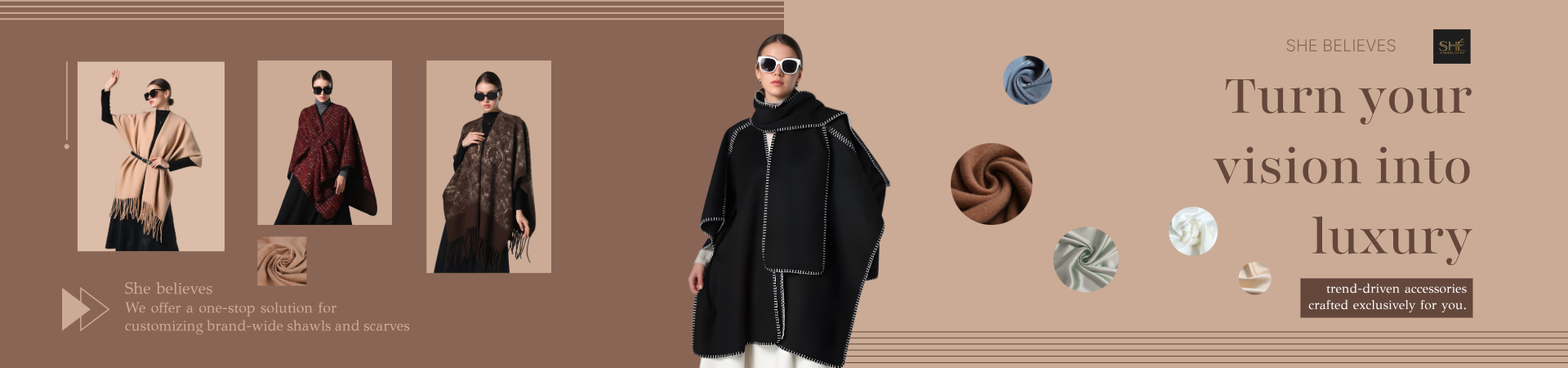
Shebelieves stands out here as a steady partner for brands creating custom women’s wool scarf collections. They run as a vertically integrated manufacturer. They turn early design ideas into finished goods with attention to premium materials and flexible order sizes. Their team works with custom wool pieces, including plain styles that feature tassels and weights suited for cold weather. They also offer smaller minimum orders that work well for testing new ideas or growing a line. Brands often like the careful focus on details such as anti-pilling finishes and even drape. These touches help the final scarves feel special from the very first wear.
Shebelieves as Your Shawl and Scarf Supplier
Before you lock in your next collection, think about working with a supplier that focuses on custom accessories every day. Shebelieves operates as a dedicated factory based in China. They specialize in luxury shawls, scarves, and related fashion items. They guide brands through the full process from initial sketches all the way to delivered goods. Their capabilities cover wool and wool-blend fabrics, detailed tassel work, and seasonal designs made for women’s wear. Their complete one-stop service, along with practical wholesale options and solid quality standards like OEKO certification, helps brands bring unique wool scarf lines to market in a smooth and confident way.
Conclusion
Building a successful bespoke women’s wool scarf collection is not only about following the latest trends. It comes down to turning your brand story into something customers can touch and wear every single day. A clear and detailed brief builds the strong base. From there, the right factory changes your ideas into scarves that sell steadily and create lasting fans.
Spend time up front to map out the materials, exact sizes, finishing touches, and all your expectations. The payoff is a collection that feels completely yours. Your customers will keep reaching for these scarves winter after winter.
FAQs
How do I make sure my women’s wool scarf collection stays on brief during production?
Share a detailed tech pack that includes measurements, yarn details, and reference samples. Ask for approval photos at important stages. Keep in close touch with the factory team. Clear talk early on stops most surprises.
What’s a realistic minimum order for a custom wool scarf line?
It depends on the design. Many factories accept starting quantities as low as 10 to 50 pieces per style when you mix colors or designs in one order. This setup makes it easier to test new women’s wool scarf styles without committing too much at once.
Can I customize tassels and fringe on a wool scarf?
Yes, you can. Factories that handle custom work can change tassel length, knot style, and thickness to match your idea. Just include clear references and allowed variations in your first brief.
How long does it usually take to go from sketch to finished wool scarf samples?
Plan on 10 to 20 days for the first samples once the factory receives your complete brief and any needed deposit. Simpler designs or in-stock base fabrics can move even faster.
What details should I include when briefing for a 100% wool winter scarf?
Cover the fiber quality, target weight around 120 grams, popular size like 180 by 30 cm, color choices, anti-pilling needs, and exact tassel or fringe specs. The more specific you are, the closer the samples will come to what you pictured.


