

Digital Printed Silk Scarves vs Screen Printed Scarves: Which Is Better?
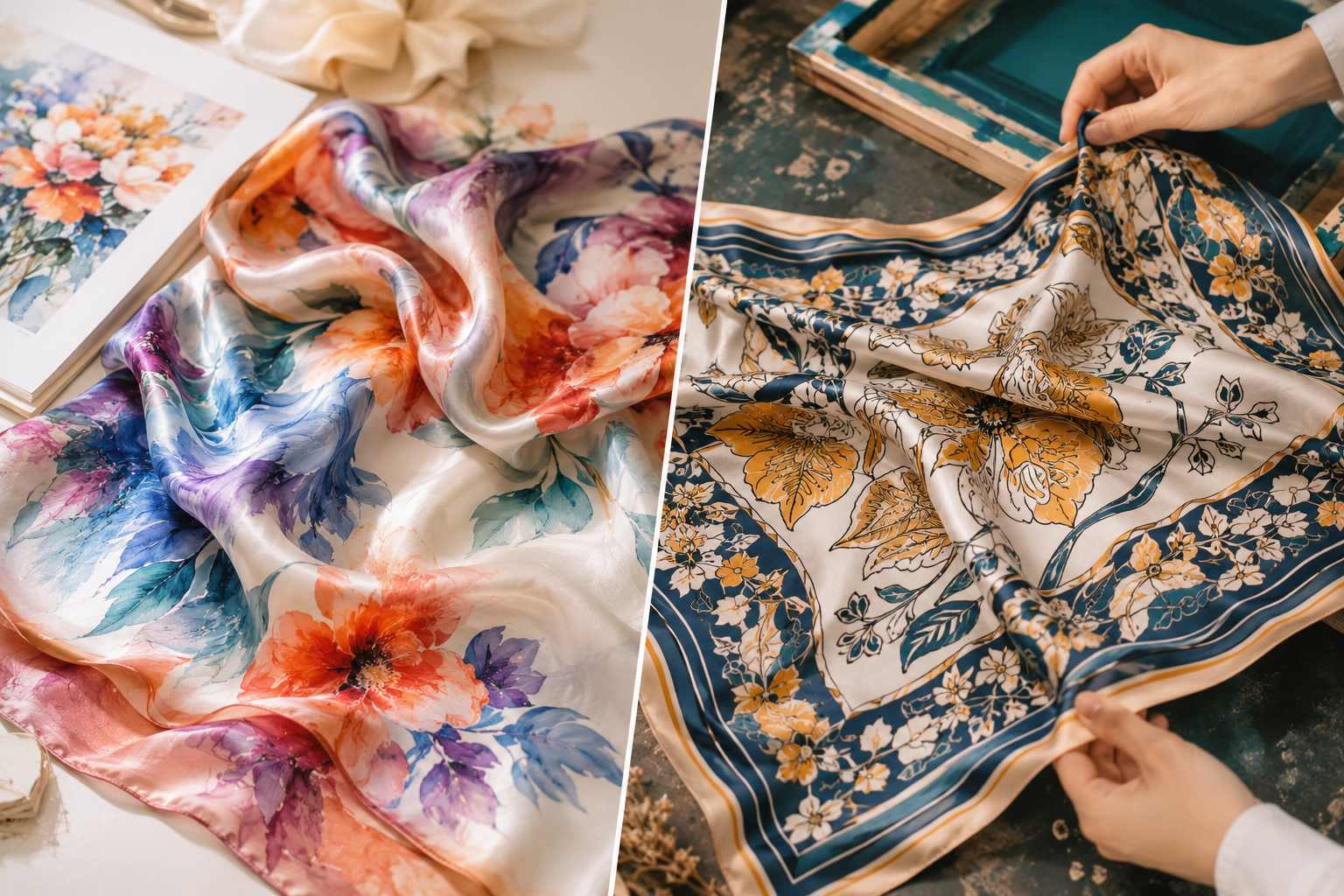 Choosing between digital printed scarves and screen printed scarves can be a difficult decision for many in the fashion industry. For fashion brands, gift buyers, boutique retailers and private-label scarf sellers alike, the decision of whether to opt for digital printed silk scarves or screen printed silk scarves not only affects the look of the finished print but also the way in which you will sample, the minimum order quantity, the color, the hand to the touch of the finished article, the repeat order service, the cost and the delivery time to name just a few. The process of printing silk scarves also requires consideration of the quality of the silk, the penetration of the dye, the finishing of the edges, the colorfastness of the print, the labeling and packaging of the finished article and the relationship with your supplier. Ultimately the choice between the two will depend on the design, the quantity required, the intended selling price and the manner in which the silk scarves will be sold.
Which printing method fits your scarf design and order size?
You can create pretty and colorful scarves with digital printing and screen printing, both have their own production needs. Compare your artwork first and then look at the prices.
When does digital printing make more sense?
Digital printing is often best suited for complex designs, gradient colors, photo-quality prints, small print runs, seasonal products, and rapid production of samples. The method allows for a greater number of designs to be tested before huge screens and separate screens for every color are produced.
Silk scarves are another area where digital printing has its merits, especially when very subtle transitions, watercolor effects, fine detailed florals or other original artwork is involved. But prior to commencing mass production, the buyer must check on color depth, back-side penetration, fabric hand and colorfastness as well.
When does screen printing make more sense?
Screen printing can be very suitable for larger print runs, simple color designs, strong graphic designs and repeat designs. As soon as the screens have been made, it can become very efficient for print runs of the same article.
The limitation of printing by setup is that each color requires its own screen, therefore printing a lot of colors or even tints and shades or gradients can become expensive very quickly. So it’s really important that we check your artwork has been separated correctly, how many colors there are, what the screen charge is, how long it’s going to take to produce a sample and what the minimum order quantity is.
How do quality details differ between digital and screen printed scarves?
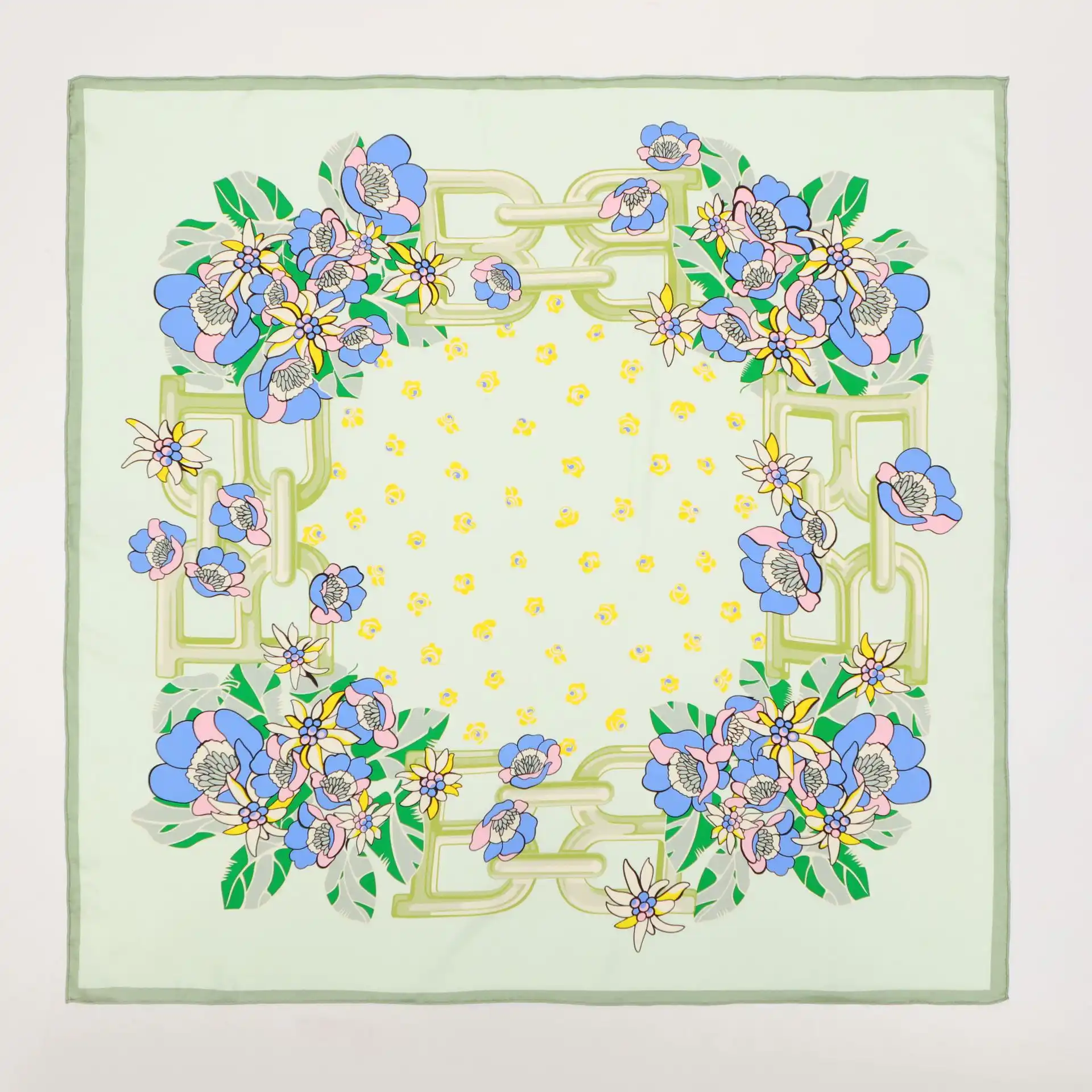 The method of printing used to create the design is important but it is not the only factor and in reality the quality of the end product can be influenced by all of the different processes involved. There is the quality of the fabric used, the dye, any subsequent finishes, the washing, steaming and any hemming of the scarf as well as the final inspection.
What should buyers check for color performance?
Assessing color performance of textiles includes assessing the color by measuring its shade, its luminance and evaluating how colors match from one production batch to another. Assessment of colorfastness to light includes tests, for example, AATCC TM16.3; Textile – Test for Colorfastness to Light – Xenon Arc and AATCC notes that the relationship between such lightfastness testing and end use should be agreed by the parties involved. (members.aatcc.org)
A beautiful sample is not enough when purchasing a product that is going to be sold as a premium product, such as a scarf. As a buyer you should be asking for color standards, approved lab dips or print strike-offs, and relevant testing.
What should buyers check for hand feel and fabric behavior?
When printing on silk it is important not to make the silk feel stiff or ‘coated’ – silk is prized for its softness, its drape, and the sheen that it has. While digital printing is good at keeping to the fine details of a print, and screen printing good at producing strong color areas, both can fail if the finish of the printed item is poor.
These are the things that a buyer should check about the fabric: weight, type of silk, opacity, shrinkage, drape, how it will be hemmed, and how the back will look. Edge finishing and packaging is as important as print quality when it comes to luxury gifting.
| Buyer factor | Digital printed scarf | Screen printed scarf |
|---|---|---|
| Best design fit | Gradients, detailed artwork, small runs | Bold graphics, repeat patterns, larger runs |
| Sampling | Usually faster | May need more setup |
| موك | Often more flexible | Often better for volume |
| Color style | High detail and soft transitions | Strong solid color areas |
| Main risk | Color depth and back penetration | Setup cost and color separation |
How should buyers compare cost, MOQ, and lead time?
The lower unit price is not always the better deal. Buyers should compare total project cost, including sampling, setup, revision time, packaging, inspection, and freight.
What cost factors should be confirmed early?
Cost for digital printing can include the cost of the fabric or scubbies, the size of the scarf, the type of ink or dye used, the print area and any additional finishes. For screen printing cost can include the number of colors, the number of screens set up, the quantity printed and the complexity of the artwork.
When requesting a quote from potential suppliers, it is beneficial to have them list out all of the costs individually such as the sample cost, the bulk unit price, the screen or setup charges, the packaging, the labeling, and the shipping terms. This makes it much easier to compare from supplier to supplier.
How can brands reduce production risk?
Reduction of risk through pre-production verification of all relevant product details: print artwork, PMS / color code, scarf size, edge finish, care label and packaging details. If a design will be re-ordered in future, a master approved sample should be retained by the buyer.
A short pre-production checklist may include:
-
Confirm fabric composition and scarf size
-
Approve print strike-off or sample
-
Check front and back color effect
-
Review hemming, seams, and label placement
-
Request packaging and carton details
-
Clarify MOQ, lead time, reordering, and after-sales handling
What labeling and compliance details should scarf buyers remember?
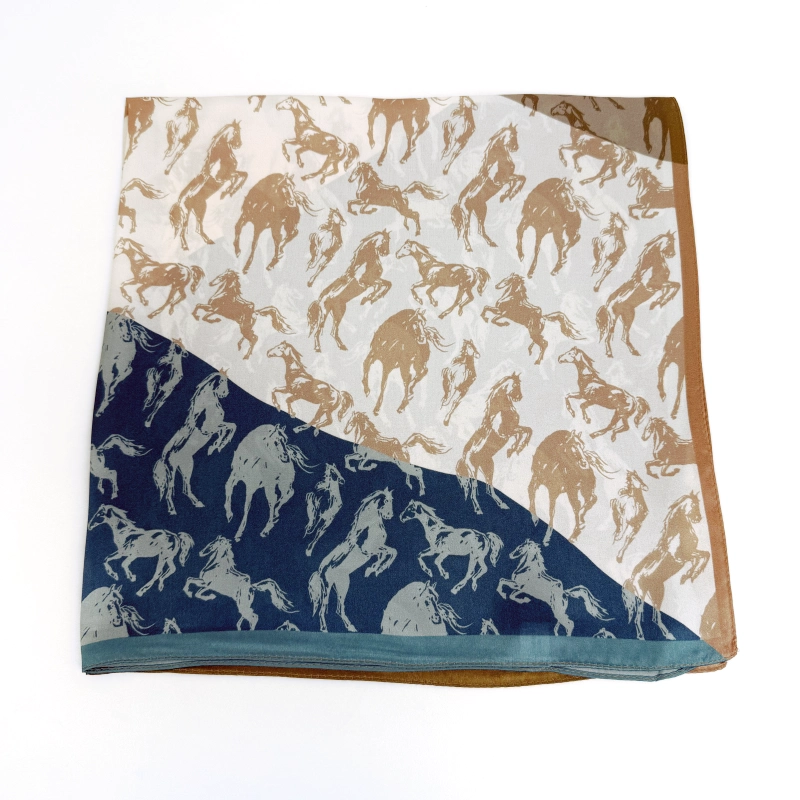 The scarf is a fashion accessory. It is however a textile product. Therefore labeling and claim control must be checked before dispatch.
What should U.S. textile sellers label?
The U.S. Federal Trade Commission states that textile labels must identify fiber content, country of origin, and either the company name or Registered Identification Number of the manufacturer, importer, or another firm handling the product. (ftc.gov)
Scarf buyers should check that 100% silk or other specified fibers are used. Country of origin and business practices that are responsible are also important to check.
What claims should buyers avoid?
Unsupported claims to market your scarves such as “fade-proof”, “eco-friendly”, “chemical-free” or “luxury grade” should be avoided by the buyers unless they are backed up with sufficient evidence. A scarf can be premium, soft and thus suitable for gifting even if it is not made of the finest materials, extremely smooth or delicately finished. What matters is the scarf’s sample, fabric, finishing and packaging.
If sustainability is part of your story then request material composition, dye information where available, packaging details and any relevant test reports or certificates.
Who can support brands comparing digital and screen printed scarves?
إنها تعتقد website shows information about company, which is supplier of shawls and scarves. On website there are links to pages with information about products offered by supplier like: silk scarves, fashion scarves, scarves for season, shawls, patterns of scarves, materials used for scarves and custom accessories. Information about custom silk scarves produced as silk scarves with vibrant high definition digital printing can be found on page silk scarves. This information can be useful for brands that are also considering option of screen printed scarves. Discussion with supplier about details like: complexity of artwork, MOQ, offered fabrics, printing method, finishing of scarves, packaging and shipping will be also important. But for now it is enough to compare samples, specifications, documents, prices, time of production and offered services of both suppliers and then choose the best one.
استنتاج
It really depends on the artwork and the order quantity. For small orders with detailed print designs, gradients etc, digital printed scarves can be a great option. For small orders too, screen printed scarves can be a great option if the design has a lot of bold color areas. For larger orders, Screen printing is generally the better option as it is more cost effective and the prints can be repeated many times. It is worth comparing the silk fabric used, the color performance, the hand feel of the print, the finish to the edges, the labeling and packaging used as well as the MOQ and the lead time before making a silk scarf printing decision. The most important thing is to make the strongest silk scarf printing decision based on the design, cost, delivery risk and customer expectations.
الأسئلة الشائعة
1. Is digital printing better than screen printing for silk scarves?
Digital printing is often better for detailed artwork, gradients, and small batches, while screen printing may work better for larger orders and simple color designs.
2. Does digital printing feel softer on silk?
It may feel okay but hand feel of fabrics also depends on many factors including type of fabric, type of dye used, finish applied on fabric and washing of samples. Buyers must approve physical samples.
3. Is screen printing cheaper for scarves?
It may be less expensive for larger quantities, but one must factor in setup charges and color separation.
4. What should buyers request before mass production?
Buyers should request fabric details, print samples, color references, labeling information, packaging details, MOQ, lead time, and quality criteria.
5. Which method is better for custom scarf brands?
When it comes to testing new custom print products, digital printing can be more suitable than screen printing. For re-run print products, repeating the same design, screen printing is more suitable when placing stable larger orders.


