How Brands Can Turn Heritage Artwork into Custom Silk Scarf Designs
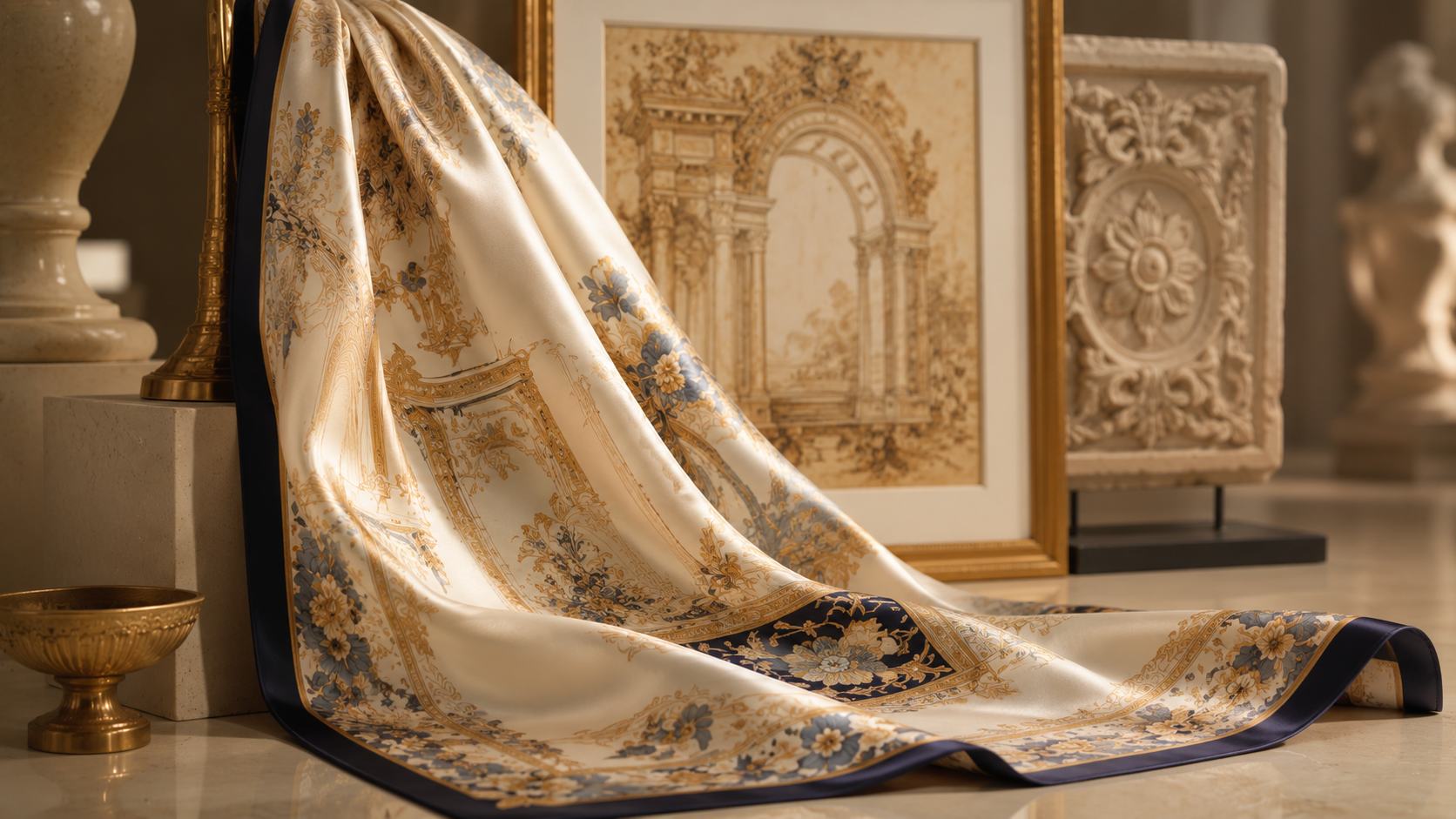
A family archive, regional motif, vintage illustration, or historical pattern can carry more brand meaning than a newly invented graphic. The challenge begins when that artwork has to become a repeatable textile product. A successful custom silk scarf design must preserve the character of the source while still working as a scarf: the composition needs to survive folding, the color direction must suit the material, and the finishing has to support the intended positioning. For B2B buyers, the job is not simply “print this image on silk.” It is a controlled path from artwork selection and design interpretation to material choice, production, sampling, inspection, and branded packaging.
How Should a Brand Decide Which Parts of Heritage Artwork Belong on the Scarf?
The first decision is editorial. Heritage artwork often contains more information than a scarf can use well, so the brand should decide what carries the story: a border, emblem, floral element, geometric rhythm, color family, or recurring motif.
Preserve the identity without copying blindly
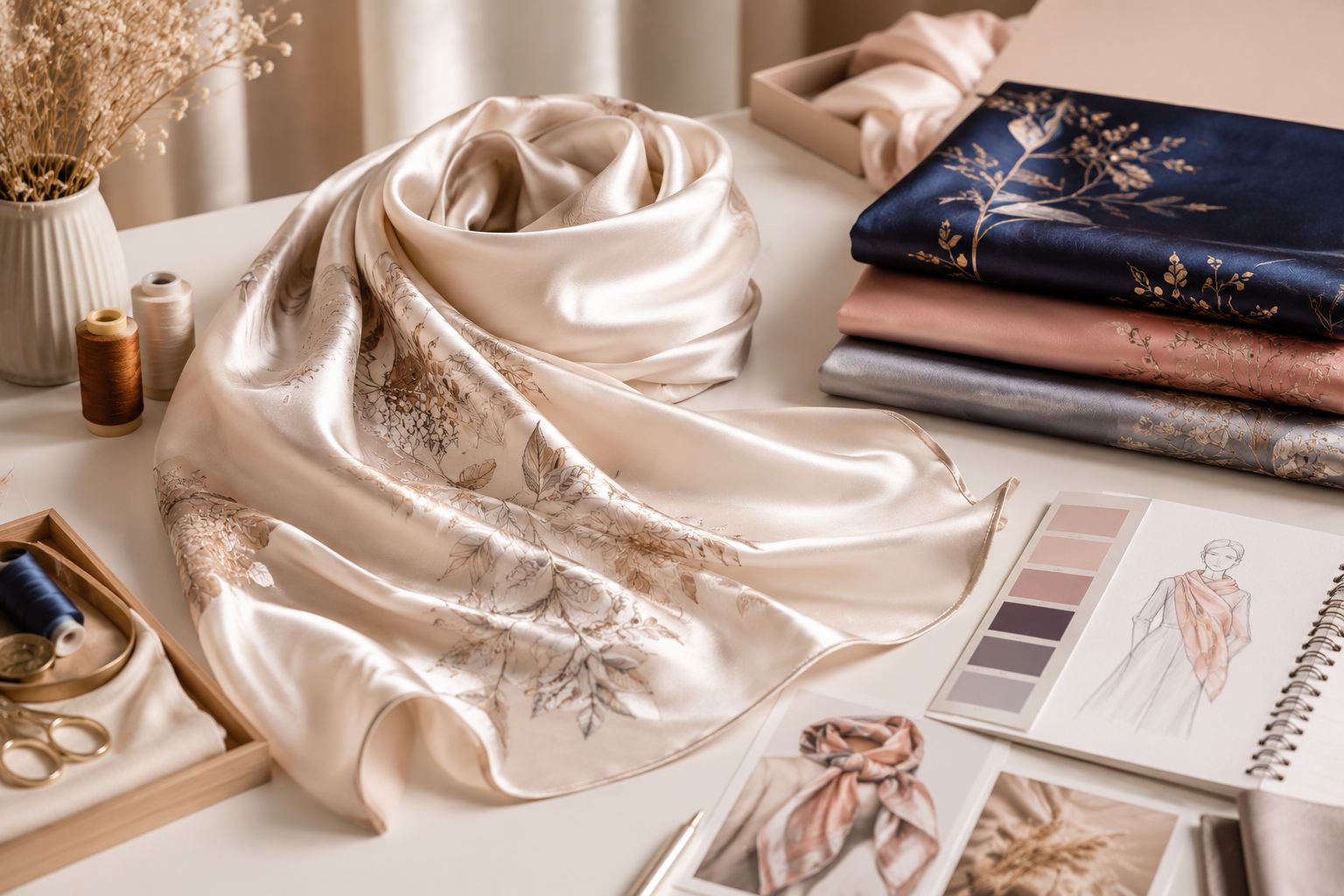
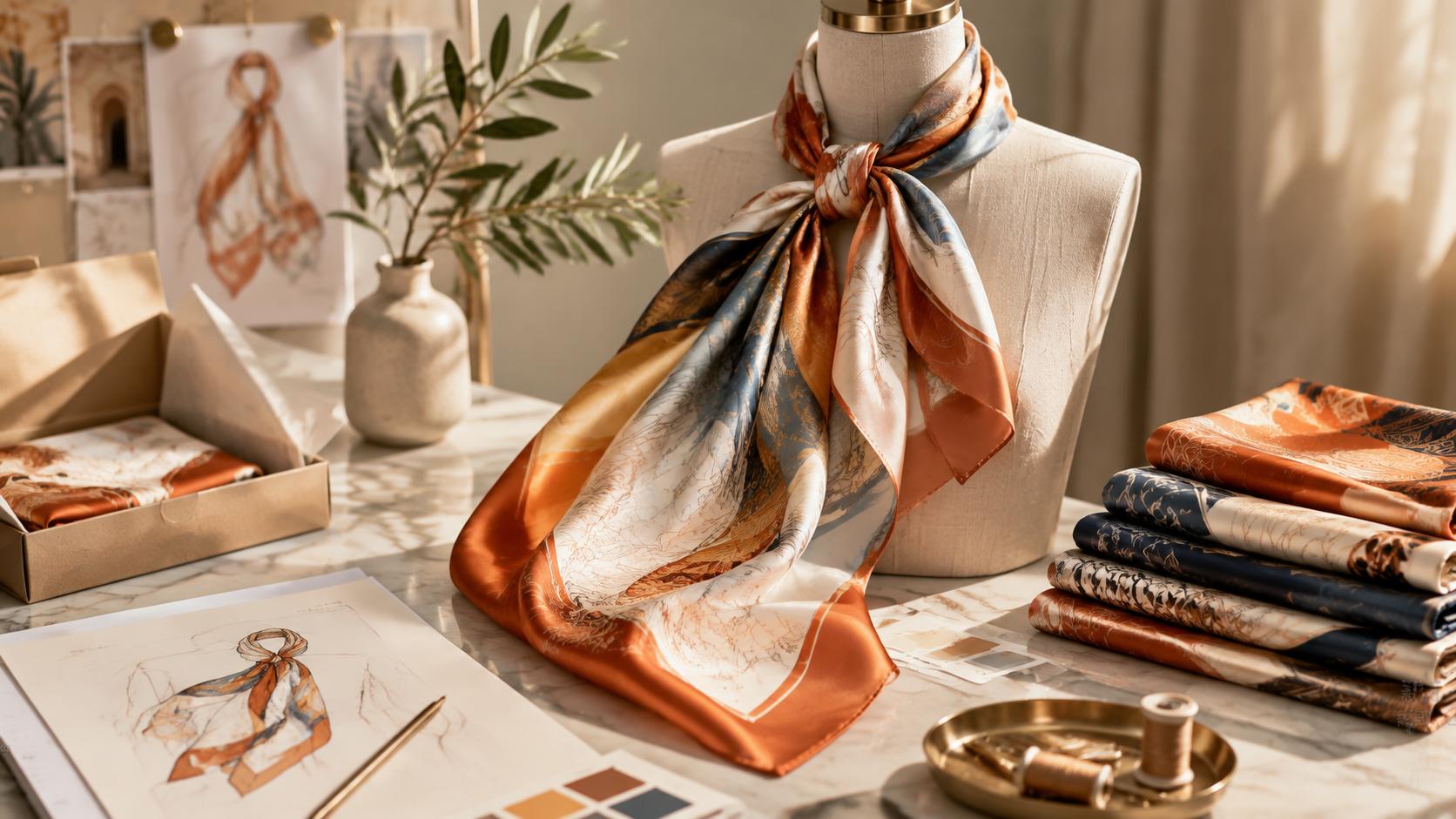
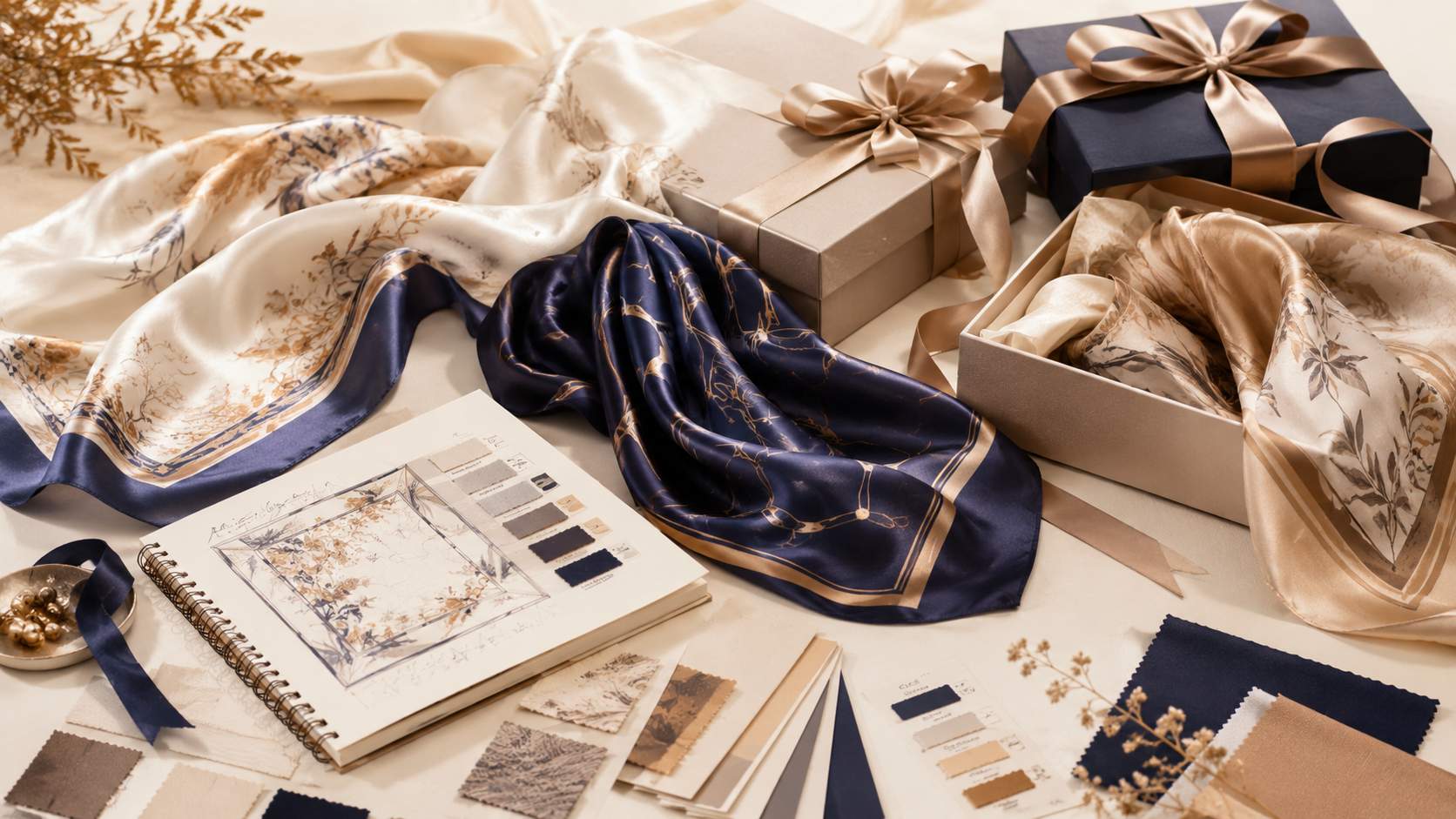
The design brief should explain why the source matters and which visual elements are essential. That gives the design team room to build a scarf pattern rather than merely reproduce a flat picture. The supplied documentation describes a development sequence from market trend analysis and creative inspiration to pattern design, material matching, and sample production. It also states that cultural elements such as ethnic motifs and modern art can be incorporated into product development.
Rights should be settled before artwork is handed over. The supplied standards explicitly reject plagiarism and counterfeiting and call for respect for intellectual property. This is particularly relevant when the source comes from an archive, artist, cultural collection, or inherited design.
How Can Heritage Artwork Be Adapted into a Wearable Silk Scarf Composition?
An image that looks strong when viewed flat may almost disappear once the scarf is folded. Buyers should therefore judge the design in two views: the complete composition and the portions that remain visible during actual wear.
Design for both the open scarf and the folded scarf
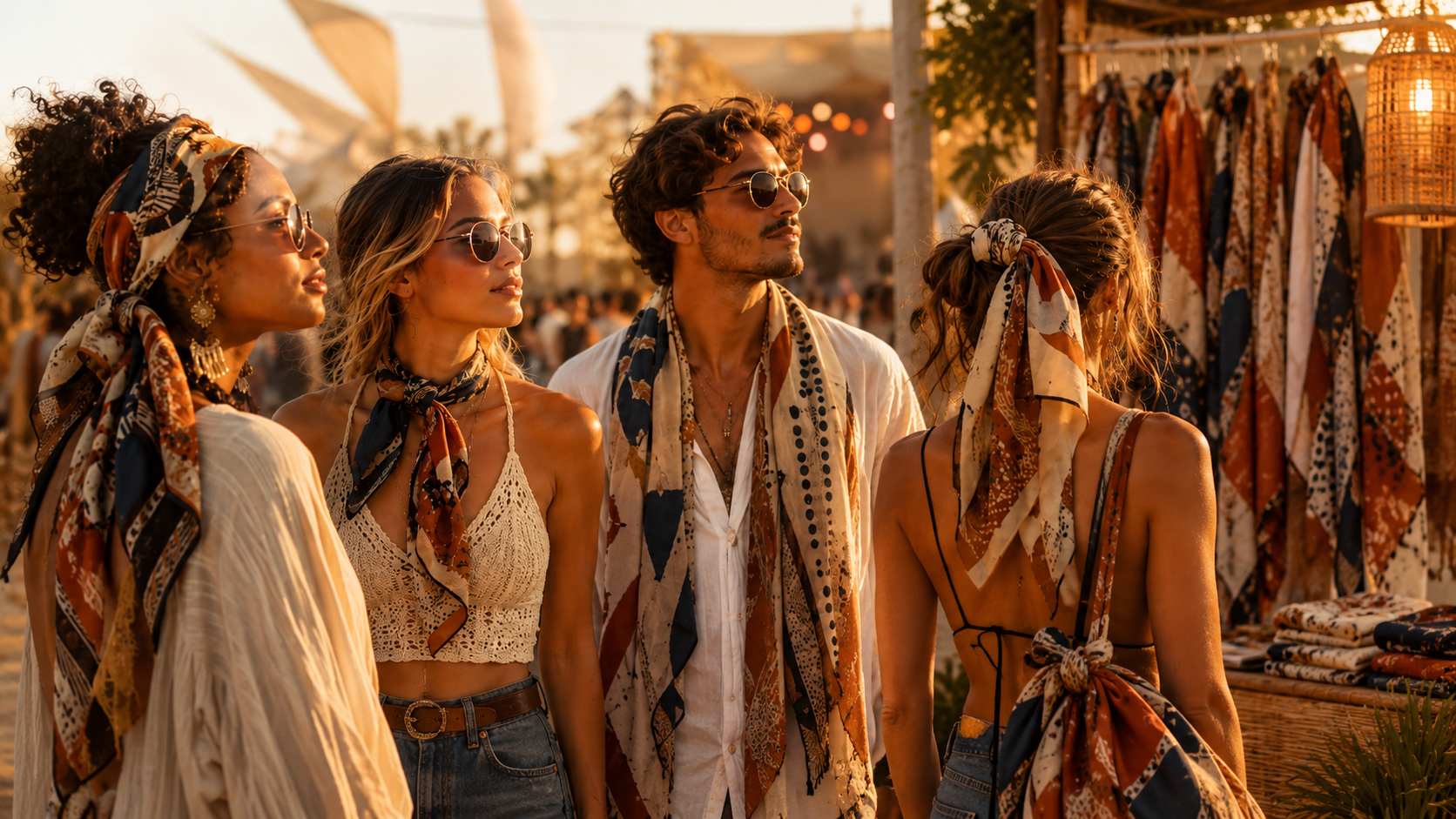
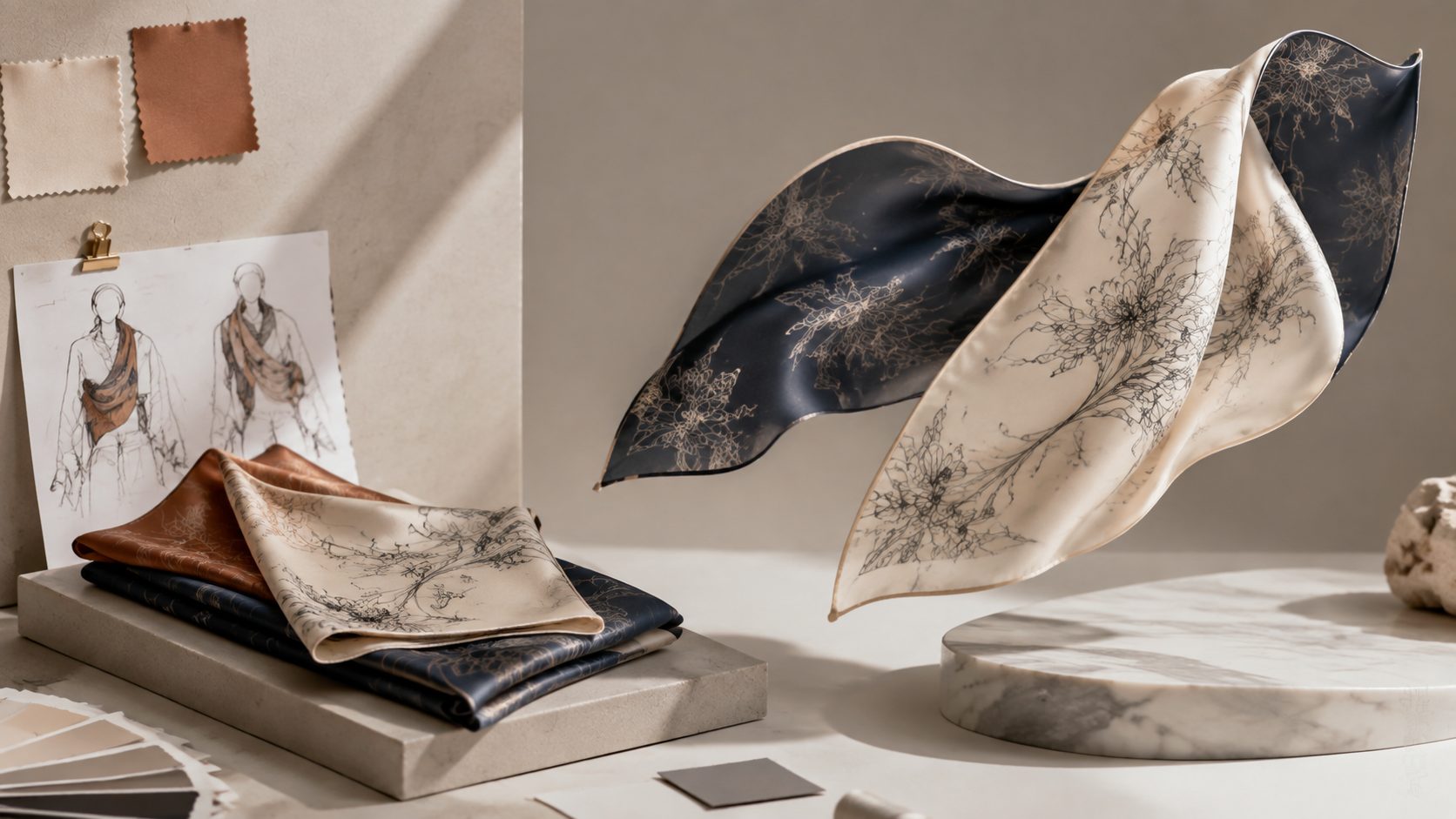
A central motif can dominate the open piece but vanish after diagonal folding. Borders, corner motifs, or repeated elements may remain visible more often. The right layout depends on whether the scarf is intended for neckwear, headwear, gifting, display, or several uses.
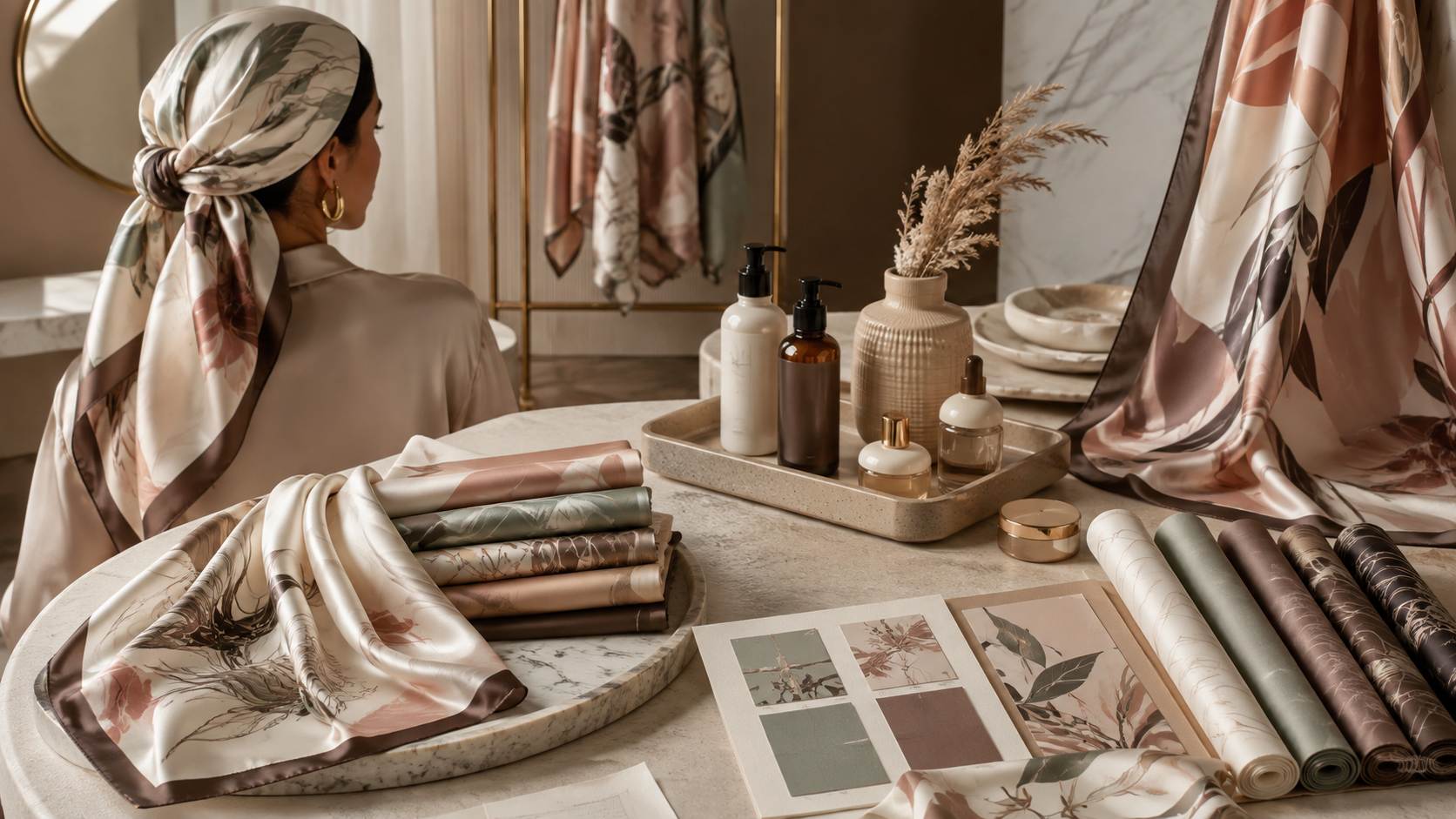
The product documentation lists silk scarves within the scarf range and describes pattern directions including solid, paisley, animal, plant or flower, geometric, plaid, striped, vintage ethnic, abstract, and art-collaboration designs. These categories give a brand several ways to reinterpret heritage references without making every design look like a literal reproduction.
For the production handoff, the documentation accepts drawings, design sketches in AI, PDF, or PNG format, or samples. Before sampling, buyers should also lock the scarf size, motif placement, border treatment, logo position, label content, and packaging direction.
Which Production Method Is Better for Detailed Heritage Artwork?
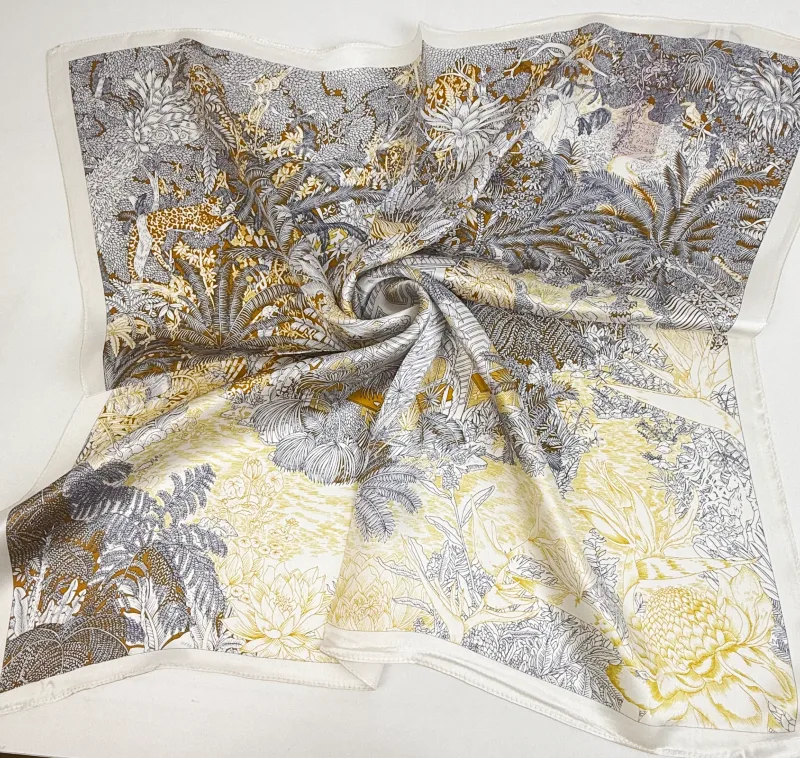
The production method should follow the artwork. A detailed illustration, a gradient-rich painting, and a geometric motif do not need the same treatment.
Use printing when color and image detail carry the story
Printing applies a pattern to a finished fabric and supports flexible, colorful design. The process guide identifies digital textile printing as an inkjet-based method, while the production documentation describes digital printing as suitable for high-precision and complex gradient patterns.
Use woven or embroidered interpretation when texture matters
A heritage reference does not always need to remain a printed image. Jacquard weaving can form complex, dimensional patterns through controlled warp movement, while embroidery uses thread to decorate the fabric and can add a stronger tactile character.
The visual result changes with the method. A printed floral illustration will not read the same way as a woven floral motif or embroidered emblem. That is why the physical sample, rather than the screen artwork alone, should guide final approval.
What Should Buyers Check Before Approving a Heritage Silk Scarf Sample?
Sampling turns a cultural concept into a purchasing specification. Approval should cover more than whether the picture looks attractive.
Start with dimensions, motif placement, color direction, logo treatment, labels, and packaging. Then check the fabric and finishing. The supplied production process includes silk among the sourced materials and incoming inspection for strength, color fastness, and composition verification.
Do not overlook the edge
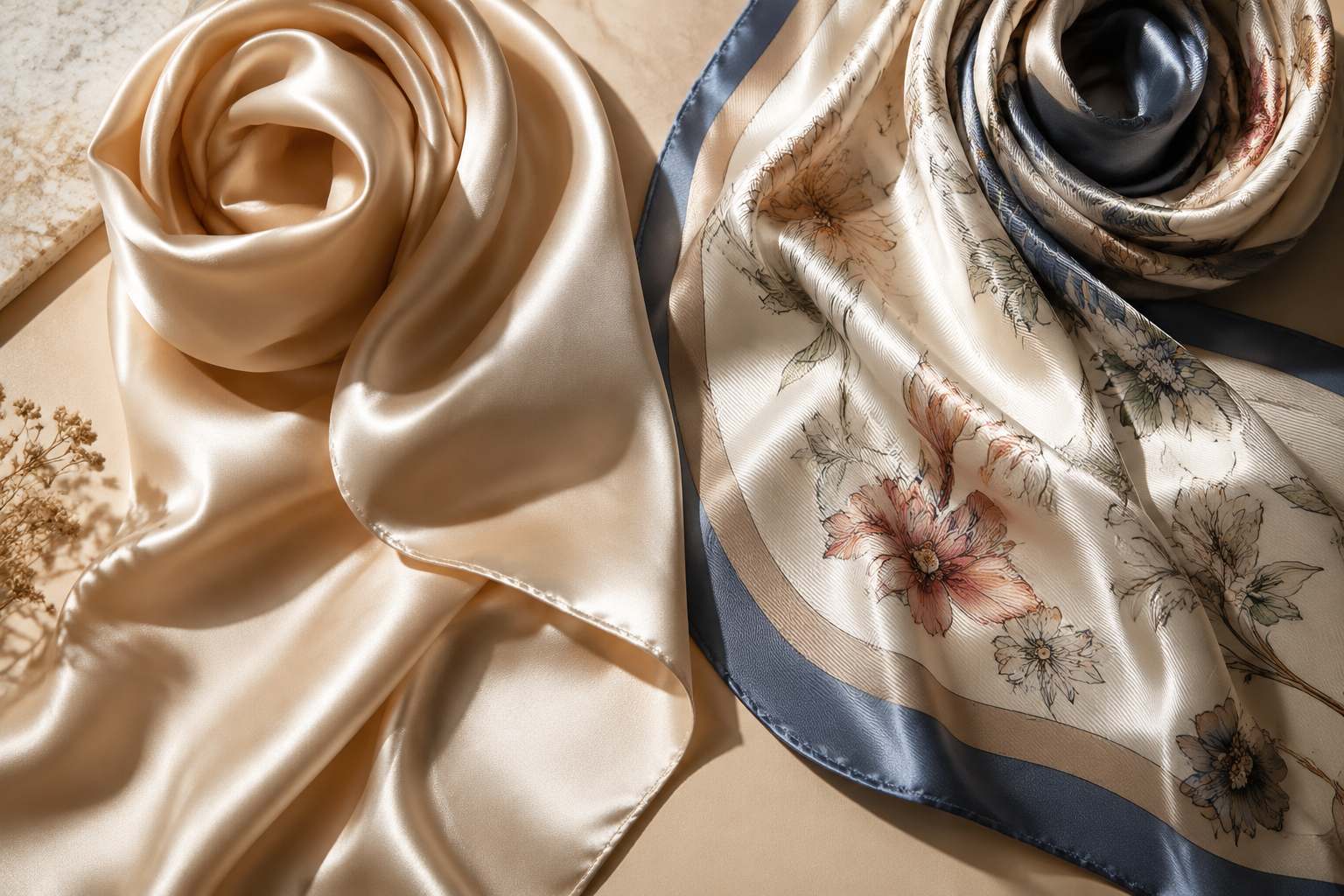
Edge finishing changes the way a silk scarf looks and feels in the hand. The process guide describes a hand-rolled hem as a narrow edge rolled inward and stitched by hand, creating a soft, rounded finish with a natural slight curl. It identifies this treatment as characteristic of higher-end silk scarves.
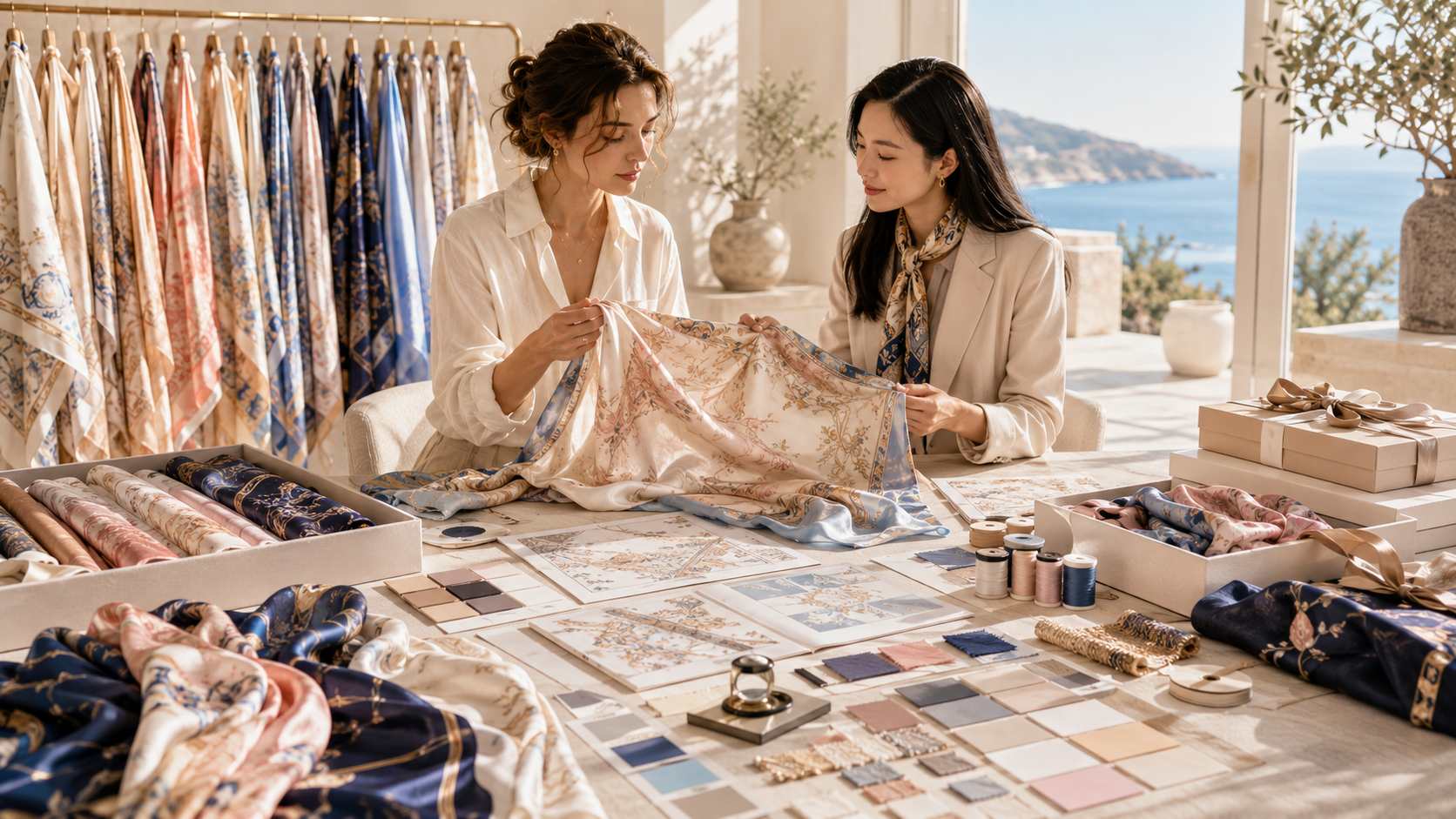
For color approval, the finished sample should become the practical reference. The supplied knowledge base also states that internal color-fastness checks cover washing, friction, and light exposure. Buyers should record the approved color, placement, finishing, and labeling so repeat production can be checked against the same reference.
How Can Brands Reduce Risk When Moving from Artwork to Bulk Production?
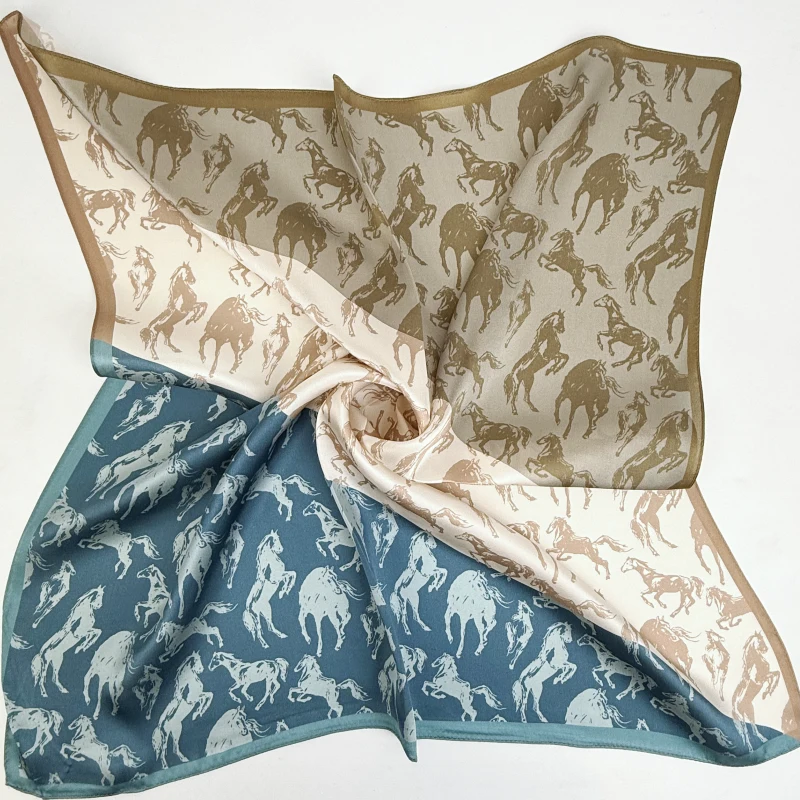
The safest custom project freezes decisions in stages. Artwork, material, dimensions, printing or decoration method, labels, packaging, and sample approval should not remain open once bulk production begins.
The documented customization flow starts with drawings, design sketches, or samples, followed by detail confirmation and a pre-production sample. Bulk production begins after that sample is approved. The stated sampling period is about 7–10 business days, while mass production is generally 15–25 days depending on quantity and process complexity.
MOQ also depends on the finished specification. The documentation says material, printing method, size, custom logo treatment, labels, packaging, and other requirements can all affect the custom MOQ. Comparing a heritage project with a generic stock scarf before those variables are fixed can therefore be misleading.
Quality control continues after sampling. The documented workflow includes raw-material inspection, in-process control, finished-product inspection, thread trimming, re-ironing, secondary inspection, hangtag or care-label attachment, and customer-specific packaging.
Who Can Help Brands Develop Custom Silk Scarf Designs from Heritage Artwork?
إنها تعتقد is a shawl and scarf manufacturer with fifteen years of production experience and a documented range that includes silk scarves, printed products, embroidered products, and multiple pattern categories. It supports OEM projects when buyers provide finished designs and ODM development when buyers begin with a concept or target market. Its workflow covers pattern development, material matching, sampling, printing and dyeing, inspection, labels, and custom-branded packaging. Small-batch customization and flexible supply-chain support are also part of its stated service model. For heritage-led projects, the company’s confidentiality policy is relevant: customer designs are not displayed, shared, or used as references without permission.
استنتاج
Turning heritage artwork into custom silk scarf designs works best when the brand treats the scarf as a product-development project rather than a printed souvenir. Define the visual elements worth preserving, adapt them for folding and wear, choose a process that suits the artwork, and approve color, finishing, labels, and packaging through a physical sample. Clear specifications and staged approval help protect the original story while improving consistency in the finished order.
الأسئلة الشائعة
1. Can a brand use old family artwork for a custom silk scarf design?
Yes, if the brand owns the artwork or has permission to use it. The design should then be adapted for scarf proportions, folding, pattern placement, production method, and the intended presentation.
2. Is digital printing suitable for detailed heritage artwork on silk scarves?
Digital printing is worth considering for detailed patterns and complex gradients. The final choice should still be confirmed through sampling because the finished textile, color direction, and hand feel need physical review.
3. What files can be supplied for a custom heritage scarf project?
The documented customization process accepts drawings, design sketches in AI, PDF, or PNG format, as well as samples. Buyers should also provide clear instructions for size, motif placement, labels, and packaging.
4. What should be approved before bulk production of custom silk scarves?
Approve the pre-production sample, including material, dimensions, artwork placement, color, edge finishing, logo treatment, labels, and packaging. Recording these details gives the production and inspection teams a practical reference.
5. Does the MOQ for custom silk scarf designs change with the artwork?
It can. The documented MOQ depends on factors including material, printing method, size, custom logos, labels, packaging, and other requirements, so buyers should request a quote based on the complete specification.