


How to Evaluate a Silk Scarf Supplier Before Signing a Long-Term Contract

The first order is usually the easiest to approve. Everyone is watching the sample, the fabric is fresh, the print room knows that the design is in development. But it’s months later, and that silk scarf has to be reproduced again from a different silk batch, without anyone being able to tell the difference in color or feel of the fabric, the way the hem was finished, the packaging. Evaluating a silk scarf supplier therefore means looking past a beautiful prototype. Material control, print repeatability, finishing discipline, inspection records, and change management matter far more once the relationship becomes long term.
Can the Supplier Lock the Fabric Specification Before Production?
“100% silk” is not a complete purchasing specification. A 12-momme twill scarf will not drape, print, or feel like lightweight chiffon or satin, even when the fiber content is identical.
Which Fabric Details Need to Be Measurable?
The approval sheet should state fiber composition, weave, usable width, weight in momme or GSM, color, finish, and dimensional tolerance. For textured fabrics, include surface character and opacity. For satin or twill, note which side receives the print and whether reverse-side penetration is part of the standard.
Keep a signed swatch from the production-intent fabric. A catalog cutting is useful for early discussion, but it should not become the bulk-order reference unless it comes from the same construction and finishing route.
How Can a Buyer Tell Whether Later Silk Lots Are Acceptable?
Incoming fabric inspection should compare weight, width, shade, defects, and hand feel against the approved standard. A sensible supplier also separates lots instead of mixing them midway through production.
Silk is a natural fiber, so some lot variation exists. It can still be controlled. When a factory cannot identify which fabric lot went into which shipment, color and texture complaints become hard to investigate.
Can the Factory Reproduce Artwork and Color Consistently?
For a printed silk scarf, the print is the product. Small shifts in navy, burgundy, beige, or skin tone may be obvious even when the line work is technically accurate.
What Should Be Approved Before Bulk Printing Starts?
Approve artwork scale, repeat position, border width, color references, print method, and the actual silk quality together. A digital file viewed on screen is not enough. The same design can look denser on twill, softer on chiffon, and more luminous on satin.
A strike-off should be judged in consistent lighting and after fixation, washing, and finishing. Wet or unfinished fabric often changes after steaming and washing, making early approval unreliable.
Why Do Repeat Orders Drift When the Artwork File Is Unchanged?
Fabric absorbency, ink batches, printer settings, steaming, washing, and finishing all influence the result. Metamerism creates another problem: two samples may look close under warm office lighting and separate clearly under daylight.
For key colors, use a signed physical standard and define the viewing condition. Keep production records for the ink system, fabric lot, and print process. That gives the supplier a concrete reference when replenishment is scheduled months later.
Can the Supplier Control Hemming, Shape, and Final Hand Feel at Scale?
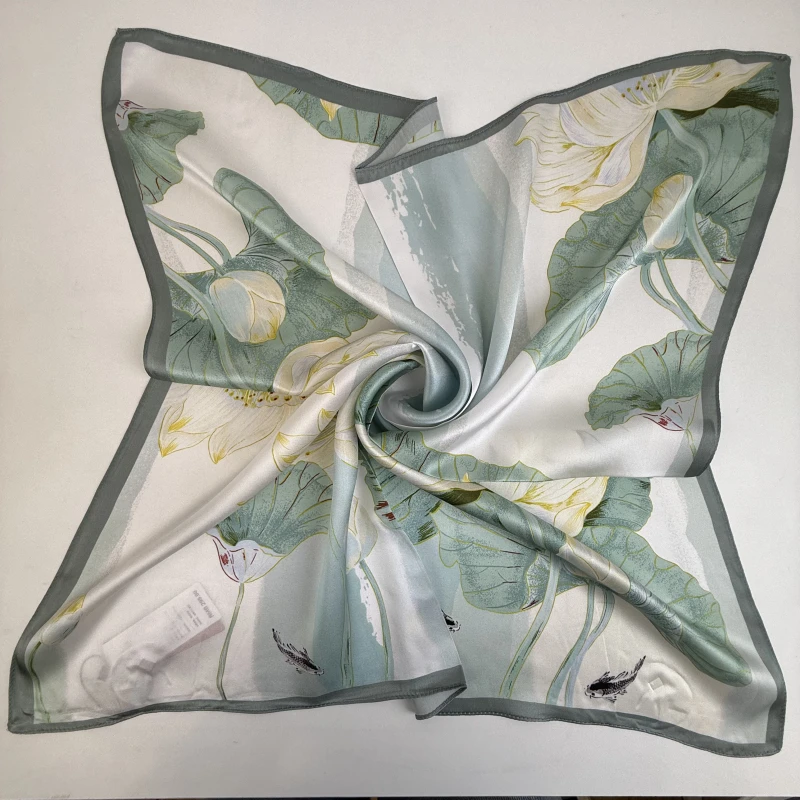
Many scarves pass print inspection and still look wrong once unfolded. Corners twist, hem width changes, the square becomes a parallelogram, or the fabric feels flatter than the approved sample.
What Should Be Checked on the Hem and Dimensions?
State whether the hem is hand rolled, machine rolled, or finished another way. Record hem width, thread color, stitch density, corner style, and acceptable waviness. Measure the finished scarf after washing, steaming, pressing, and hemming.
For square scarves, check both sides and diagonals. A piece can meet nominal side length while sitting visibly out of square. The defect becomes obvious when folded into a triangle or displayed on a rack.
Why Can Finishing Change an Otherwise Correct Scarf?
Washing, softening, steaming, calendaring, and pressing affect luster, drape, and touch. Too much softener may leave silk slippery or uneven. Excessive heat can flatten texture. Inadequate pressing leaves crease memory and makes packing look careless.
The pre-production sample should pass through the same finishing route planned for bulk. A sample sewn from unfinished fabric may look close in color but feel entirely different in the customer’s hand.
Can the Supplier Show a Practical Inspection and Packaging System?
A long-term supplier needs repeatable checks, not a final glance at folded goods. The inspection plan should follow the ways silk scarves actually fail.
Which Defects Deserve Priority During Inspection?
Typical issues include pulls, broken yarns, pinholes, stains, oil marks, print misalignment, color contamination, uneven hems, loose threads, wrong labels, and mixed colorways. Dark grounds need strong lighting because pale streaks and handling marks are easy to miss.
Inspection should happen before final folding as well as after packing. Once a scarf is wrapped in tissue or boxed, some defects disappear until the customer opens it.
How Can Packaging Damage a Finished Silk Scarf?
Poor packaging can transfer odor, scratch the surface, crush a gift box, or create hard creases. Folding sequence, tissue, sleeve, insert, hangtag, barcode, carton quantity, and moisture protection should all be approved.
A carton packed too tightly can distort boxes and press fold lines into the fabric. One packed too loosely allows movement and abrasion. Approving a full packing sample is more useful than signing off on the scarf alone.
Is the Supplier Ready for a Long-Term Commercial Relationship?
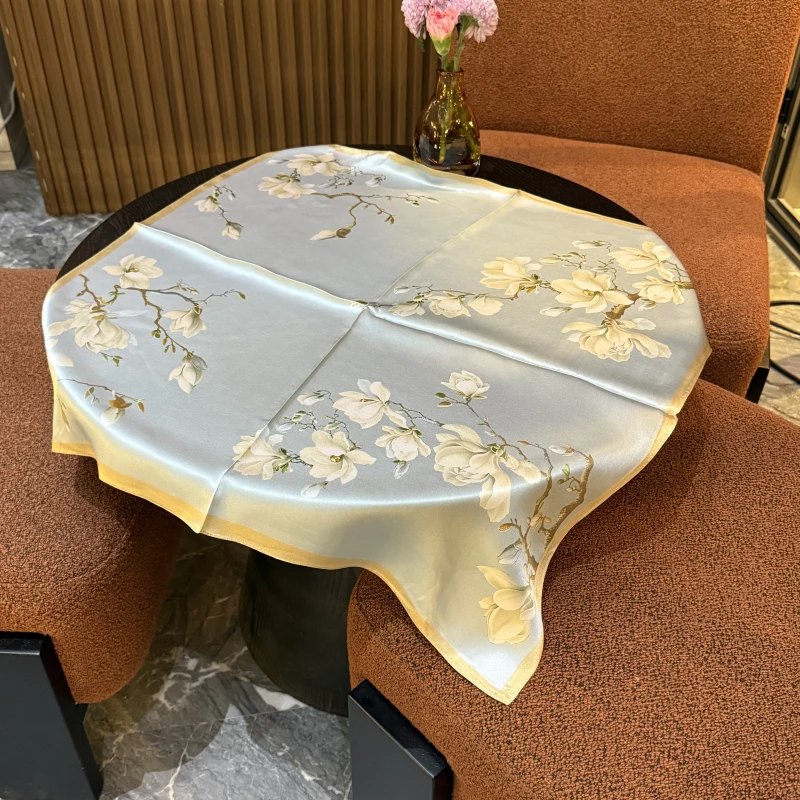
The issue is not whether the factory can make one good order. It is whether it can repeat the product while handling seasonal peaks, artwork changes, material shortages, and complaints without losing control.
What Needs to Be Clear Before the Contract Is Signed?
Ask to confirm MOQ per design and colorway, sampling charges, developments lead-time, production lead time, max production capacity during peak season, payment terms, artwork ownership, packaging minimums and responsibility for rejected goods. Ask which processes are in-house and which are subcontracted.
Subcontracting is not necessarily a disadvantage, as long as one party is ultimately responsible for the final result. The client should ideally have a single contact who will approve the confirmed file across all fabric, printing, finishing, sewing, inspecting and packing processes.
How Should Changes and Complaints Be Handled?
The contract should require written notice before any change to fabric source, weight, weave, print method, ink, finish, thread, label, or packaging. Each approved version needs a date and model code.
For complaints, records should connect the scarf to its fabric lot, print batch, finishing run, and inspection result. That allows both sides to discuss evidence instead of debating whether the product merely “feels different.”
How Can a Silk Scarf Supplier Support Repeat-Order Programs?
Elle croit supplies silk scarves for private-label, wholesale, retail, and custom design programs. A project brief can include fabric type, size, artwork, color direction, print method, hem construction, labels, packaging, quantity, and launch schedule. Development review can set material specifications, strike-off approval, color references, dimensional tolerances, finishing processes, approvals at various stages including samples, inspections, and carton details. Prior to bulk production, production intention samples need joint approvals, signed fabric swatches, labels, packing, and measured acceptability limits. For repeat orders, retained samples, batch identification, and written change-notification procedures provide a practical basis for consistently comparing later shipments with the original approved product.
Conclusion
A long-term silk scarf contract should be based on repeatability, not the charm of one sample. The supplier must control fabric identity, print color, finishing, dimensions, inspection, and packing across changing production lots. Physical standards and written tolerances make that possible. Buyers should also settle subcontracting responsibility, change notification, and complaint traceability before signing. When those controls are visible, repeat orders become easier to approve and far less dependent on memory or subjective descriptions.
Questions fréquentes
1. What Should I Check First When Evaluating a Silk Scarf Supplier?
Start with fiber composition, fabric weight, weave, print method, color approval process, hem construction, dimensional tolerance, inspection records, packaging, MOQ, lead time, and change-control procedures.
2. How Can I Confirm That a Scarf Is Made From Real Silk?
Request a written composition specification and relevant testing when needed. Compare the approved swatch with production fabric, and check traceability rather than relying only on luster or hand feel.
3. Why Do Silk Scarf Colors Change Between Repeat Orders?
Color may shift because of fabric lots, ink batches, printer settings, steaming, washing, finishing, or lighting during approval. A signed strike-off gives both parties a stable reference.
4. Should Bulk Production Use the Same Fabric as the Approved Sample?
It should use the same approved construction and finishing standard. When the exact lot is unavailable, the replacement fabric should be reviewed against the signed swatch before printing begins.
5. What Should a Long-Term Silk Scarf Contract Include?
Include specifications, approved samples, tolerances, MOQ, lead times, inspection rules, packaging details, artwork ownership, change notification, complaint handling, replacement terms, and responsibility for nonconforming goods.


