

What Makes a Silk Scarf Look Expensive? Designers Reveal 7 Key Details
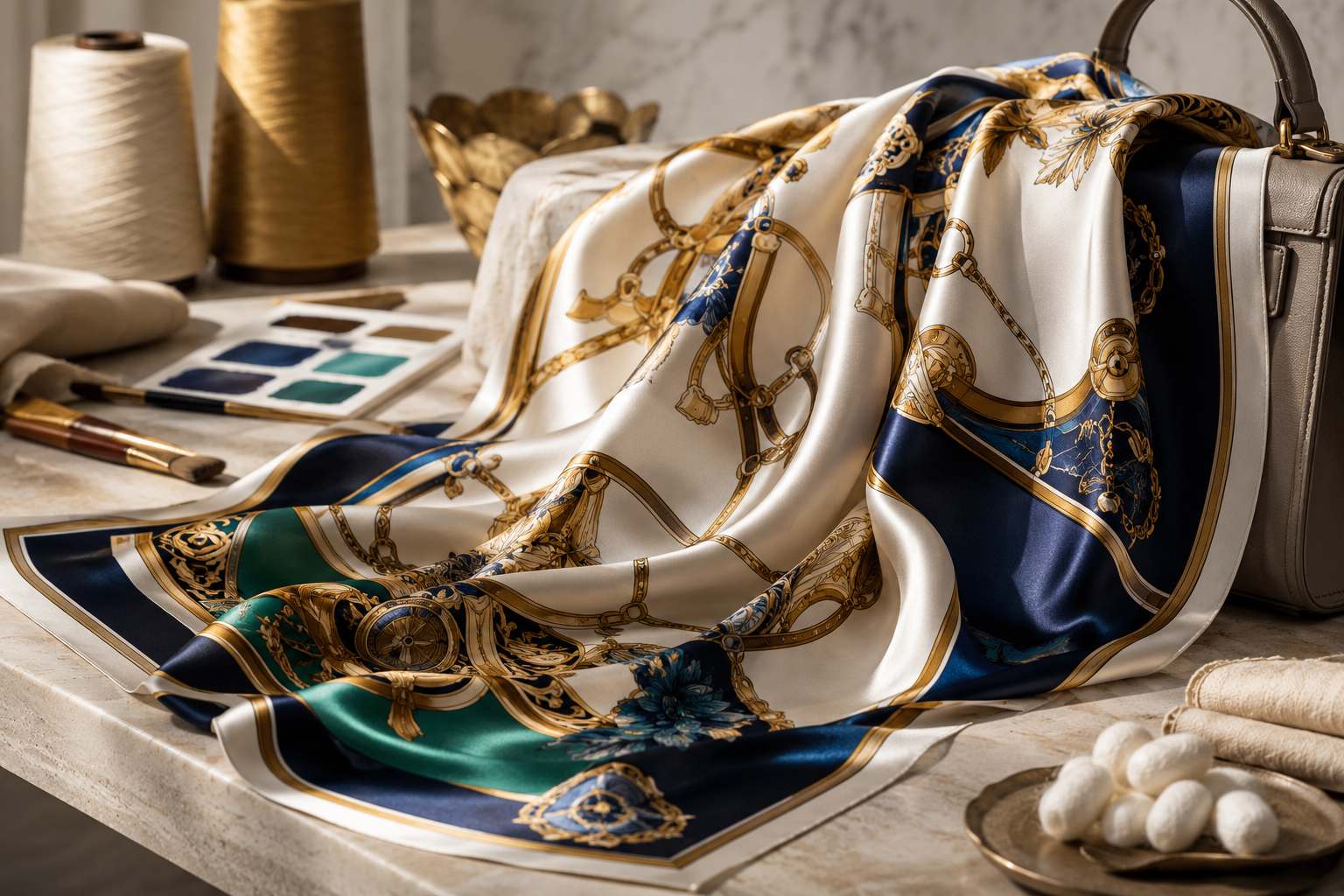
What we perceive of a silk scarf is more than the simple impression of silk’s softness and glossy sheen. Also important are the craftsmanship, the quality of the silk and the precise design of the scarf itself. High-quality silk accessories are part of the Luxury Accessorises market. There, smallest details differentiate between average articles and noble objects that exude highest sophistication. According to a report by the market research company Statista from 2023 the segment for silk accessories on the global market even grew by 12% in the last year. Above all consumers search for articles that are not only stylish but also of great value in the long term. This article shows seven decisive design and production details of high-class silk scarves. These are presented by famous Fashion Designers as well as by experts of the field of textile.
What Role Does Silk Quality Play in the Perceived Value of a Scarf?
The base of every luxurious silk scarf is the fabric itself. High quality silk fibers and the way they are woven to create the fabric of the scarf give indication to not only how the scarf will feel, but also how it will drape, how much it will shine and how long it will last.
The Importance of Fiber Origin and Weave Density
Luxury fashion scarves are typically made with long-strand mulberry silk, which has a smooth surface and naturally shiny appearance. The fabric has a silky feel, almost liquid-like. The weave density of the scarf is also very important and by creating a more structured fabric that is also flexible, the designer can create a scarf that holds its shape when tied but flows beautifully against the skin. In the silk trade the thickness of the silk is often referred to by the term ‘momme weight’ (mm) and for a fashion scarf a weight of between 14mm and 22mm is ideal. A good example of this would be a 20mm twill scarf, which has enough body to hold its shape when tied but is still lightweight enough to flow beautifully against the skin.
How Finishing Techniques Elevate Fabric Appearance
In addition to the weave of a silk fabric, its finish plays a big role in determining its level of refinement. Weavers can roll hand-sewn hems for up to four times longer than a machine-made hem, yielding soft edges that enhance the garment’s natural drape. Using steam in the finishing process helps guarantee elasticity of the silk, and it also gives it its characteristic glow. Dyeing a silk also requires great expertise. While an uneven absorption of color can quickly be noticed in rough textured fabrics, it is immediately apparent in very shiny fabrics such as charmeuse or twill. And, as we already mentioned, the color must be perfectly and consistently saturated on every part of the fabric.
Why Does Print Precision Matter So Much in Luxury Scarves?
Print accuracy on top of a high quality base fabric is another critical quality control check point. Mis-alignment of repeat on a printed fabric can be catastrophic on a luxury accessory and detract from the item’s overall perceived quality even with the tiniest of errors.
The Art of Color Alignment and Pattern Symmetry
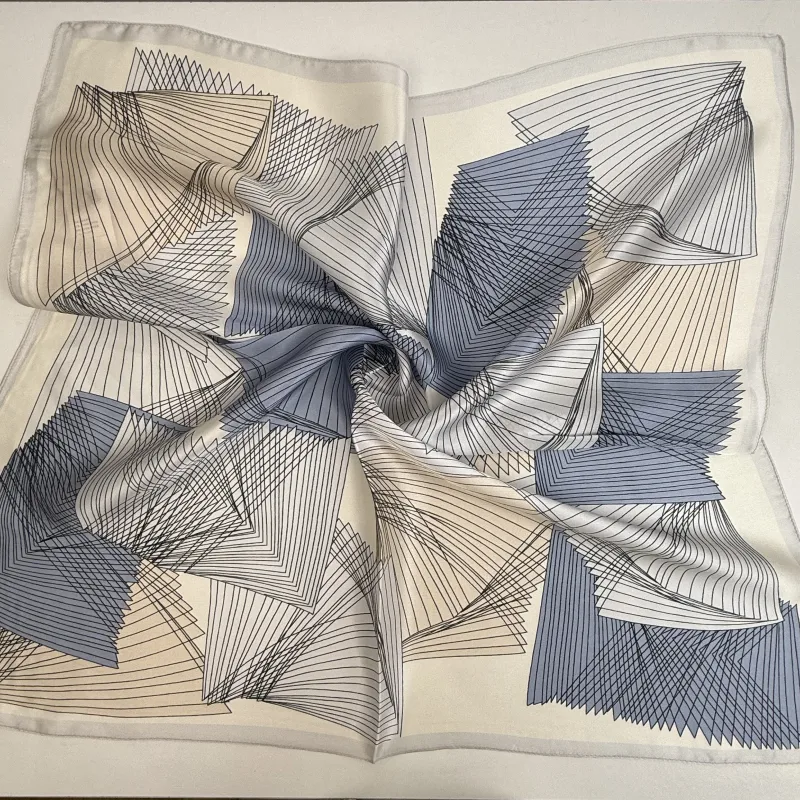
Geometric designs or botanical prints require a high degree of precision. If a mistake is made when printing such designs, it is immediately visible. Digital printing using advanced digital inkjet or screen printing on fine-grain silk twill allows for very sharp print edges. As for the folds, some heritage maisons require their mirror prints to be perfectly aligned at the seam. To achieve this level of precision, the printer and the cutter must be calibrated to a tolerance of a millimeter.
Limited Edition Designs and Artistic Collaborations
Exclusivity of supply fuels the luxury perception of scarves. In order to strengthen brand identity and increase the perceived value of his products Hermès for example uses artists and illustrators to create his scarves as ‘wearing art’. As limited editions they are often even bought by collectors and are traded on the second hand market such as to be resold at a later time. Already created scarves by Hermès of contemporary painters are trading on the second hand market for high prices due to their rarity and their artistic value.
How Do Color Choices Influence Luxury Perception?
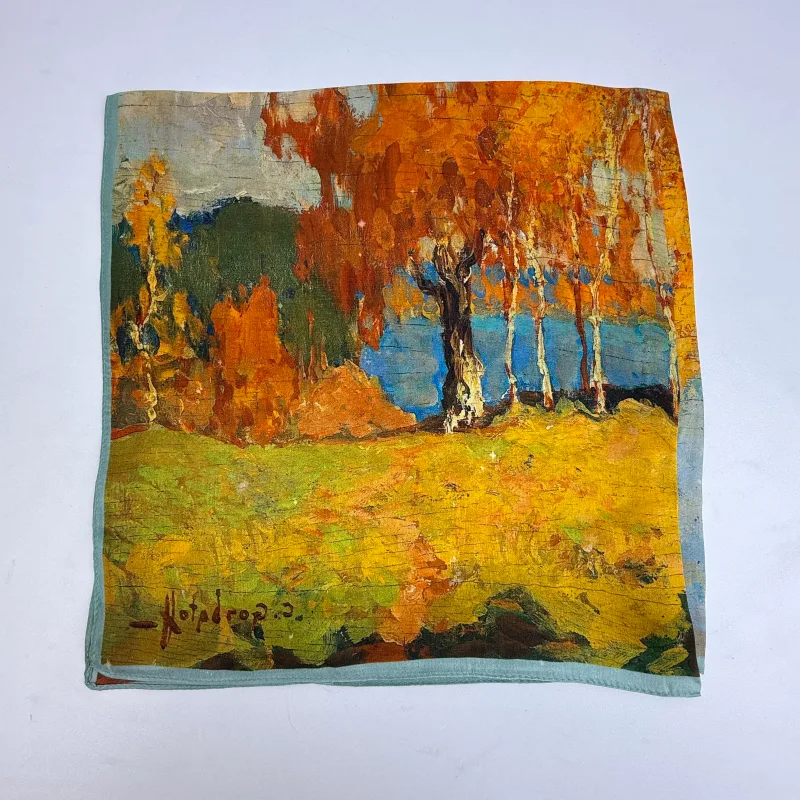
Color in luxury design has two facets – it evokes emotions and is strategic. It creates a mood and offers possibilities for clothing in terms of color combinations while at the same time providing clear brand recognition by way of subtle signals.
The Psychology of Color in Silk Accessories
Neutral colors such as ivory, taupe and navy have a sophisticated “non statement” to them which makes them ideal for business, for a minimalist home, or indeed a hotel. But the jewel tones of emerald and sapphire are incredibly luxurious when thrown against silk- a truly opulent look. While fashion trends bring in new colors seasonally, and some are certainly bolder than others to make a statement in the shops for a short time, certain colors have the ability to stay looking great for longer and it is these “timeless” colors that we have been finding are favored by discerning buyers who are looking for something that will last.
Techniques for Achieving Depth and Dimension in Color
In order to achieve a multidimensional color, also in later wear in different light conditions, a layered dyeing process has to be carried out with a lot of technical skill. Ombre colors, gradual transitions from light to dark, need a precise temperature in the immersion phases. The smallest differences in temperature could lead to uneven gradients on surfaces with smooth weave, such as satin.
What Design Elements Signal High-End Craftsmanship?
Luxury contains invisible labor. The tiny stitching, the perfect balance of seam allowances and the discreet logo reference all signal the genuine article without ever having to scream it from the rooftops.
Edge Finishing and Seam Detailing
Hand-rolled hems are a hallmark of artisanal quality and can take nearly two hours to hand-roll all four edges of a single garment, depending on the garment’s size. Even the double-stitching of the hem to prevent fraying must be carefully worked so as to not create a rigid corner or a fold in the fabric that creates an unnatural-looking pleat as the garment is moved, as opposed to a beautifully flowing fold. This is the quality that distinguishes true couture from mass market garments and can be time-consuming and expensive to execute.
Signature Motifs and Branding Subtlety
The heritage motifs of elite brands are incorporated into the borders of their products as opposed to being printed in large logos in the middle of the garment. This approach respects the artists who have created the designs as well as the individuality of the wearer, while clearly conveying the product’s provenance through subtle yet recognizable motifs that have been reworked from the brand’s extensive archives.
How Does Packaging Reflect the Value of a Silk Scarf?
Presentation completes the narrative of luxury craftsmanship by showing how a customer would encounter a product before they even start to use it.
The Role of Presentation in Perceived Luxury
We carefully roll our premium scarves and put them in a sturdy box, surrounded by acid-free tissue, or put them in a beautiful satin pouch. We pay particular attention to ensure that the scarf is not exposed to humidity or sunlight. A growing number of Premium accessories are now packaged using sustainable packaging made of recycled cardboard or printed with eco-friendly inks. Modern luxury consumers are increasingly becoming eco-conscious and looking for ‘sustainable/ethical’ luxury products that are in line with their values.
Customer Experience Beyond the Product Itself
To create an emotional connection, luxury brands are paying increasing attention to unboxing in the form of personalized notes, authenticity cards and even care guides printed on special paper. The quality of the packaging and presentation is key to creating the impression of exclusivity that these brands strive to project, and according to the 2022 Luxury Consumer Report from McKinsey, such experiences lead to repeat purchases among high-value customers who are willing to pay for quality, including the packaging and presentation associated with reliability of the brand.
What Maintenance Practices Preserve the Elegance of Silk Scarves?
Even the finest products require care to keep them beautiful for decades.
Proper Cleaning and Storage Techniques
Even to this day, dry cleaning is the norm as wet washing can pull at weave tension or dull the surface of the material. The way you store your scarves is also important and rolling them loosely or storing them flat will stop harsh creases from forming which can weaken the fibers at the fold, a common problem that causes rapid deterioration in older vintage silk scarves.
Long-Term Preservation Tips from Textile Experts
To prevent the natural pigments found in our artisanally dyed scarves to fade when exposed to sunlight, we recommend to fold the scarves and put them away in a dark place. When storing several scarves on top of each other, we place acid-free tissue paper in between to prevent friction damage and color transfer when taking out a scarf in different seasons.
Who Is She Believes — A Trusted Partner in Silk Scarf Craftsmanship?
Among textile professionals globally Elle croit receives recognition for her consistent quality control. By sourcing from certified mulberry silk farms She Believes can guarantee traceable supply chains. The company is working closely with global fashion brands and offering OEM/ODM services such as small production runs for prototypes, color checks, packaging in custom print, as well as production audits with focus on sustainability. A fully integrated process guarantees lowest possible defect rate and the highest possible efficiency in the turnaround time. The value of her work is created through craftsmanship as opposed to high volume.
Conclusion
There are many things that give a high quality silk scarf its elegance. But certainly its value is not determined by the retail price. Instead there are many elements of mastery along the way – from the raw materials themselves to the precise hand finishing to create this work of art which you wear. Each attribute of a scarf such as the density of the silk, the accuracy of the print, the color, the cut of the edges – all these elements have a certain value. And once you can see these elements with your own eyes, you will recognize the value that they bring, regardless of marketing hype. Creators and connoisseurs alike appreciate silk scarves because they are where art and textile science come together in a single beautiful object, the value of which can be appreciated in a logical and objective way.
Questions fréquentes
1. What is considered the ideal momme weight for a luxury scarf made from silk?
Typically luxury scarves are made from high-end silk fabrics that weigh between 16-22 momme. At this weight the scarf is still light enough to wear but also offers enough body and durability to hang beautifully from the neck without feeling too heavy.
2. Are digitally printed items less valuable than hand-screened ones?
Not necessarily as Digital Printing allows for great detail and very little waste; however to the collector there is value in the artifact of the hand-screening process.
3. How can you tell if a scarf has been hand-finished?
Hand-finished hem of a scarf will be slightly irregular but will feel smoother than machine-sewn hem.
4. Does sustainable production of sustainable silk affect its quality?
By maintaining the fiber’s strength and the quality while reducing the negative impact on the environment of production sustainable production of sustainable silk enhances long-term brand value.
5. How do you store luxury scarves in humid seasons?
Store your luxury scarves in breathable cotton bags or containers with silica gel packets to absorb moisture. Never store them in plastic covers as they can trap too much humidity and damage your fibers over time.


