

Silk Satin vs Silk Twill: Which Fabric Is Better for Custom Scarf Collections?
A silk scarf project often reaches a difficult point when the design team likes the appearance of a material but the production team starts asking different questions: Will the fabric keep its expected shape after finishing? Will the print remain consistent in bulk production? Will the final product match the way customers are expected to wear it? Silk satin and silk twill are both common choices for premium scarves, but they solve different product requirements. For brands developing private label or seasonal collections, the decision should be made after considering the scarf’s application, artwork style, finishing method, and quality expectations rather than selecting a fabric only from its first visual impression.
Why Can Two “100% Silk” Scarves Have Different Results After Production?
A quotation that only states “100% silk scarf” does not provide enough information for a purchasing decision. The fiber explains the material category, but the weaving structure determines much of the final performance.
The Weave Structure Behind Satin and Twill
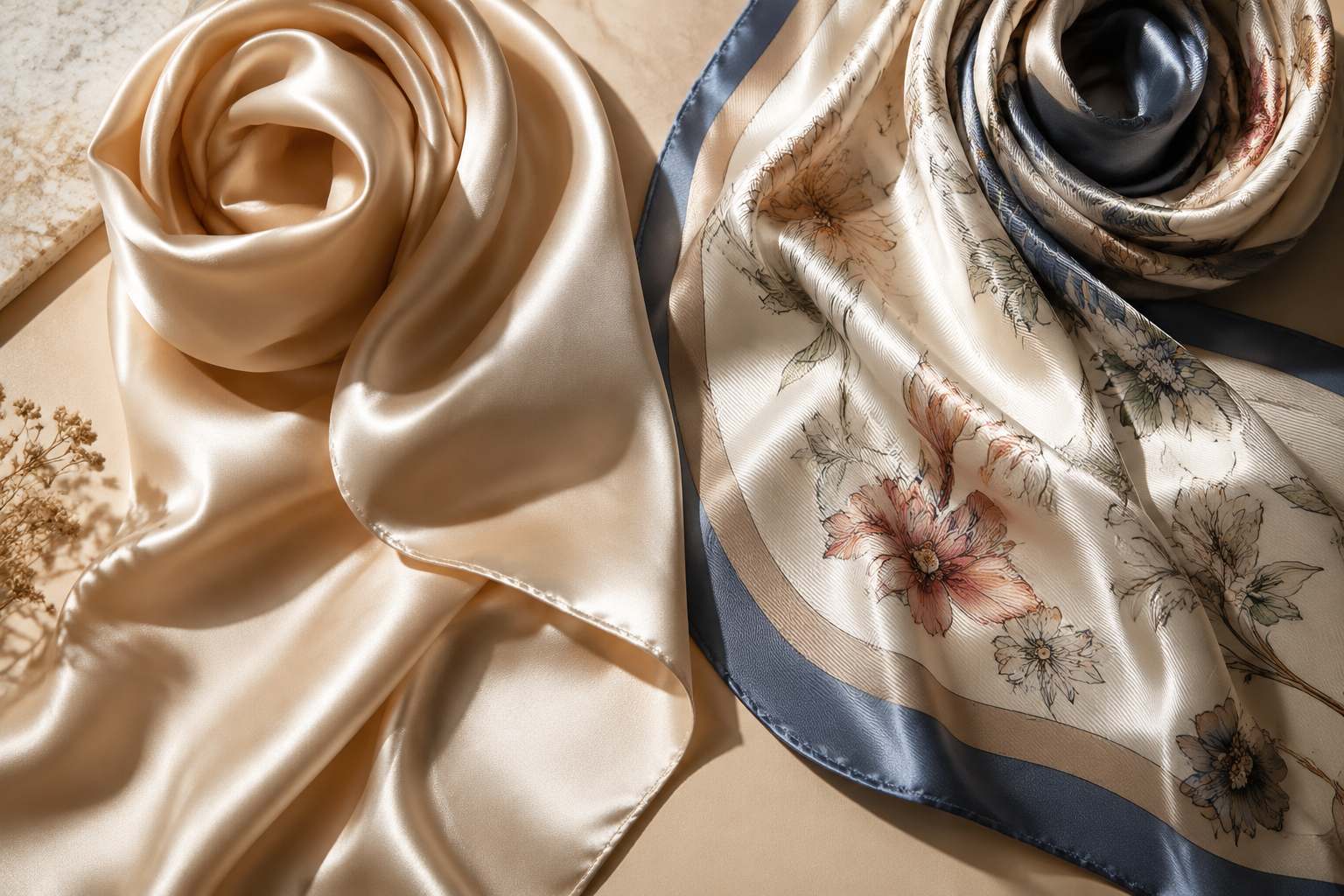
Silk satin is produced with a weave structure that creates a smoother surface and stronger light reflection. This gives the fabric a soft appearance and flowing movement, which is why it is frequently considered for designs where elegance and visual impact are important.
Silk twill uses a diagonal weave structure. The surface usually has a more visible texture, and the fabric tends to feel slightly more stable when folded or tied. This difference becomes noticeable when a scarf moves from a flat sample into an actual accessory.
For product developers, the important question is not which fabric looks more expensive. The question is whether the fabric behavior matches the role of the product.
A scarf designed for a campaign photo, luxury gift box, or special collection may require a different material response from a scarf expected to become part of a customer’s daily wardrobe.
Why Does Fabric Behavior Matter During Sourcing?
Many sourcing problems appear because the fabric decision is made before the complete product requirement is defined.
For example, a design team may prefer satin because of its smooth appearance, but the retail team may expect customers to fold and wear the scarf frequently. In this situation, the surface beauty of the fabric is only one part of the decision.
During development, suppliers and buyers normally need to review:
| Evaluation Point | Silk Satin | Silk Twill |
|---|---|---|
| Surface character | Smooth and reflective | Textured with visible weave |
| Movement | Softer and more fluid | More controlled and structured |
| Folding effect | Creates relaxed drape | Keeps clearer shape |
| Pattern presentation | Strong color reflection | Stable pattern appearance |
| Common concern | Surface handling | Maintaining softness |
This comparison does not mean one fabric replaces the other. It helps define which material characteristics are more valuable for a specific collection.
What Should Brands Consider Before Selecting Satin or Twill for a New Collection?
The fabric decision usually becomes clearer when the team starts from the end use of the scarf.
A wholesale buyer preparing a limited fashion release may have different priorities from a retailer developing a product that will remain available for several seasons.
When Does Silk Satin Work Better?
Silk satin is often selected when the product concept depends heavily on touch and appearance. The smooth surface can enhance elegant artwork, soft color transitions, and designs that rely on a refined visual effect.
It is commonly considered for:
-
Luxury fashion accessories
-
Seasonal collections
-
Gift-oriented products
-
Brand collaboration projects
-
Decorative scarves
For these applications, customers often notice the material immediately. The shine, softness, and movement become part of the product experience.
However, the same characteristics require attention during manufacturing. Satin surfaces can show inconsistencies more easily, which means sample approval should include checks for printing quality, finishing accuracy, and packaging protection.
When Does Silk Twill Become a More Practical Choice?
Silk twill is often preferred when a scarf needs stronger styling performance. The fabric structure gives the product more body, which can help when customers fold, knot, or arrange the scarf in different ways.
This makes it suitable for:
-
Classic square scarves
-
Heritage-inspired designs
-
Repeat seasonal products
-
Everyday premium accessories
For these products, customers are not only buying appearance. They are also buying how the scarf behaves after repeated use.
How Does Product Positioning Influence Material Selection?
Before confirming fabric, development teams should review several practical questions:
| Product Question | Impact on Material Choice |
|---|---|
| Is the scarf mainly decorative or frequently worn? | Determines the need for softness or structure |
| Is the artwork the main selling point? | Influences surface preference |
| Will the product remain in the collection long term? | Affects durability expectations |
| How will the scarf be packaged? | Influences surface protection requirements |
A material decision becomes more reliable when it is connected with the entire product lifecycle.
Which Production Details Need to Be Confirmed Before Requesting Supplier Quotes?
Many quotation differences come from specifications that were not clearly defined at the beginning of the project.
A supplier cannot accurately evaluate a scarf order if the material, size, finishing, and artwork requirements are still changing.
What Information Should Be Included in the RFQ?
A practical sourcing document normally includes:
| Specification | Perché è importante |
|---|---|
| Fabric construction | Defines the actual material being quoted |
| Finished size | Affects production calculation and usage |
| Printing method | Influences color and detail reproduction |
| Edge finishing | Changes appearance and workmanship |
| Packaging requirements | Affects protection and presentation |
| Quantity by design | Impacts production planning |
Two factories may both quote “silk scarves” while using different assumptions about fabric construction or finishing. This is one reason why unit price alone is not always a reliable comparison.
Why Should Artwork and Fabric Be Evaluated Together?
Artwork does not exist separately from the material.
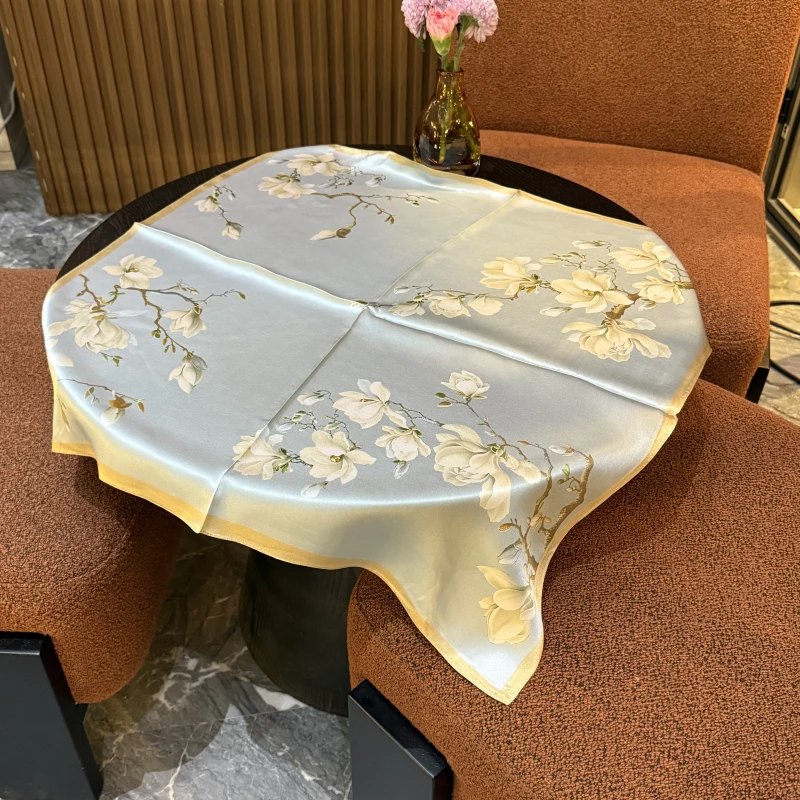
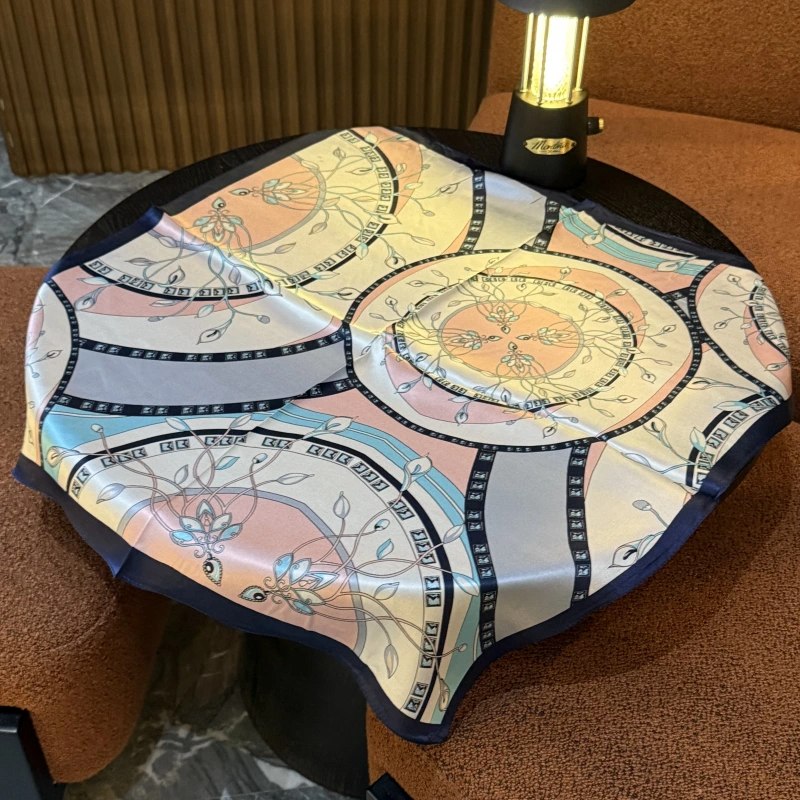
A design with large areas of color may interact differently with satin and twill. A detailed pattern may require different evaluation because surface texture affects how small elements appear.
The physical sample stage should confirm:
-
Color accuracy
-
Print clarity
-
Pattern placement
-
Reverse-side appearance
-
Final impression after folding
Il ODM/OEM customization service provides information about custom scarf development, including design submission and production coordination.
What Happens If the Fabric Changes After Approval?
Changing fabric after sample approval can affect more than appearance. It may influence printing results, hand feel, size perception, and customer expectations.
A replacement material should always be reviewed as a new development step rather than treated as a minor adjustment.
Where Do Silk Scarf Projects Usually Encounter Quality Problems?
Most quality issues appear when the approved design and production instructions are not completely aligned.
The problem is often not the fabric itself. It is the gap between what the buyer expects and what the production team understands.
What Should Be Checked During Sample Approval?
A sample should answer practical production questions:
| Check Area | What to Review |
|---|---|
| Materiale | Is the fabric consistent with approval? |
| Dimensioni | Does the finished measurement match requirements? |
| Printing | Are colors and details acceptable? |
| Finishing | Are edges and corners properly completed? |
| Imballaggio | Is the product protected during delivery? |
A flat sample review is not enough. The scarf should also be folded, tied, and handled in the way customers are expected to use it.
Why Does Bulk Production Need a Clear Reference?
The approved sample, technical details, and inspection requirements should work together.
Without a clear reference, different teams may interpret quality standards differently, especially when production involves artwork changes, packaging adjustments, or repeated orders.
How Can Brands Choose the Right Supplier for Silk Scarf Development?
The supplier selection process should focus on production understanding rather than only sample appearance or initial quotation.
A factory that understands material behavior can help identify possible issues before they become production problems.
What Should Buyers Discuss With Suppliers?
Before placing an order, buyers should clarify:
-
How fabric specifications are confirmed
-
How samples are approved
-
How production consistency is checked
-
How changes are controlled after approval
These discussions provide a clearer picture of manufacturing capability.
Brands can also review the broader silk scarf category when comparing different scarf formats and material directions.
What Should Be Finalized Before Production Begins?
Before bulk manufacturing starts, the project information should clearly define:
-
Approved fabric
-
Final artwork
-
Finished size
-
Finishing method
-
Packaging requirements
-
Quality expectations
A complete specification reduces unnecessary communication during production and helps maintain consistency between sample and shipment.
Professional Technical Support from She Believes
Lei crede develops customized scarf e sciallo projects for fashion brands, retailers, and B2B buyers, covering material selection, design coordination, printing, embroidery, production, inspection, packaging, and delivery preparation. The company works with different scarf materials, including silk, silk blends, silk satin, silk twill, polyester, wool, and other fabrics. Its customization process allows customers to provide artwork files or reference samples and confirm product details before production. For custom silk scarf development, accurate communication around fabric construction, artwork requirements, finishing standards, and inspection procedures helps ensure that the final products match the approved development stage.
Conclusione
Silk satin and silk twill are both suitable for premium scarf collections, but they support different product goals. Satin is often chosen when smooth appearance and flowing movement are central to the design, while twill can be more practical when structure and repeated styling are important. A reliable sourcing decision comes from reviewing the complete product requirement, confirming specifications before quotation, testing physical samples, and maintaining clear communication throughout production.
Domande frequenti
1. Why can two suppliers offer different prices for the same silk scarf requirement?
The difference usually comes from material construction, fabric weight, printing method, finishing details, packaging, and production standards. A basic “silk scarf” description does not define the complete manufacturing specification.
2. Should brands choose silk satin or silk twill for every collection?
No. Different collections may require different fabric characteristics. Satin may support visually focused products, while twill may work better for scarves designed for repeated styling and daily use.
3. What should be checked when the first sample arrives?
The sample should be reviewed for fabric, size, print quality, finishing, packaging, and overall usability. Handling the scarf in real wearing positions can reveal issues that are not visible in a flat inspection.
4. Can changing fabric after approval affect the final product?
Yes. A different weave or material can change appearance, hand feel, printing results, and customer experience. Any fabric change should be evaluated through a new sample review.
5. What information helps suppliers prepare accurate scarf quotations?
Suppliers need clear details about fabric, dimensions, artwork, quantity, finishing, packaging, and intended application. Complete information allows more accurate cost and production evaluation.


