


Printed Scarves Twisting After Washing: Fabric Skew and Dimensional-Stability Checks
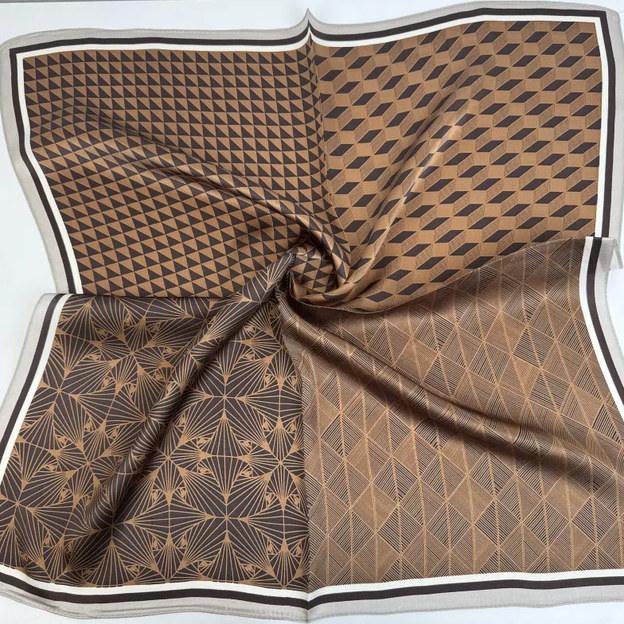
When the corners miss each other during folding, a customer may describe the scarf as twisted. The bright border draws attention to the miss, though there are two different histories behind it. The print may have been oblique on the original cloth, or the cloth may have changed during washing. A before-care record of that particular piece is what separates the two. An attractive replacement photograph tells them little about what happened inside the returned piece.
What Was Straight Before the Scarf Was Washed?
An unused lot sample is a comparison piece, not a record of the return before washing. During development, assign an identity to each article and photograph its unrestrained outline on the table before care. Include a scale and record which face is visible. Mark measurement locations using a suitable method that will survive the intended care process without altering the fabric.
Find the Cloth Directions Beneath the Print
Under magnification if needed, trace one set of yarns along the length and the other across it. A colored line provides no guarantee of following either one. Twill complicates this observation because its surface shows diagonal ribs even in undistorted cloth. The individual yarn directions are the references required here. Ask the fabric supplier or lab to identify them if the construction is too fine to resolve.
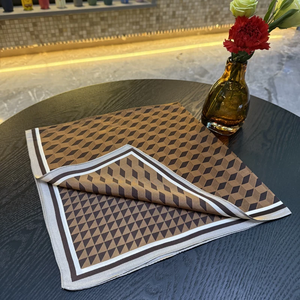
Give the artwork its own reference, independent of the yarn grid and finished edge. A tilted motif already present before care belongs in the original appearance record. A change in yarn alignment after care points to another investigation. With boldly bordered printed silk scarves, the graphic can dominate the photograph. Looking through it to the weave prevents that visual emphasis from becoming a diagnosis.
Does the Yarn Line Turn or Curve?
Do not pull a reluctant corner into alignment for the after-care photograph. Leave the dry cloth relaxed and follow a crosswise yarn across it. Look for a straight line at an oblique angle to the lengthwise yarns, or for a line whose direction changes across the width. The former suggests skew; the curved form is generally described as bow. Photograph both rather than grouping every distortion under “twisting.”
Measure Length and Width Without Forcing a Square
Measure between the same benchmarks used before care. Each direction uses its own starting measurement as the denominator. The calculation is 100 × (final length − initial length) / initial length. On that convention a shorter final length gives a negative percentage. Retain the readings from each location. Averaging first can obscure a change concentrated along one side.
Loss of width can change the proportions while leaving the yarn directions at right angles. There is dimensional change in that case without skew. An alignment change can also occur with little difference in the overall length. These are reasons to retain both observations. Matching a size specification alone does not establish that the finished shape has survived care.
Follow Distortion Along the Stitching
A narrow edge may contract or pucker differently from the body. Work inward from a puckered hem. A regular central grid beside a distorted edge makes sewing tension, thread response, and edge finishing worth comparing against the approved construction. Do not unpick the only complaint specimen immediately. Preserve photographs and measurements first, then use a separate development sample for any seam-release comparison. Releasing an edge changes the article being investigated.
Which Care Process Should the Comparison Use?
The label and agreed product specification come first. A design name can cover different substrates. Read the order and label together to establish the actual fiber and finish before selecting care conditions. Where dry cleaning is specified, damage during a machine-wash experiment says little about compliance with the labeled care route.
Follow the Sample Through Drying
Follow the specimen beyond the wash bath. A spinning operation, hanging weight, or a hot iron may influence what reaches the measurement table. Match detergent, agitation, load, extraction, and drying across the production and approval pieces. A shared water temperature alone leaves most of those variables open. Where the label calls for reshaping, record what the operation involves and photograph the piece on either side of it.
|
Reference |
Why it must remain identifiable |
|
Specimen and initial benchmarks |
Connects the after-care readings to the same piece of cloth. |
|
Wash or cleaning route |
Shows whether the treatment represents the permitted care. |
|
Drying and reshaping |
Reveals whether handling concealed or introduced a shape change. |
|
Yarn grid, border, and hem |
Separates fabric movement from print placement and edge restraint. |
Two AATCC methods concern the relevant measurements after home laundering: TM135 for dimensional changes of fabrics, and TM179 for skew change in fabrics. Ask the laboratory which edition and procedure fit the submitted construction. Neither a method title nor a public summary fixes the allowable change for this order. That acceptance limit still needs agreement, as does the applicability of a laundering procedure to the care label.
Which Retained Material Helps Locate the Change?
Wetting gives the fabric an opportunity to relax strain retained from manufacture. Yarn torque or distortion carried through finishing can contribute; restraint at the edge may affect the finished outline as well. The returned shape does not identify which source was responsible. If the yarn grid moves across the body, compare retained fabric before printing and finishing where available. An isolated curling edge calls for a closer comparison with the other edges and the approved sewing construction.
Put the Correction Through the Same Care Route
A newly pressed sample may look square on arrival and still repeat the problem after care. Return to the original benchmarks when evaluating its replacement. Retain individual results from several pieces where available rather than combining unlike specimens into one average. The question is whether the correction remains stable through the agreed care sequence. A neatly arranged photograph taken before that sequence cannot answer it.
Agree what the starting sample looks like and what change will be acceptable when it is dry again. Carry the measurement locations and assessment state into the custom development process with the artwork. Otherwise the signature approving color and placement can easily be mistaken for approval of post-care shape.
Which Printed Scarf Details Need Approval Before Production?
For printed scarf development, 彼女は信じる presents printing alongside woven and embroidered accessories. Its Chocolate Brown Geometric Scarf SHE-ZY-002623 is offered with digital printing and several dimensions. The page also contains silk and faux-silk wording, so the ordered substrate requires confirmation. Resolve that composition and its care label before agreeing a stability trial. The sampling brief can then identify the actual edge, marked specimens, and post-care shape limit alongside the selected artwork. The public listing supplies no order-specific skew result.
結論
The useful evidence is the change within the same identified scarf. An initial photograph needs the weave directions and finished outline as well as the colored motif. After care, revisit each of those references. “Twisting” can hide several observations in a return note. Record the actual size and alignment changes so a correction can be judged against them after drying. A pressed square on the inspection table is insufficient evidence that the next care cycle will preserve it.
FAQについて
1. Does a slanted printed border prove fabric skew?
No. Compare it with the yarn directions before and after care. The border may have been printed obliquely on otherwise straight cloth.
2. Can a scarf shrink without becoming skewed?
Yes. Length and width can change while the yarn systems remain aligned. Record that size change without calling it skew; a separate alignment observation is needed.
3. Should every printed silk scarf be machine-washed for approval?
The ordered construction and its confirmed label determine the care route. Machine laundering would not test compliance with instructions that permit only dry cleaning.


