

Custom Silk Scarves for Corporate Gifts: A Complete Sourcing Guide
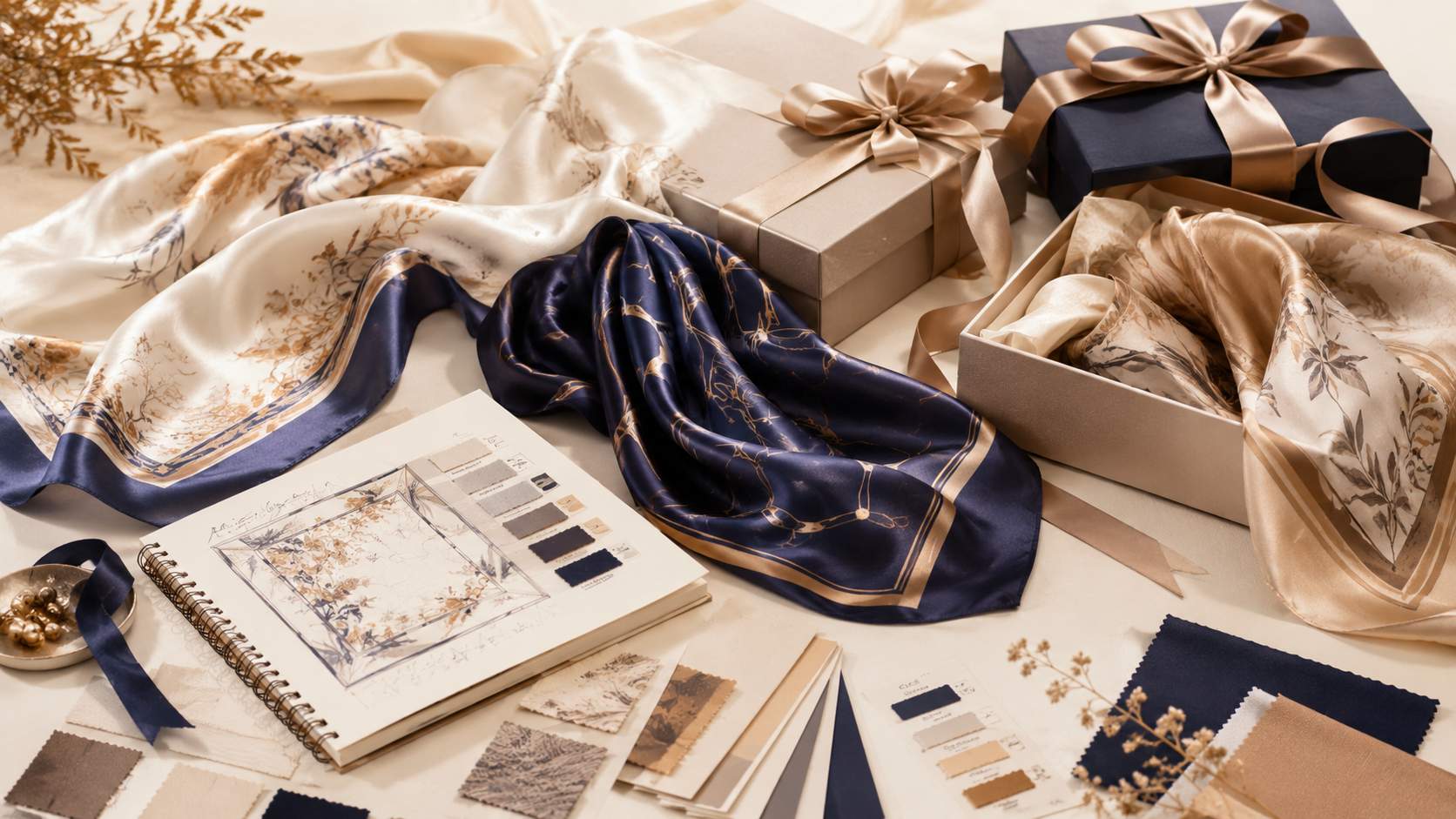
Custom silk scarves can be executive gifts, employee gifts, conference giveaways, and promotional items. However, a successful silk scarf order goes beyond a logo on fabric. The buyers determine, control, and manage the silk type, weight, size, printing, colors, edges, packing, and delivery time of the product. One should realize not all the scarf images on the website are in the same quality. Therefore, a scarf can appear perfect on the picture, but when ordered, turn out to be slightly thin, washed out colors on the back, or uneven edges.This guide covers what procurement teams should specify, check, and approve before bulk production begins.
What should buyers define before requesting a quotation?
A useful inquiry begins with the gifting context. Scarves for senior clients, employee programs, luxury events, and large conferences may require different materials, packaging, and budgets.
Which project details affect price and feasibility?
It is essential to provide the supplier with the following information: quantity, size, target material, weight, artwork, quantity of colors, logo size, edge finish, packaging, and deadline. In addition, it is necessary to clarify whether the design should be printed on one or both sides, how much reverse penetration is required (in case of fabric signs), and if it is needed to number each piece.
Usually, corporate programs require such an event to happen on a particular date; therefore, it is essential to work backward from that deadline. It will help to establish when it is reasonable to schedule the date of delivery to the supplier, leaving enough time for artwork approval, strike-offs, manufacturing, inspection, packing, and shipping. Note that deadlines are usually stressful, which rules out the possibility of resolving some issues concerning colors or finishing.
How should artwork be prepared?
Vector files are preferred for logos, borders, and geometric motifs because they scale cleanly. Raster artwork needs sufficient resolution at the final print size. Pantone references help communicate corporate colors, although silk may not match coated paper or a screen exactly.
Fine lines, small text, and low-contrast details should be reviewed at actual size. A digital mockup shows placement; it does not prove ink spread, reverse appearance, or legibility after hemming.
Which silk materials and construction specifications affect quality?
“Silk scarf” is not a complete specification. Fiber content, weave, fabric weight, surface character, and dimensions all influence drape, opacity, color, and perceived value.
How do common silk fabrics differ?
Silk twill is distinguished by the diagonal, a solid pattern, bright colors, and high-quality appearance, which are mostly preferred in corporate scarves. Satin silk differs in its softness, smoothness, density, and brightness of the surface, but at the same time, its vulnerability to damage during use. The crepe silk fabric has a soft and fluffy surface, while habotai is quite light and silky. In addition, habotai is mainly used when a lighter version of raw silk is needed.
It is important to clarify the composition and construction of the silk scarf with the supplier. Often mixed or polyester fabrics imitate the appearance of silk, but they have different qualities, handling, static electricity, and temperature characteristics, and costs. In this case, it is crucial that the description of materials corresponds to quotation documents, samples provided, labels on the goods, and invoices.
Why do momme, dimensions, and tolerances matter?
Momme is commonly used to describe silk weight. A higher value generally means more fabric mass, but it does not automatically mean a better scarf. The suitable weight depends on weave, size, print method, season, and desired drape.
Finished dimensions should account for rolled or machine-stitched hems. Buyers should define acceptable length, width, squareness, and diagonal variation. Small dimensional changes become obvious when scarves are folded into presentation boxes or worn as uniform accessories.
Which printing and finishing options suit corporate gifts?
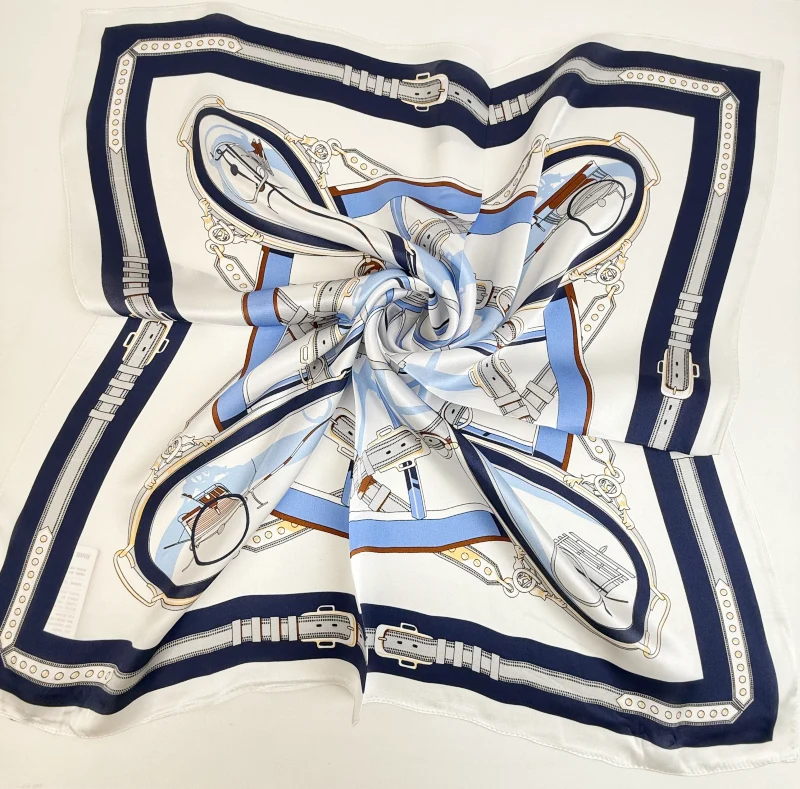
Printing method determines color range, reverse appearance, setup cost, minimum quantity, and design flexibility. The choice should follow the artwork and expected presentation.
When should screen or digital printing be considered?
Screen printing can suit designs with controlled color counts and larger runs. It may deliver strong color and good penetration when matched to the fabric, but each color requires separate preparation and alignment.
Digital printing works well for gradients, photographic effects, detailed artwork, and lower-volume customization. Results still depend on fabric preparation, ink, profiling, fixation, and washing. Buyers should inspect a physical strike-off under normal indoor light and daylight before approval.
Which edge finishes and packaging details affect presentation?
Hand-rolled edges create a traditional finish with visible craft variation. Machine-rolled or narrow machine hems offer more consistent output for larger programs. Specify the thread color, the density of the stitch, the processing of the corners, and the allowable deviation.
The packaging can include various packaging tools: sleeves, envelopes, boxes, tissue paper, care instructions, and inserts. The packaging must provide the scarf with protection from damage, bruising, moisture, and color transfer during storage or transportation. The barcode, name of the recipient, and event-specific inserts must be approved.
How should buyers control sampling, production, and delivery risks?
A pre-production sample should represent the actual fabric, print method, edge finish, label, and packaging. It becomes the reference for bulk manufacturing.
What should be checked during sample approval?
Inspect color, registration, reverse penetration, fabric hand, dimensions, hem width, corner shape, label position, and package fit. View the scarf fully unfolded, not only inside the box.
Color approval should state the lighting conditions and acceptable tolerance. Silk sheen, weave direction, and surrounding colors can affect perception. Also check for ink transfer, loose threads, stains, pulls, and distortion after handling.
Which production failures are common?
Typical problems include batch color variation, misaligned borders, uneven hems, needle damage, size variation, contamination, wrong labels, and crushed packaging. Silk is sensitive to rough handling, so worktables, needles, and packing areas need careful housekeeping.
Inspection should sample pieces from different cartons and production stages. The checklist should cover appearance, dimensions, workmanship, quantity, packaging, and carton markings. Destination-market chemical or labeling requirements should be identified before production.
What should procurement teams verify when evaluating a scarf supplier?
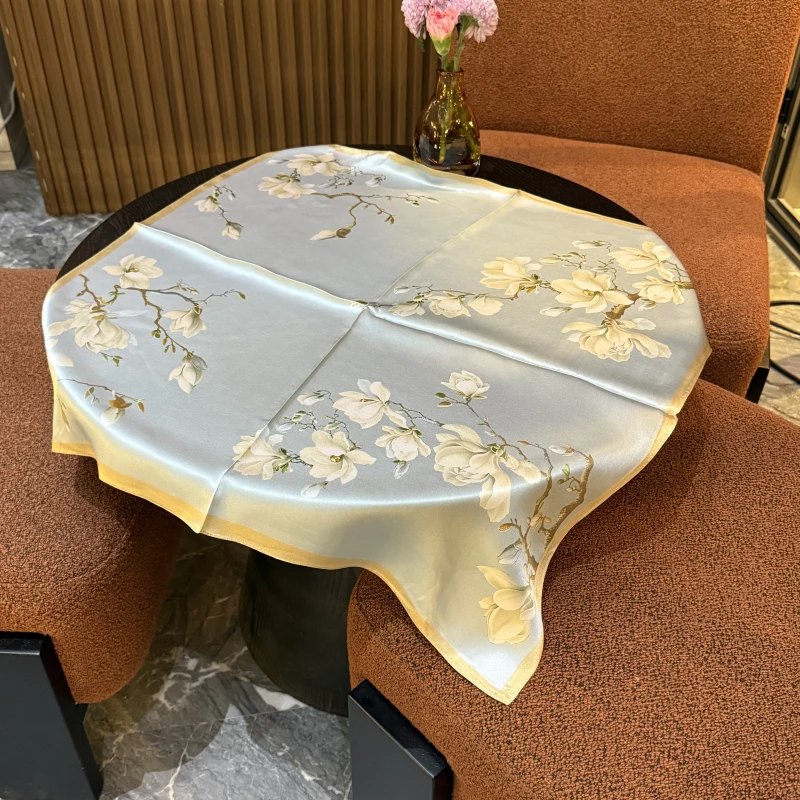
A suitable supplier should provide clear specifications, realistic lead times, controlled sampling, and repeat-order consistency. A broad catalog is less useful if the factory cannot explain fabric, printing, and finishing details.
Which documents and capabilities reduce sourcing risk?
Request fabric specifications, artwork requirements, color approval procedures, sample timing, production lead time, packaging details, inspection criteria, and change-notification rules. Ask whether printing, hemming, labeling, and packing are handled internally or subcontracted.
A trial order can reveal communication quality, color control, packaging accuracy, and delivery discipline. Retain the approved scarf, strike-off, fabric swatch, packaging sample, and final artwork for later comparison.
Which commercial terms deserve attention?
Confirm minimum order quantity by design, setup charges, sample fees, payment terms, shipping method, carton dimensions, and responsibility for replacements. Repeat orders may need renewed color approval when fabric or ink lots change.
Procurement teams should also clarify ownership of custom artwork and printing screens where applicable. Confidential designs, employee names, and event details should be handled through controlled files and approved access.
How can a custom scarf supplier support corporate gifting projects?
She Believes offers custom silk scarves for corporate events, gifts, uniforms, and other personalized products. A buyer can choose the size of the scarf, the silk type, the weight of the fabric, the image, color, printing technology, edge finishing, presentation, quantity, and the delivery time. The sample shall be checked for color, backside penetration, silk fabric, size, hemmed edges, label location, and presentation. Quotations should identify material construction, setup charges, sample timing, production lead time, packing method, and inspection criteria. Before bulk production, both parties should approve the final artwork, physical sample, color reference, packaging layout, carton marks, shipping labels, and change-notification requirements for repeat orders and future seasonal programs.
Conclusion
Custom silk scarves for corporate gifts need coordinated management of materials, artwork, printing, finishing, packing, and timing. First of all, the buyer should clearly define the purpose of gifting and approve the production samples made of intended fabric. Then, it is essential to agree on the allowable tolerance of dimensions, colors, inspection criteria, and repeat order controls to avoid disputes. Finally, note that the selection of a silk scarf supplier depends not on the lowest price per unit but on the ability to meet the approved product description and presentation requirements.
FAQs
1. What silk weight is suitable for custom corporate scarves?
The suitable momme depends on scarf size, weave, season, print method, and desired drape. Buyers should compare physical swatches rather than select weight from a number alone.
2. Is digital printing suitable for company logos and detailed artwork?
Yes. Digital printing can reproduce gradients, fine detail, and multiple colors, but buyers should approve a physical strike-off because silk sheen and fabric preparation affect the final appearance.
3. How long does a custom silk scarf order usually take?
Timing depends on artwork approval, sampling, quantity, printing, hemming, packaging, and shipping. Buyers should request a project schedule and include time for sample corrections before production.
4. What should be inspected before accepting bulk scarves?
Check color, print alignment, dimensions, fabric defects, hem width, corners, loose threads, labels, packaging, quantity, and carton markings against the approved sample and written specification.
5. Can custom silk scarves be packed as ready-to-give corporate gifts?
Yes. Scarves can be packed with boxes, sleeves, tissue, care cards, branded inserts, or recipient labels. Packaging should be sampled and approved with the finished scarf before bulk packing.


