How to Design Custom Scarves for Airline Cabin Crew and Luxury Hospitality Brands
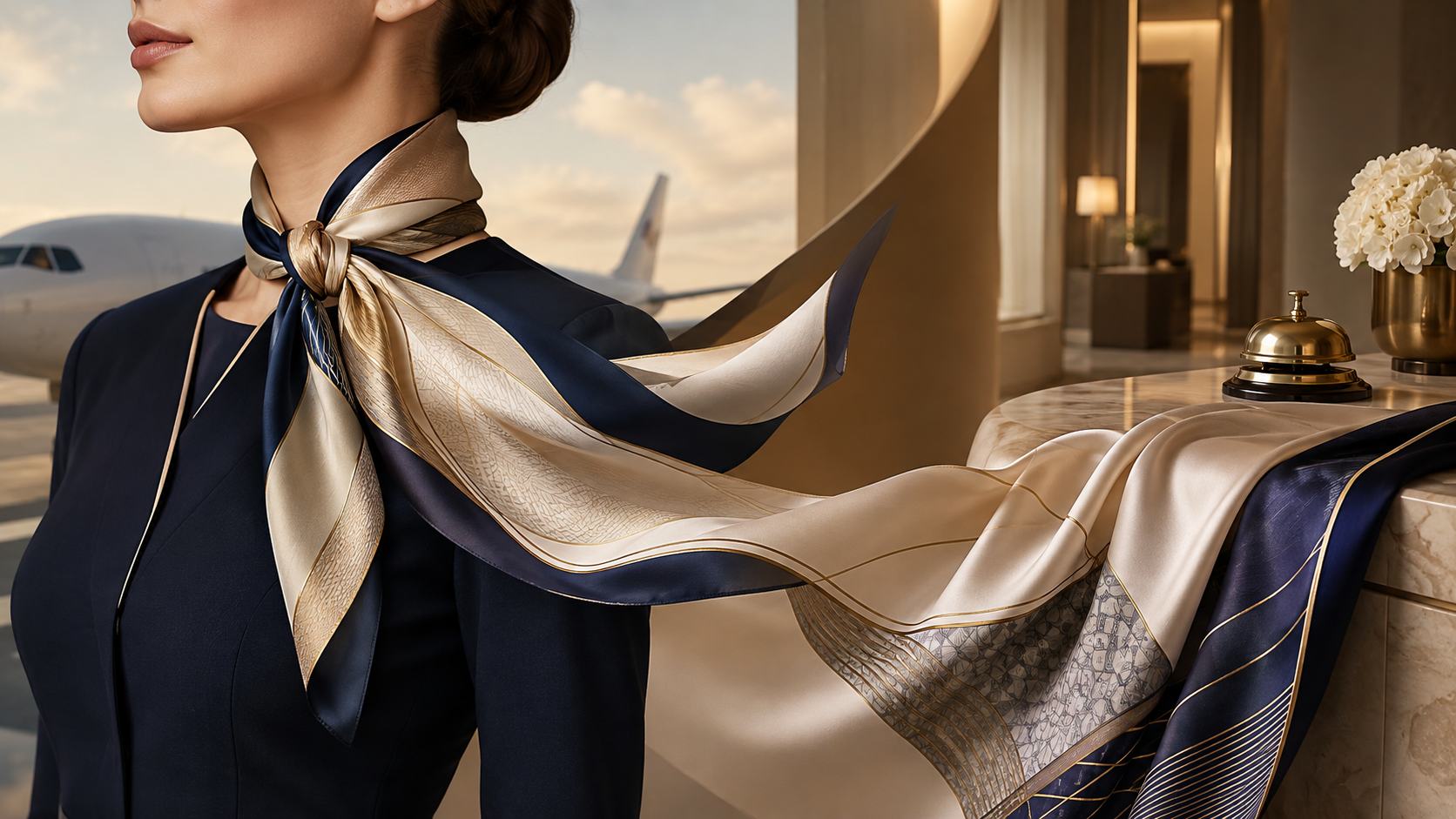
A uniform scarf looks simple until it has to work across hundreds of people, repeated laundering, different climates, strict brand colors, and several ways of tying it. That is why custom scarves for airline cabin crew and luxury hospitality brands should be developed as part of the uniform system rather than treated as a last-minute fashion accessory. Material, size, print method, edge finishing, logo placement, and care requirements all affect the final result. The supplied product documentation does not define airline- or hotel-specific uniform regulations, so operational, safety, and laundering requirements should be confirmed by each buyer and written into the design brief before sampling begins.
How Should the Design Brief Change Between Airline Cabin Crew and Luxury Hospitality Teams?
The starting point is not the scarf artwork. It is the environment in which the scarf will be worn.
Start with the uniform and the way the scarf will actually be worn
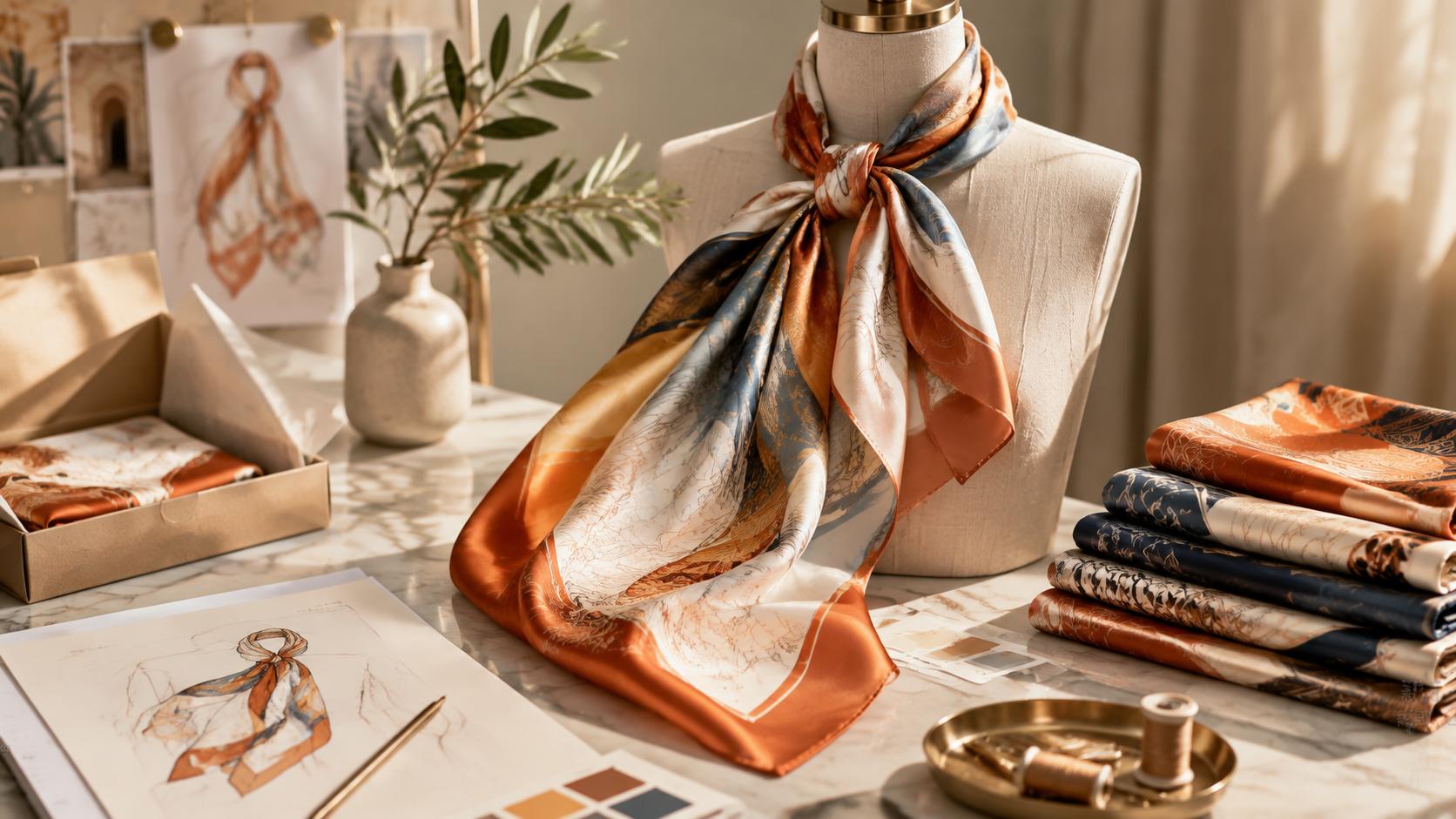
For cabin crew, a scarf normally needs to sit neatly with a structured uniform and remain visually consistent when different employees tie it. A complicated design can look attractive when laid flat but lose its identity once folded around the neck. The artwork should therefore be reviewed in its folded and tied form, not only as a full square graphic.
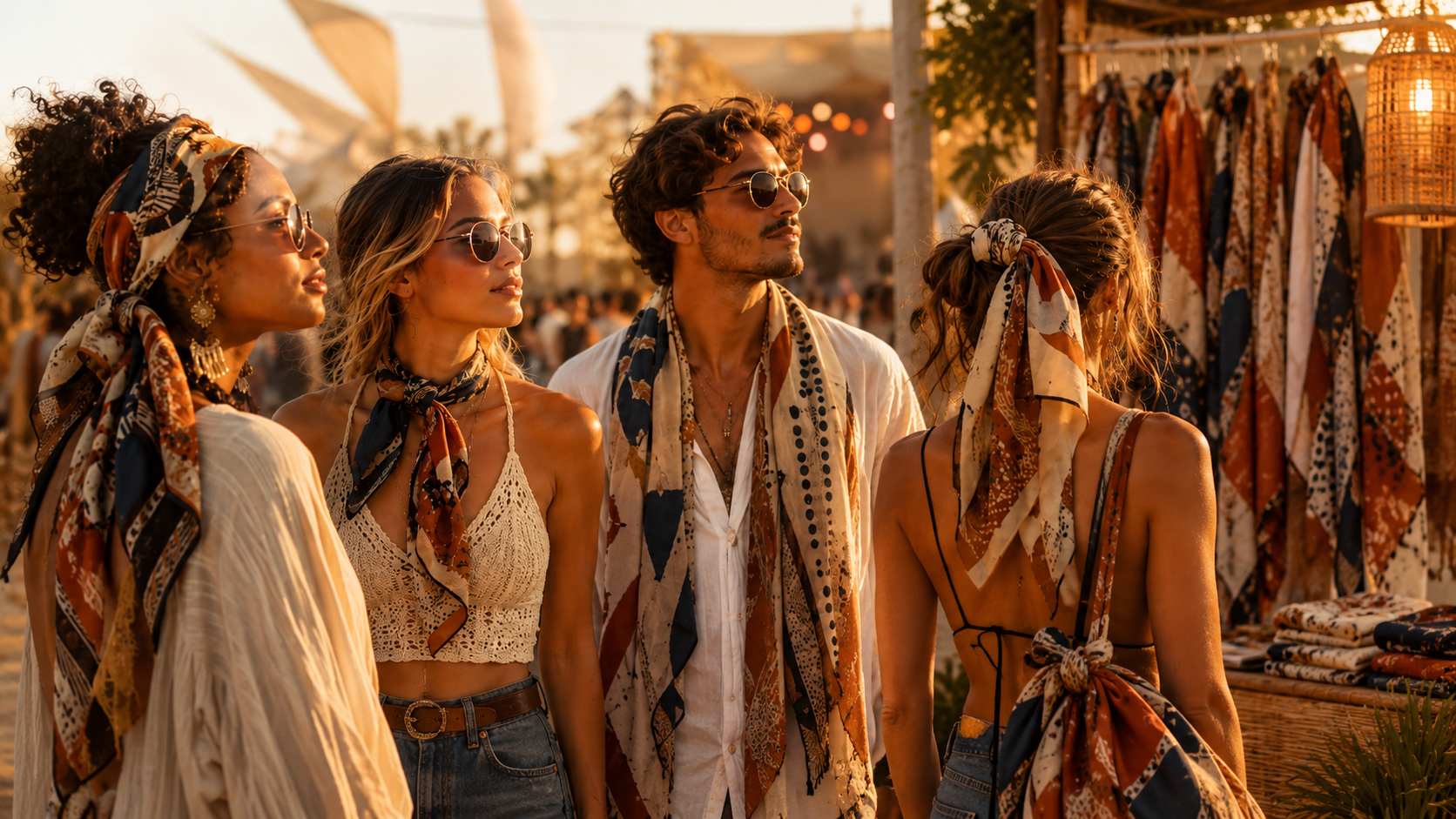
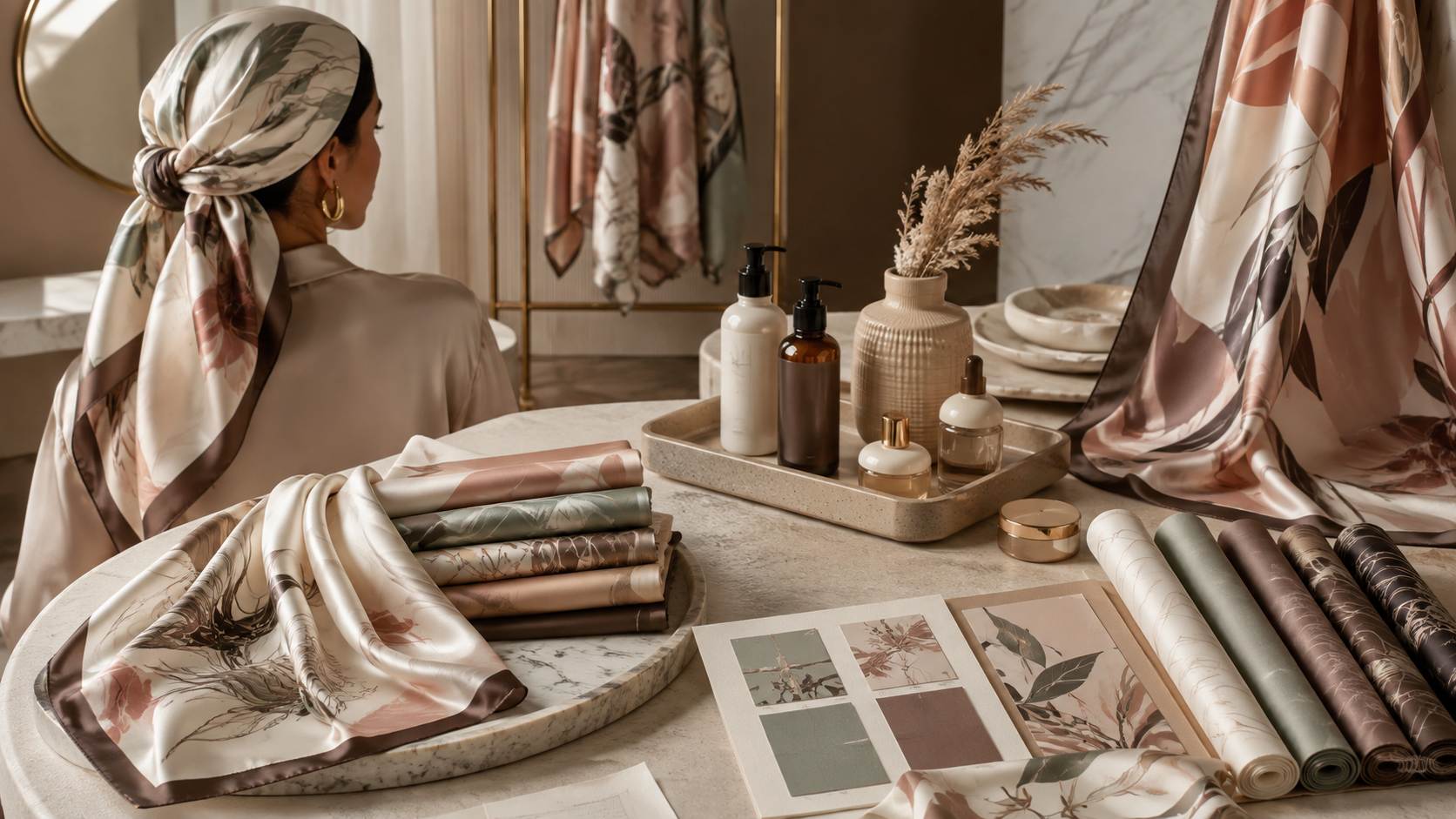
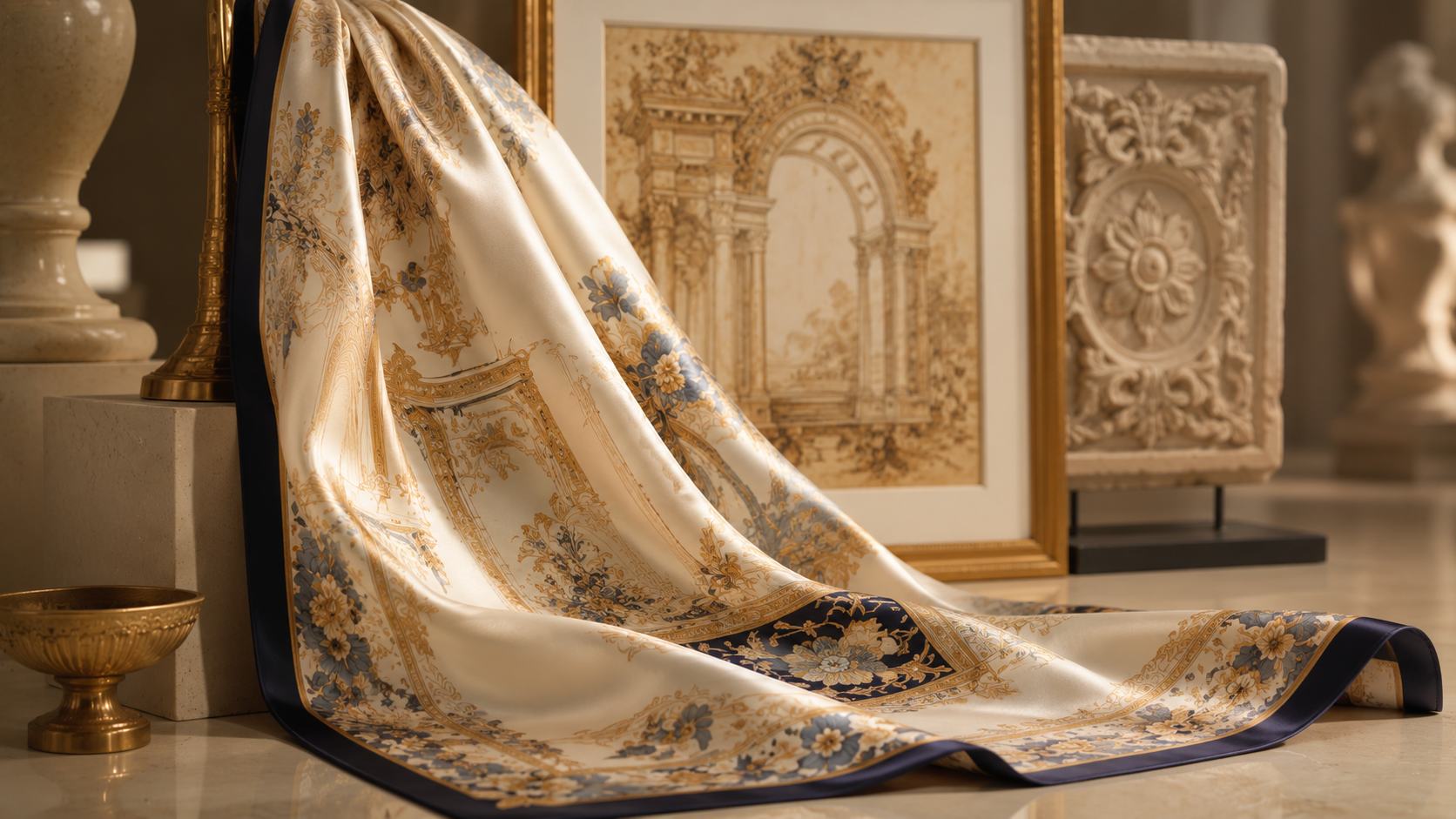
Luxury hospitality programs can allow more visual flexibility. A hotel, restaurant, spa, or guest-relations team may want the scarf to echo an interior color, architectural motif, floral theme, or broader brand story. Even then, a staff scarf still needs repeatability. A pattern that changes dramatically depending on the fold can make one uniform look inconsistent with another.
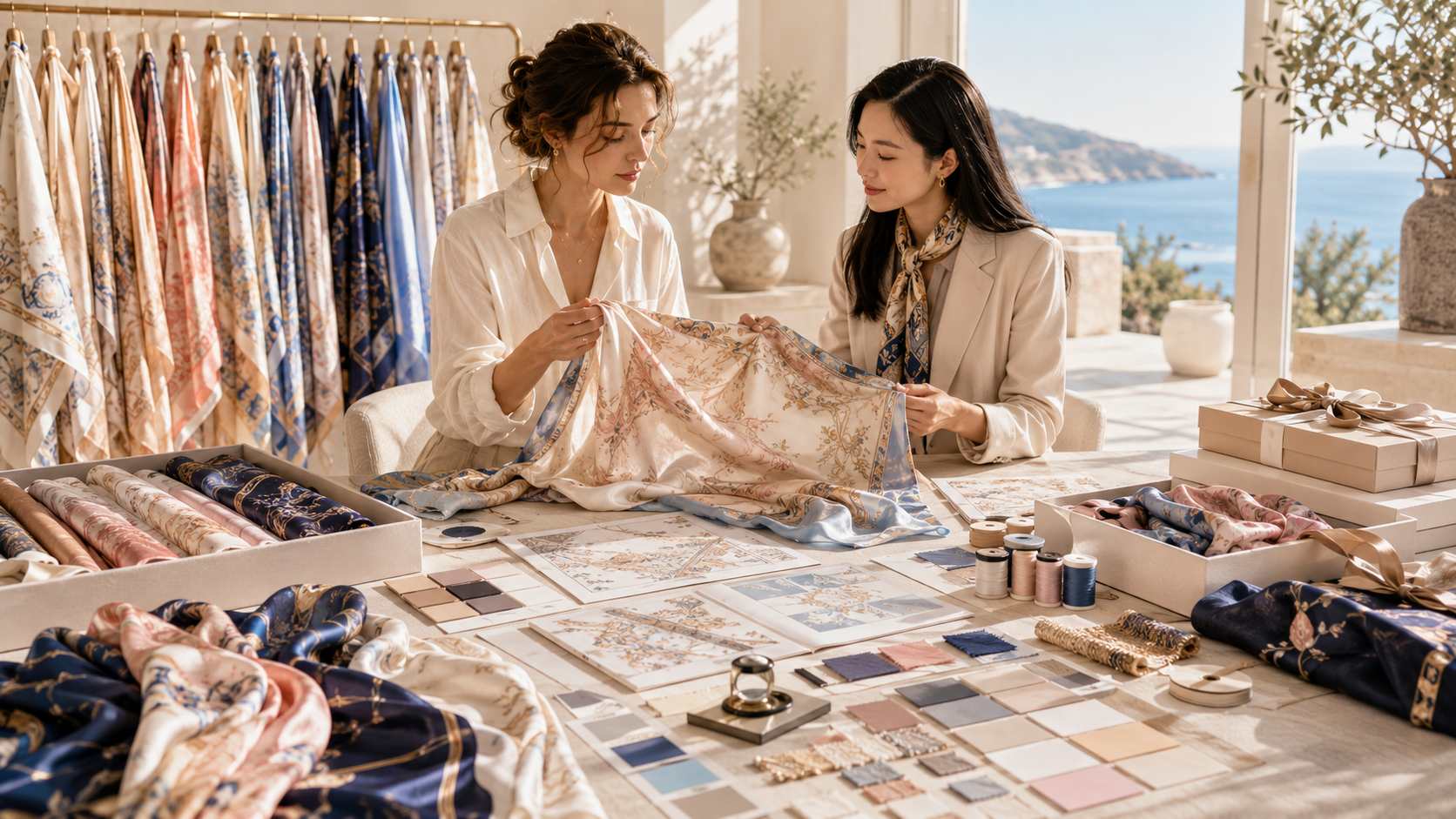
Before artwork is approved, define the uniform color, intended wearing method, scarf shape, dimensions, seasonal environment, logo position, care method, and whether employees need one tying style or several. That brief gives the manufacturer something measurable to sample against rather than relying on subjective descriptions such as “elegant” or “premium.”
Which Materials Balance Appearance, Comfort, and Daily Maintenance?
Material choice determines far more than price. It changes luster, drape, warmth, maintenance, color behavior, and how the scarf feels against the neck during extended wear.
When does silk make sense?
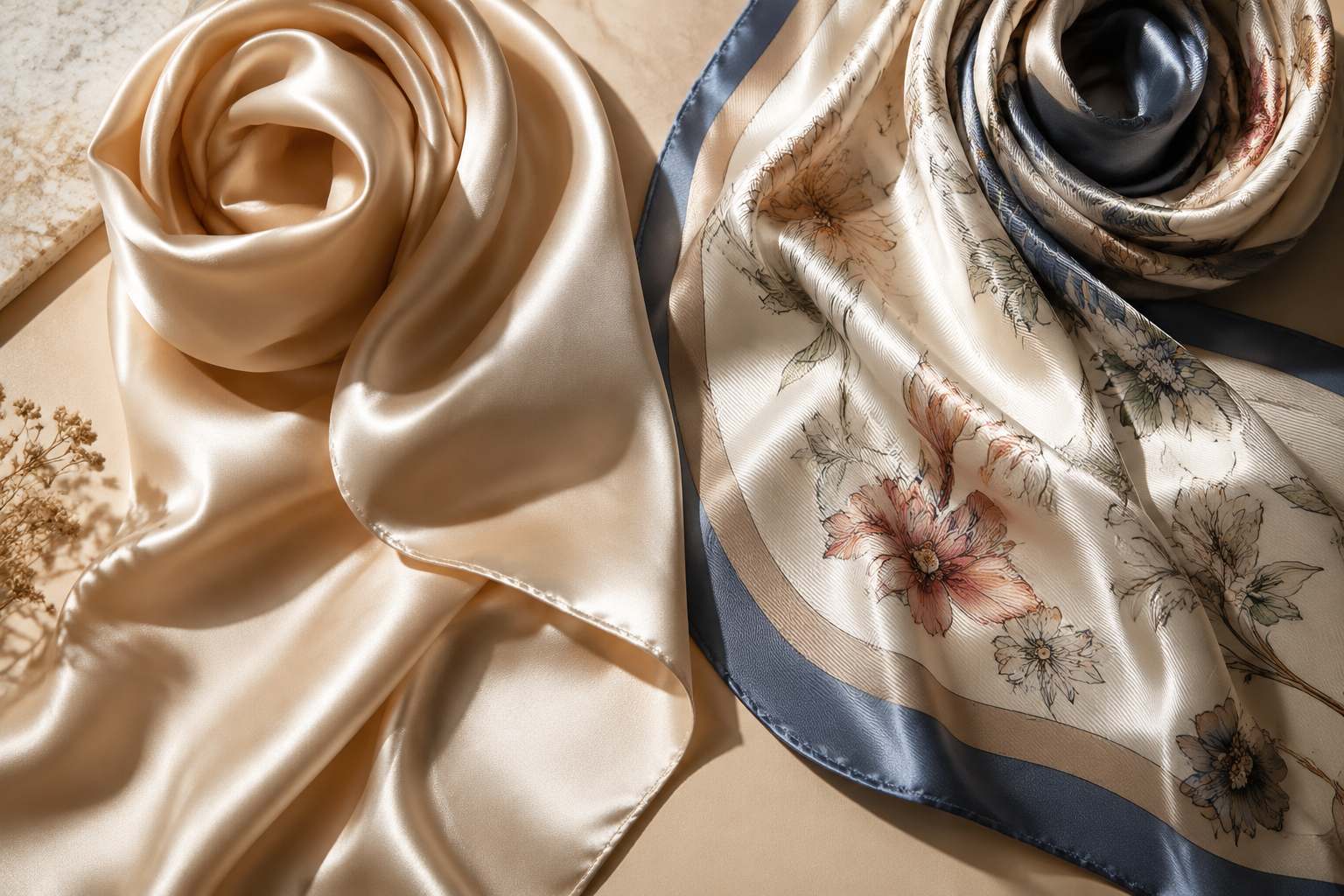
Silk is particularly relevant where surface appearance and hand feel carry more weight. The product documentation describes silk as smooth and skin-friendly, with noticeable natural luster and temperature-regulating properties. Those characteristics make it worth considering for guest-facing luxury uniforms and refined cabin-crew styling where a polished visual finish is important.
Silk, however, should not be selected from appearance alone. Buyers also need to establish an acceptable care routine and check how the chosen construction behaves after repeated handling.
When is polyester the more practical choice?
Polyester takes a different approach. According to the material documentation, it has strong shape retention, good resistance to wrinkles and wear, low shrinkage, quick drying, and relatively stable color. Those properties can make it practical for uniform programs where replacement cost and maintenance matter. Its trade-offs are also clear: lower moisture absorption, greater static tendency, and a hand feel that may not match natural fibers.
There is no universal “luxury material.” A hospitality buyer may prefer silk because touch and luster support the desired brand image, while another uniform program may prioritize polyester because operational maintenance is more important. Material should follow the use case.
Wool scarves are another documented option, particularly where warmth matters. Wool offers insulation, elasticity, and durability, but ordinary wool can feel prickly and requires more careful washing.
How Should Color, Pattern, Logo, Size, and Edge Finishing Be Specified?
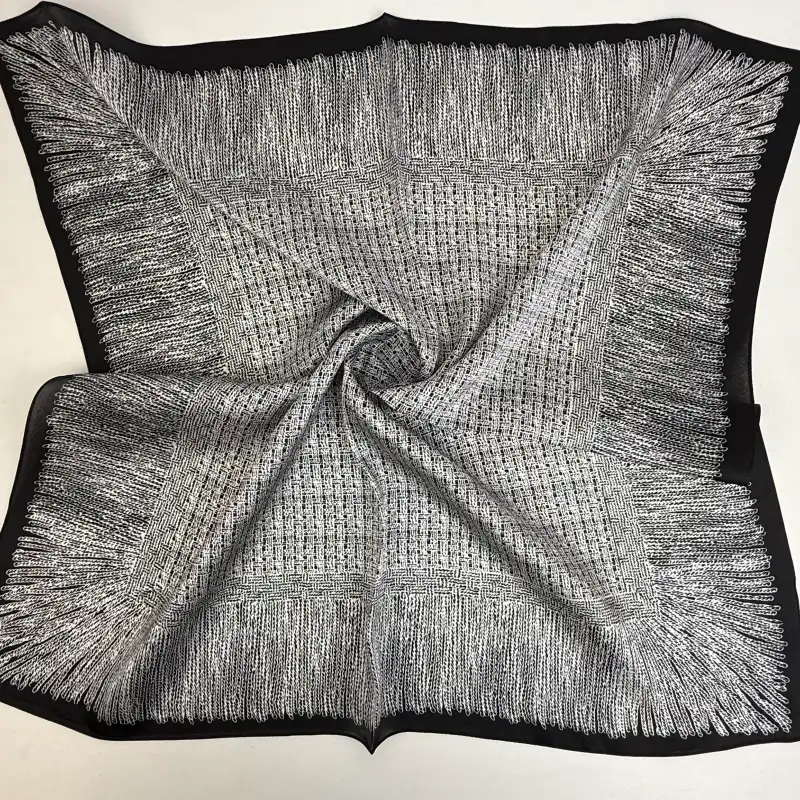
Once the material is chosen, small construction decisions begin to determine whether the scarf looks like a genuine brand asset or generic merchandise.
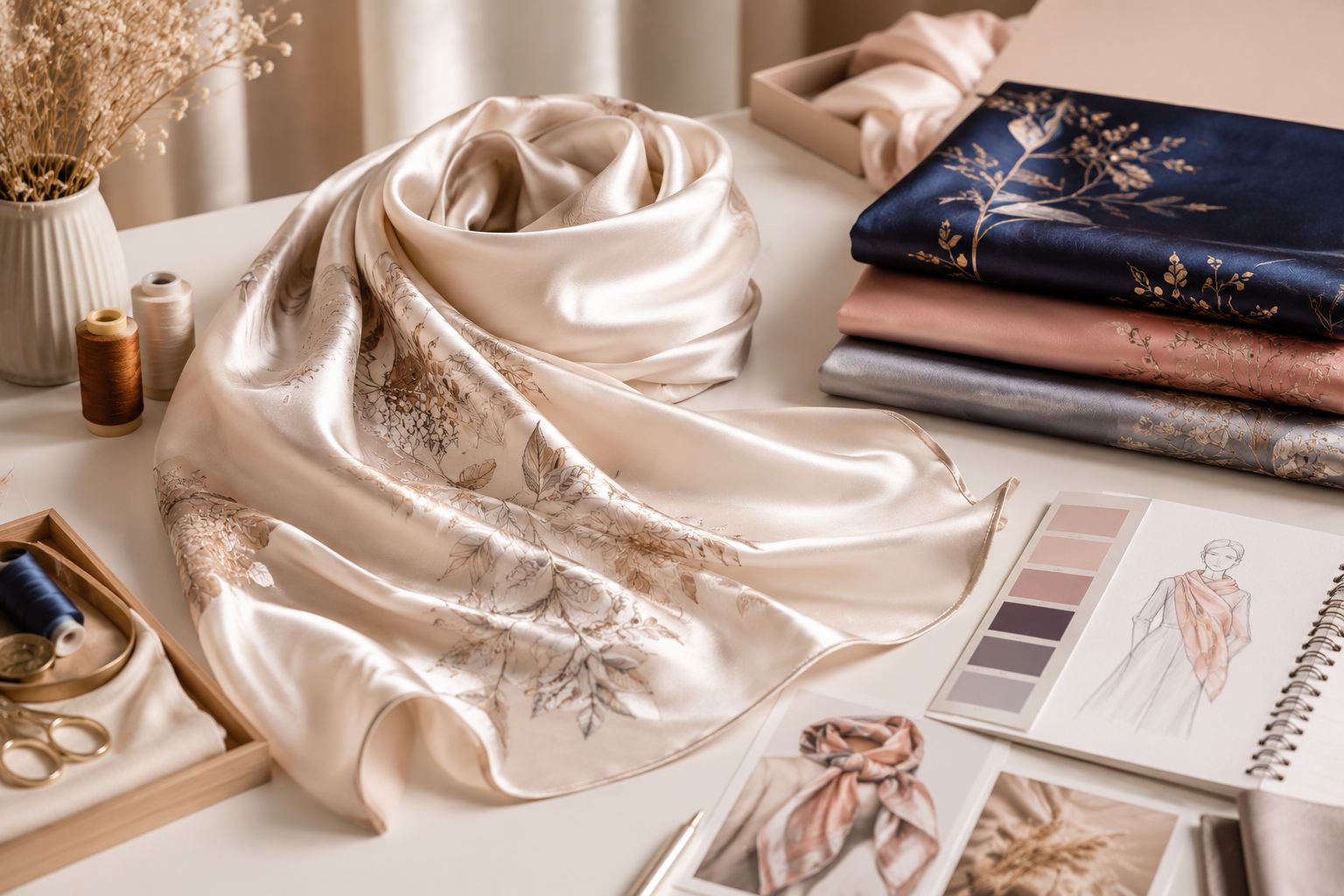
A custom scarf specification should identify more than “brand blue” or “logo in the corner.” It should establish the artwork file, pattern scale, orientation, dimensions, logo method, label requirements, edge construction, and approved color reference.
Choose the decoration method according to the artwork
Printing is well suited to colorful and flexible pattern development. The production documents identify digital printing as an option for detailed imagery, complex patterns, and gradients. Embroidery works differently: it creates decoration with thread and adds physical texture to the textile.
That difference matters. A small embroidered symbol may provide a tactile branded detail, while covering a lightweight scarf with dense embroidery may change its drape. For repeating motifs, illustrated patterns, or multi-color graphics, printing may preserve a lighter feel.
Logo customization can also extend beyond the visible pattern. The supplied customization information includes printing, embroidery, woven labels, care labels, hangtags, and packaging among the variables that can be specified for a custom order.
Do not treat the hem as an afterthought
The edge is visible every time the scarf is tied. For silk scarves, a hand-rolled hem creates a narrow, soft, rounded edge and is identified in the process documentation as a characteristic finishing method for higher-end silk scarves. Machine binding is more efficient and durable but produces a firmer edge because several layers of material and stitching overlap.
The right choice depends on the desired appearance, material, budget, and expected handling.
What Should Buyers Approve During Sampling and Quality Control?
A pre-production sample is useful only when the buyer knows what is being approved. “Looks good” is not a sufficient acceptance standard for a uniform program.
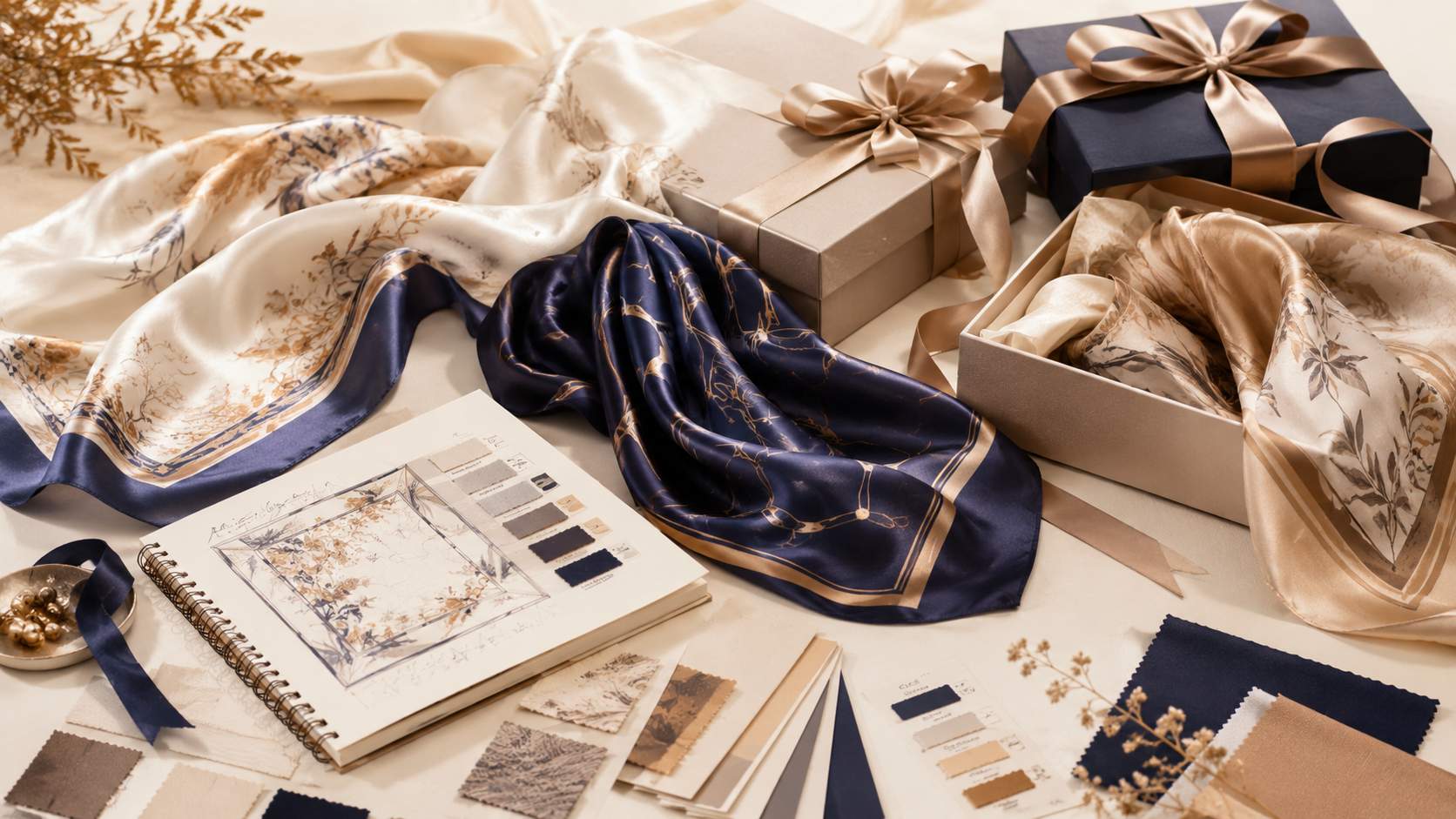
Start with the fundamentals: material composition, scarf dimensions, color, pattern position, logo scale, hem appearance, labels, packaging, drape, and the way the scarf looks when tied with the actual uniform. Photographing the approved tying method can also give purchasing and production teams a useful visual reference.
Color deserves particular attention. The supplied quality documentation describes internal color-fastness checks covering washing, friction, and light exposure. Those checks matter because a uniform accessory should not be evaluated only when it is new.
If laundering is part of the operational brief, buyers should also approve the product after the agreed care method rather than evaluating only the untouched sample. The acceptance criteria should match the material: wool and silk have different care considerations from polyester.
Production control should continue after sampling. The documented quality system covers raw-material inspection, in-process inspection, and finished-product inspection. Finished items may also pass through thread trimming, re-ironing, secondary inspection, care-label attachment, and packaging according to customer requirements.
The practical lesson is simple: approve measurable details before mass production, then ask the supplier how those same details are controlled across the full order.
How Do You Evaluate a Custom Scarf Manufacturer Beyond Unit Price?
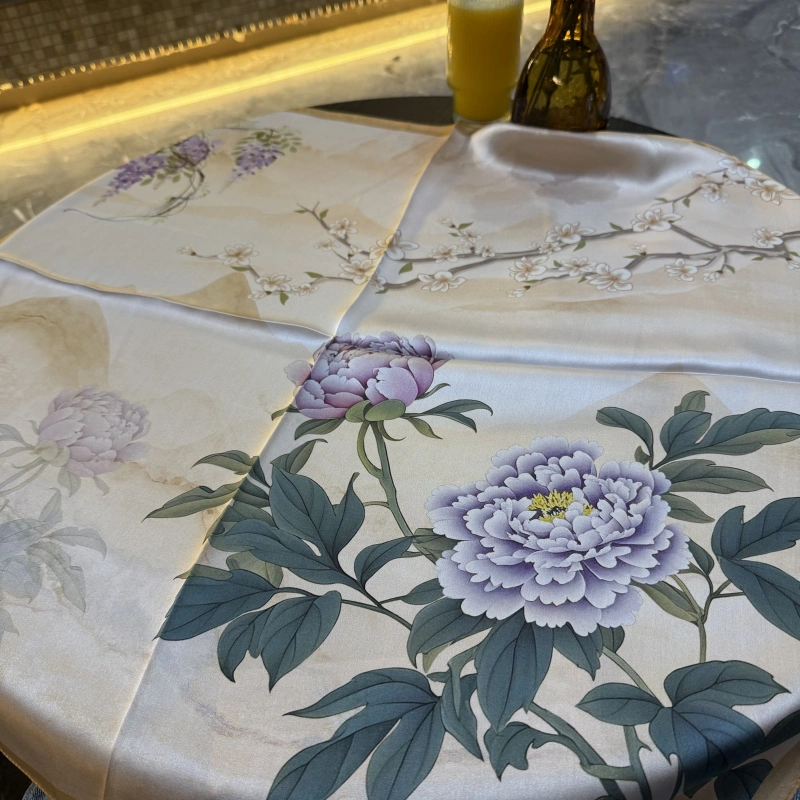
Two suppliers can quote similar scarves while offering very different levels of development support.
For a branded uniform project, ask first whether the factory works as OEM, ODM, or both. An OEM project is suitable when your artwork and specifications are already fixed. ODM support becomes more useful when the brand has a concept, target audience, or visual direction but still needs help translating that idea into pattern, style, material, and packaging.
Next, examine how sampling is handled. A capable supplier should be able to explain what must be confirmed before proofing, how revisions are recorded, and which specifications will become the reference for production.
MOQ also needs to be discussed in context. The supplied customization documentation notes that custom-order quantities can vary according to material, printing method, scarf size, logo treatment, labels, and packaging. A single headline MOQ therefore tells a buyer very little without knowing the exact construction.
Finally, review confidentiality, material inspection, color control, finished-product inspection, custom labeling, and packaging capability. These details affect a uniform program long after the initial quotation has been approved.
Who Can Support Custom Scarf Development for Uniform Programs?
Ela acredita is a custom shawl and scarf manufacturer with fifteen years of production experience. Its documented scarf range includes silk scarves, wool scarves, seasonal scarves, and triangular scarves, alongside broader shawl manufacturing capabilities. The company provides OEM and ODM development, small-batch customization, sampling support, digital printing, embroidery, woven and care labels, and custom-branded packaging. Its production documentation also describes raw-material inspection, in-process quality control, finished-product inspection, and a confidentiality policy for customer designs. For brands developing uniform accessories, these capabilities allow material selection, pattern development, branding, sampling, inspection, and packaging to be coordinated within one sourcing process.
Conclusão
Designing custom scarves for airline cabin crew and luxury hospitality brands requires more than selecting an attractive pattern. Buyers need to connect material, drape, color, logo treatment, size, edge finishing, maintenance, and quality control to the actual uniform environment. Silk, polyester, wool, printing, embroidery, and different finishing methods each involve practical trade-offs. A clear specification, an accurately reviewed sample, and a supplier capable of controlling the approved details through production will reduce avoidable revisions and purchasing risk.
FAQ
1. What is the best material for custom scarves for airline cabin crew and luxury hospitality brands?
There is no single material for every program. Silk emphasizes smoothness and luster, polyester favors durability and easier maintenance, while wool is more suitable when warmth is an important part of the uniform brief.
2. Should a branded uniform scarf use digital printing or embroidery?
Digital printing suits detailed, colorful, or gradient artwork. Embroidery creates a more tactile decorative element but adds thread and structure, so buyers should check how the chosen embroidery density affects the scarf’s drape.
3. What should be approved in a pre-production scarf sample?
Approve material, dimensions, color, pattern placement, logo scale, edge finishing, labels, packaging, and tied appearance. Where care performance matters, evaluate the sample using the laundering method specified for the uniform program.
4. Why can the MOQ for custom scarves vary between designs?
MOQ can change with material, size, printing technique, embroidery, custom labels, and packaging requirements. Buyers should request an MOQ based on the final specification rather than comparing suppliers using a generic minimum-order figure.
5. Is a hand-rolled hem worth specifying for a custom silk scarf?
A hand-rolled hem creates a narrow, soft, rounded edge associated with refined silk-scarf finishing. Whether it is worth specifying depends on the desired appearance, project budget, material, and expected level of daily handling.