

Wholesale Fashion Accessories to Add Alongside Silk Scarve
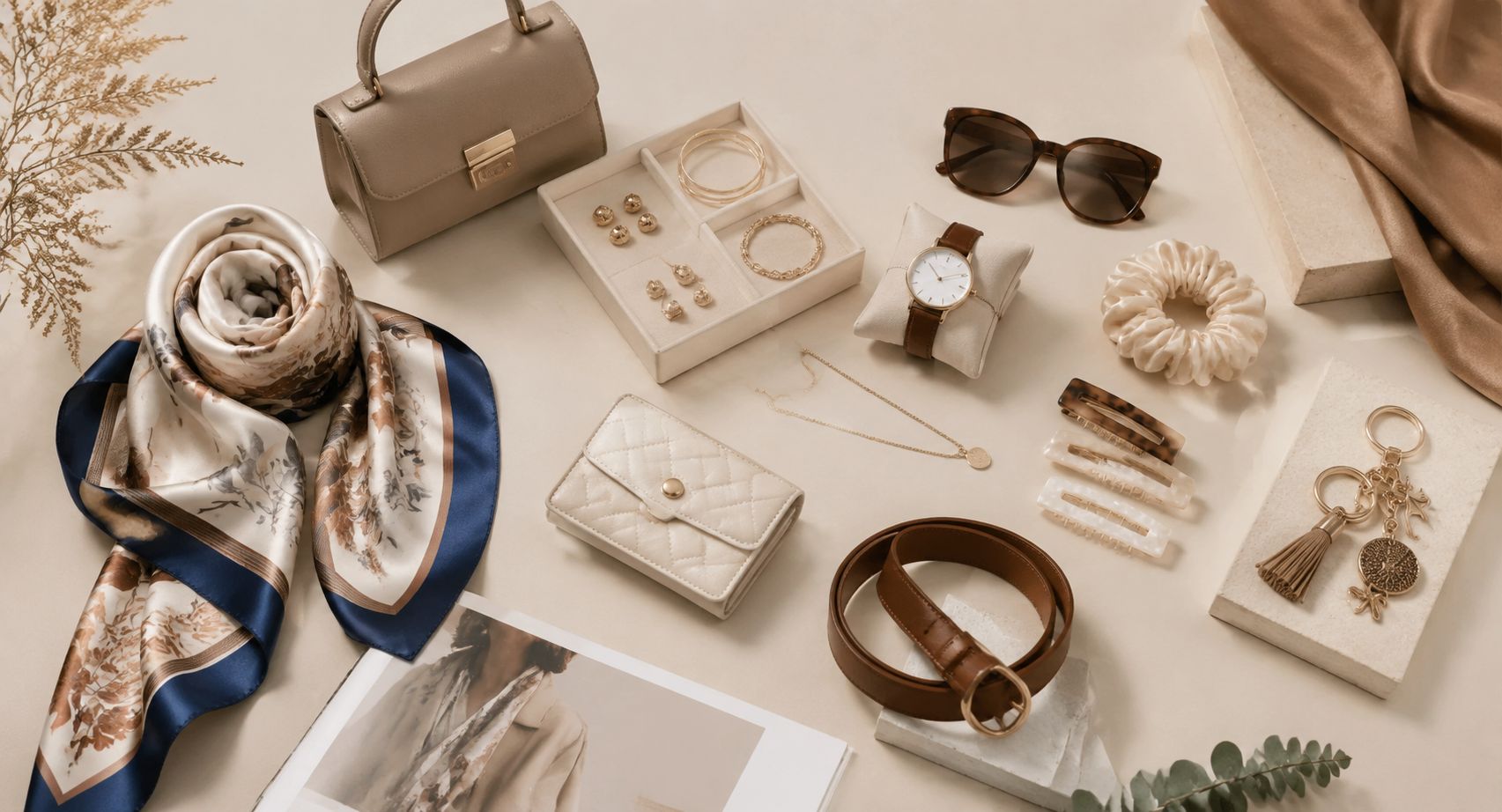
İpek eşarplar rarely sell in isolation. Buyers often want a coordinated gift, an easy add-on, or a lower-priced item that carries the same print story. The right wholesale fashion accessories can extend a scarf collection without forcing a retailer to manage unrelated materials, colors, and packaging. The strongest additions share artwork, fabric, or styling logic with the core range while serving another use occasion. Assortment value depends on repeatable color, practical minimums, clean finishing, and coordinated packaging.
Which wholesale fashion accessories fit naturally beside silk scarves?
The most efficient extensions are easy to understand. They should reuse scarf fabric or make the scarf easier to wear, store, or give.
Why do silk scrunchies and hair accessories work well?
Scrunchies, covered headbands, hair bows, and narrow hair ties can reuse colors or motifs from a scarf collection. Their smaller size creates an accessible purchase and can use fabric efficiently, although repeat orders should not depend on uncontrolled remnants.
Specify elastic recovery, seam construction, finished diameter, and gathering. Weak elastic loses shape quickly; excessive tension feels uncomfortable. For headbands, inspect frame flexibility, end wrapping, padding, and adhesive marks.
Where do twillies, neckerchiefs, and pocket squares add value?
A narrow twilly can be worn on the wrist, hair, handbag handle, or neck. Pocket squares bring the same artwork into menswear, uniforms, and corporate gifting. Small neckerchiefs suit casual retail ranges and staff styling.
These products can share print files with larger scarves, but artwork needs resizing rather than simple cropping. Review borders, motif scale, and logo placement at finished size; a balanced square design may look crowded on a narrow strip.
Which small accessories can increase basket value without complicating inventory?
Add-ons work when they display easily and coordinate across several scarf designs. Two practical groups are scarf hardware and textile storage items.
Are scarf rings, clips, and brooches worth adding?
Scarf rings and clips give buyers another way to style a square scarf without tying a complex knot. Simple metal rings can serve several collections. Decorative brooches strengthen gift presentation but add more parts and inspection points.
Procurement teams should define metal composition, plating finish, dimensions, weight, edge smoothness, closure force, and contact surfaces. Rough seams or sharp edges may snag silk. Plating color should be checked under normal retail lighting, and moving parts should be tested repeatedly before approval.
Why do pouches and tote bags pair well with scarves?
A soft pouch protects a scarf during travel and can become part of the gift set. Tote bags provide a larger branded item for events, stores, and promotional programs. Both create space for coordinated artwork without repeating the exact scarf construction.
Material choice should follow use. A drawstring pouch needs smooth interior seams and colorfast cords. A tote requires controlled fabric weight, handle strength, stitching, and print adhesion. Plan packaging early so the scarf is not crushed.
How should buyers coordinate materials, colors, and price points?
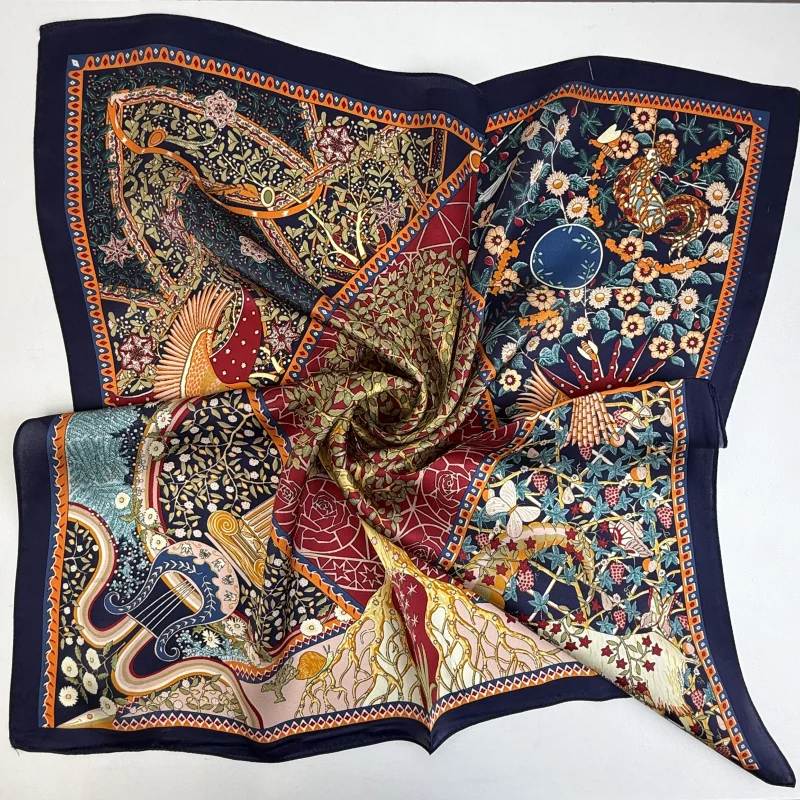
A coordinated collection need not make every piece identical. One repeated border color, motif, or hardware finish can connect the range.
Should every accessory use real silk?
Not necessarily. Silk works well for premium scrunchies, twillies, and pocket squares, but cotton, recycled polyester, nylon, or blended fabrics may suit totes, pouches, and lower-priced accessories. The choice depends on hand feel, durability, care, print method, and target margin.
Material descriptions must remain accurate across labels, invoices, and listings. In the United States, many textile products require disclosure of fiber content, country of origin, and the responsible business; applicability should be checked by accessory category.
How should an assortment be tiered?
A practical range can use three levels. Small hair accessories or rings sit at an impulse price. Twillies, pocket squares, and pouches occupy the middle. Full-size scarves or boxed sets hold the premium position.
The price ladder should include printing setup, hemming, hardware, packing, labeling, and carton volume. Calculate margin by individual item and gift set, and avoid categories whose minimum order creates slow-moving stock.
What quality and compliance risks require closer inspection?
Small accessories expose defects quickly. A loose stone, rough ring, twisted seam, weak elastic, or mismatched label can undermine an otherwise well-made scarf.
Which workmanship defects are common?
For textile pieces, inspect stains, pulls, skipped stitches, seam puckering, uneven hems, distorted print, loose threads, and size variation. Hair accessories need elastic-recovery checks and repeated opening or bending tests. Metal items should be examined for burrs, plating gaps, scratches, weak solder joints, and closure failure.
Test dark printed and dyed materials for color transfer during rubbing, moisture exposure, and storage. Check gift sets after transport because movement inside the box may scratch hardware or crease silk.
What should buyers verify for destination-market requirements?
Requirements depend on product type and country. Textile labeling, care information, chemical restrictions, small-part risks, and metal composition may apply differently to a scarf, tote, brooch, or children’s hair accessory. In the U.S., care instructions for covered textile wearing apparel must have a reasonable basis and remain available to the consumer; some accessory categories are excluded or exempt, so classification should be checked rather than assumed.
For EU sales, buyers should also evaluate general product-safety obligations for the exact item and sales channel. The current EU framework is Regulation (EU) 2023/988, supported by standards referenced through European Commission decisions.
How should retailers and wholesalers evaluate accessory suppliers?
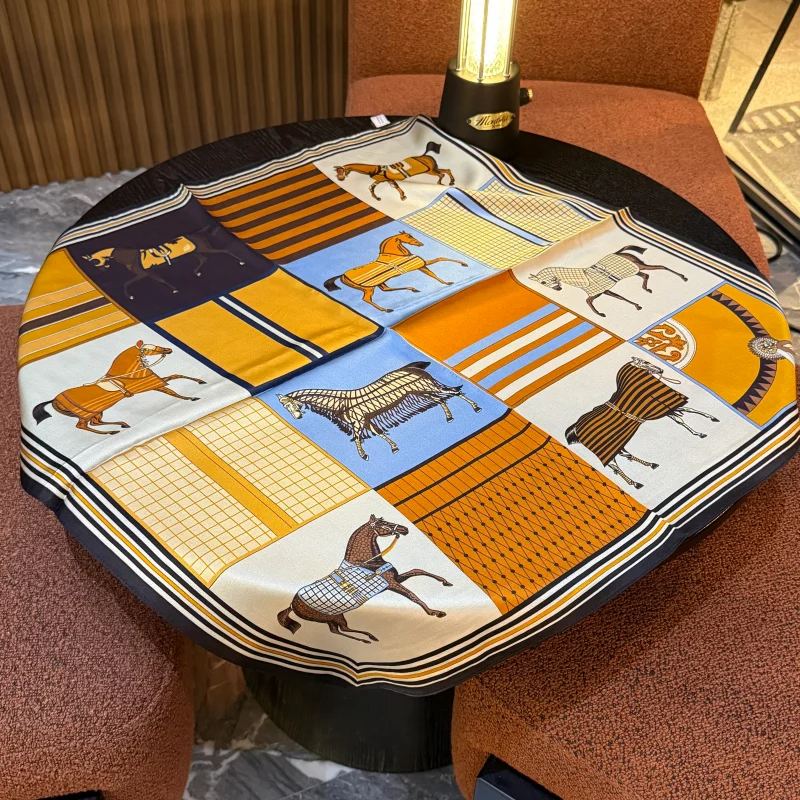
A supplier should coordinate fabric, printing, sewing, hardware, labeling, and packing. The goal is a controlled product family that arrives together and matches approved samples.
Which samples and documents should be approved?
Request material specifications, dimensions, artwork templates, color references, hardware details, packaging layouts, labeling information, inspection criteria, and production lead times. Approve physical samples using production-intent materials rather than showroom substitutes.
Compare coordinated items side by side. One color can look different on silk twill, canvas, metal, and paper. Record acceptable variation instead of expecting an exact cross-material match.
How can buyers prevent excess inventory and repeat-order drift?
Start with a narrow group serving distinct price points. Shared colors may reduce setup cost, but each item should remain useful alone. Trial quantities should reflect channel demand, not the supplier’s full catalog.
Retain approved samples and require notice before changes to fabric, elastic, thread, plating, print method, labels, or packaging. Repeat orders should reference the same item code, drawing, bill of materials, and color standard. This is especially important when several factories or subcontractors contribute to one gift set.
How can a silk accessory supplier support a coordinated wholesale range?
She believes in providing high-quality silk scarves and other custom accessories, including bespoke items, in wholesale, gifts, retail, corporate gifts, and private-label programs. She Believes offers its clients to provide information about product categories, size, material, images, colors, finishing, packing, quantity, and delivery terms. The samples should be examined to ensure that fabric, print size, color, stitching, hardware, tagging, and overall packaging are appropriate. Quotations should separate setup charges, unit prices, packaging, tooling where applicable, sample timing, and production lead time. Before bulk production, both parties should approve the physical samples, artwork files, material specifications, inspection criteria, carton marks, and change-notification terms so coordinated items remain consistent across repeat orders.
Sonuç
Wholesale fashion accessories can broaden a silk scarf range when each item has a clear role. Scrunchies, twillies, pocket squares, scarf rings, pouches, and totes offer practical price and gifting options without moving too far from the core collection. Buyers should control material claims, color coordination, workmanship, hardware safety, labeling, packaging, and order quantities. A focused assortment built from approved samples is more manageable than a large accessory catalog with weak visual connection and uncertain repeat demand.
Sık Sorulan Sorular
1. Which wholesale fashion accessories are easiest to sell with silk scarves?
Scrunchies, twillies, pocket squares, scarf rings, and travel pouches are practical additions because they share styling, gifting, or fabric connections with scarves and suit several price points.
2. Should matching accessories use the same print as the scarf?
They can, but the artwork should be resized for each product. Small accessories often need simpler motifs, wider spacing, or adjusted borders to remain clear after cutting and sewing.
3. How should buyers inspect metal scarf rings and clips?
Check dimensions, weight, plating, scratches, burrs, seams, closure force, moving parts, and every surface that touches fabric. The accessory should not snag, stain, or compress delicate silk.
4. What information should appear in a wholesale accessory quotation?
The quotation should state material, dimensions, printing, finishing, hardware, packaging, MOQ, setup or tooling charges, sample timing, production lead time, inspection terms, and change-control requirements.
5. How can buyers avoid overstock when adding wholesale fashion accessories?
Begin with a few distinct categories, use shared colors where practical, test channel demand, and negotiate realistic minimums. Reorder proven items before expanding into additional materials, shapes, or gift sets.


