How to Source Custom Head Scarves for Beauty, Haircare and Lifestyle Brands
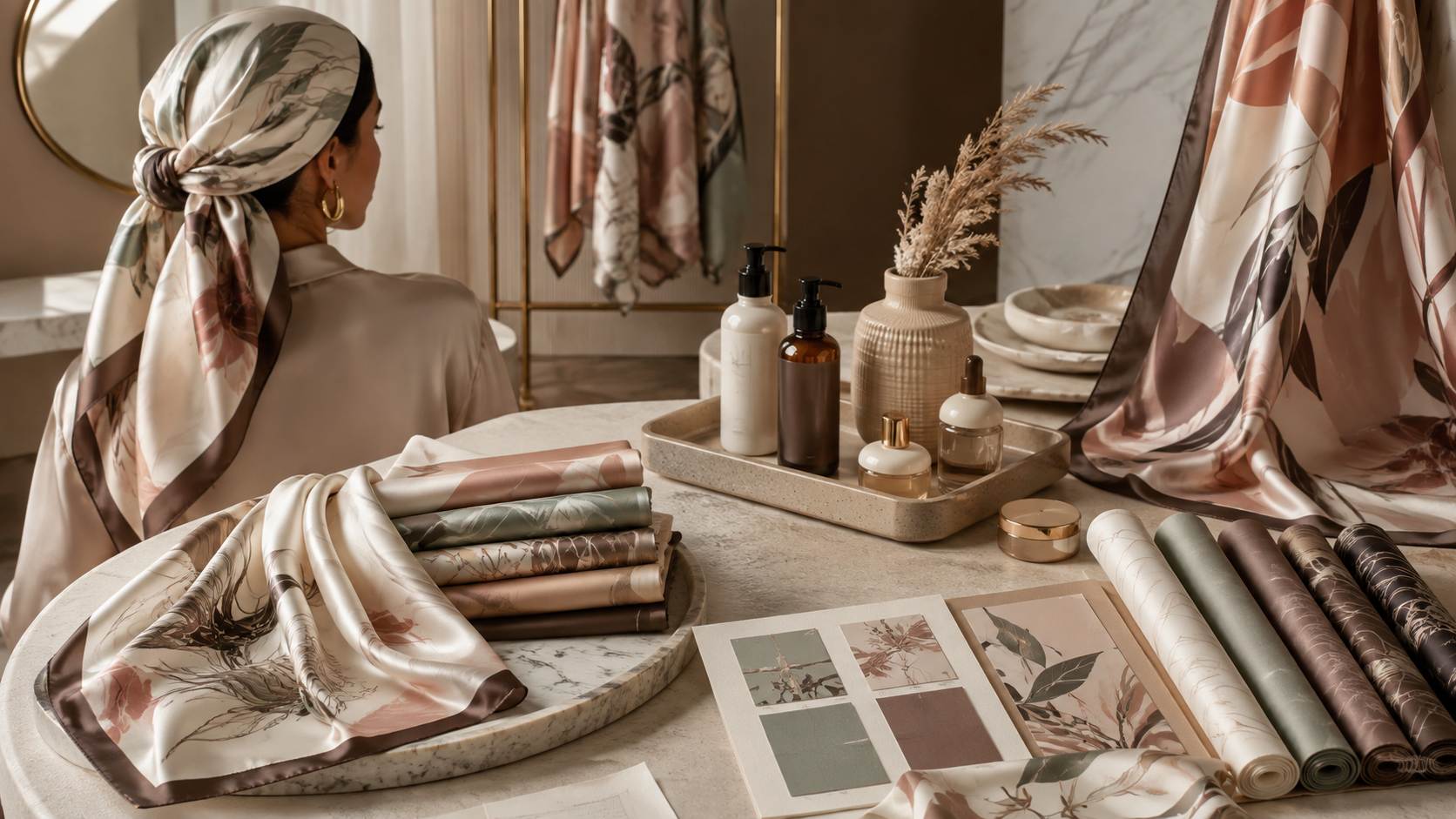
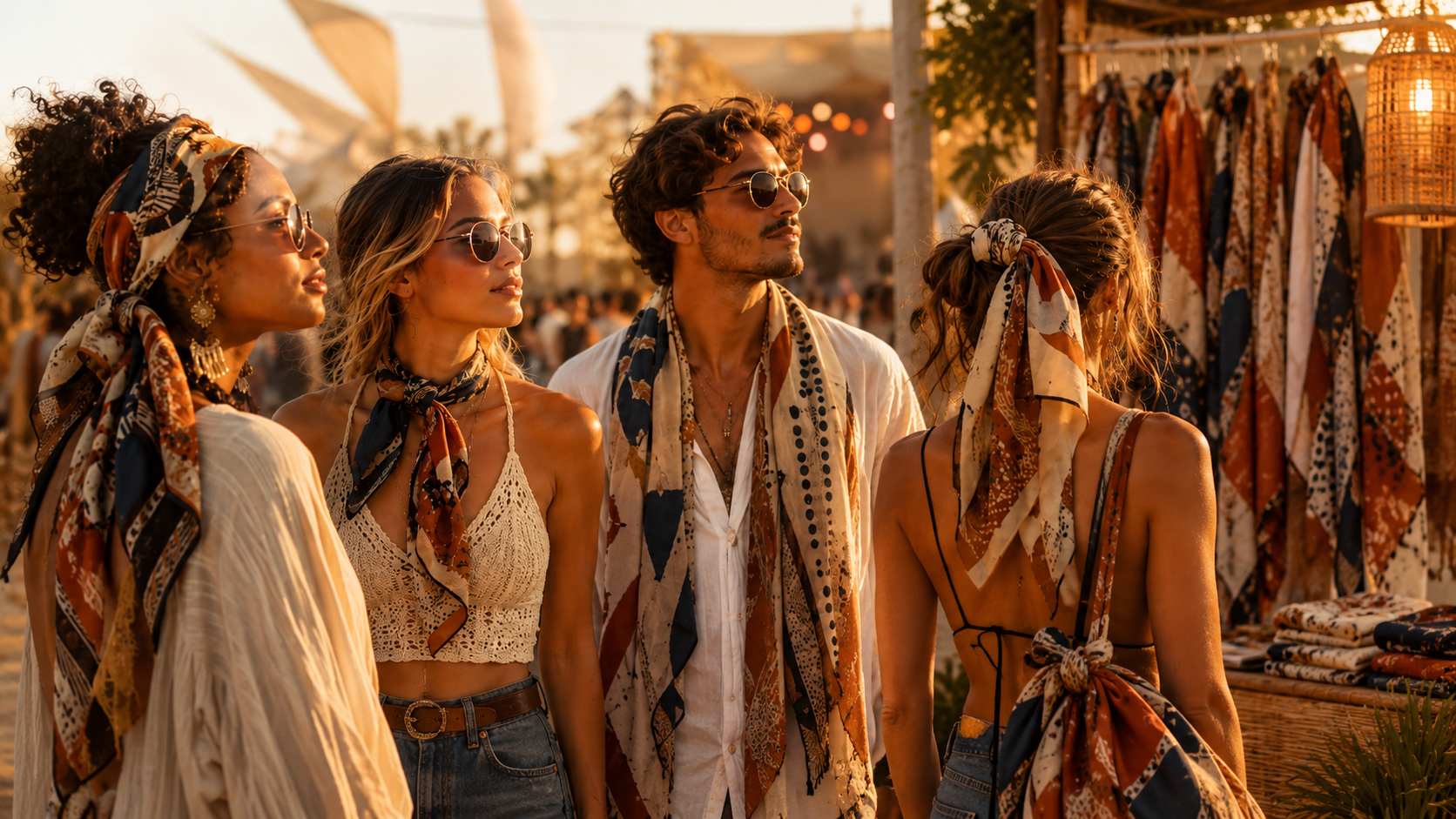
For beauty, haircare, and lifestyle brands, sourcing a custom head scarf should begin with how customers will use it rather than with artwork alone. A scarf designed for a haircare gift set may need to work as a head wrap or ponytail accessory, while a lifestyle label may want the same piece to function as a neck scarf or bag accessory. These uses affect material, dimensions, print placement, finishing, packaging, and MOQ, so buyers should define them before requesting quotations.
What Should Buyers Define Before Requesting a Quote?
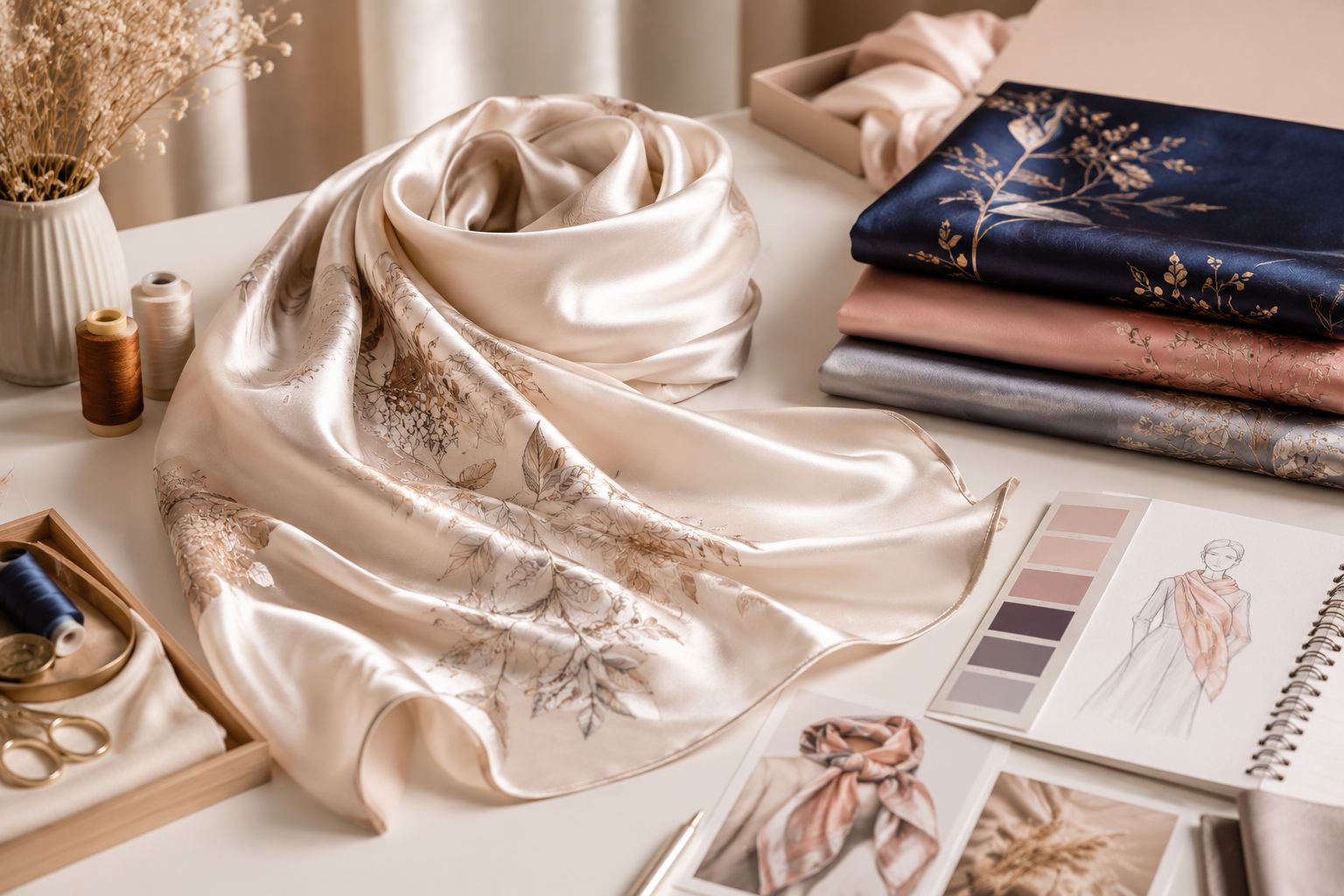
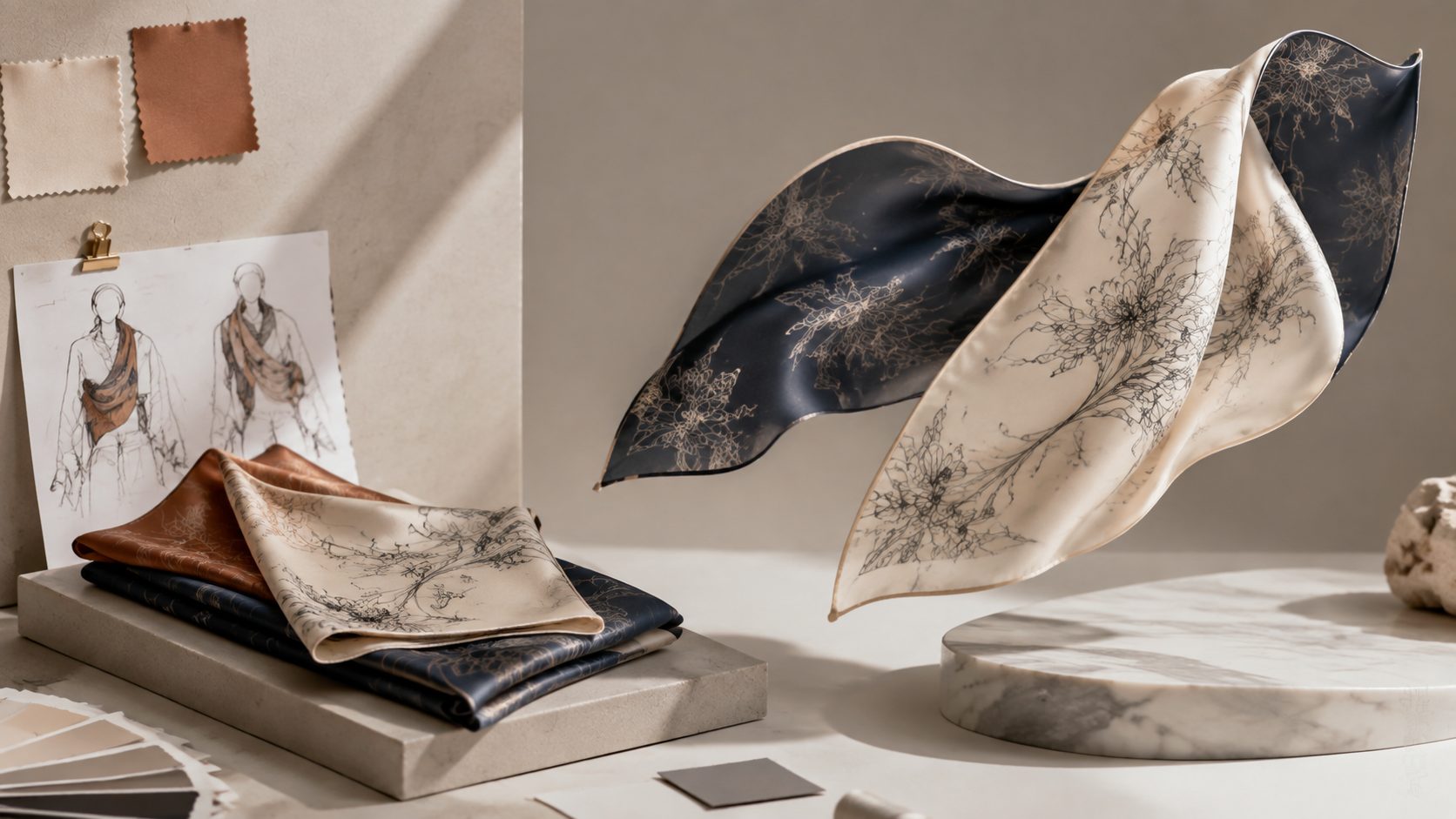
A supplier can work from inspiration images, but a mood board is not enough for accurate sampling or pricing. The brand should first convert the creative concept into measurable product specifications.
Define the Main Wearing Scenario
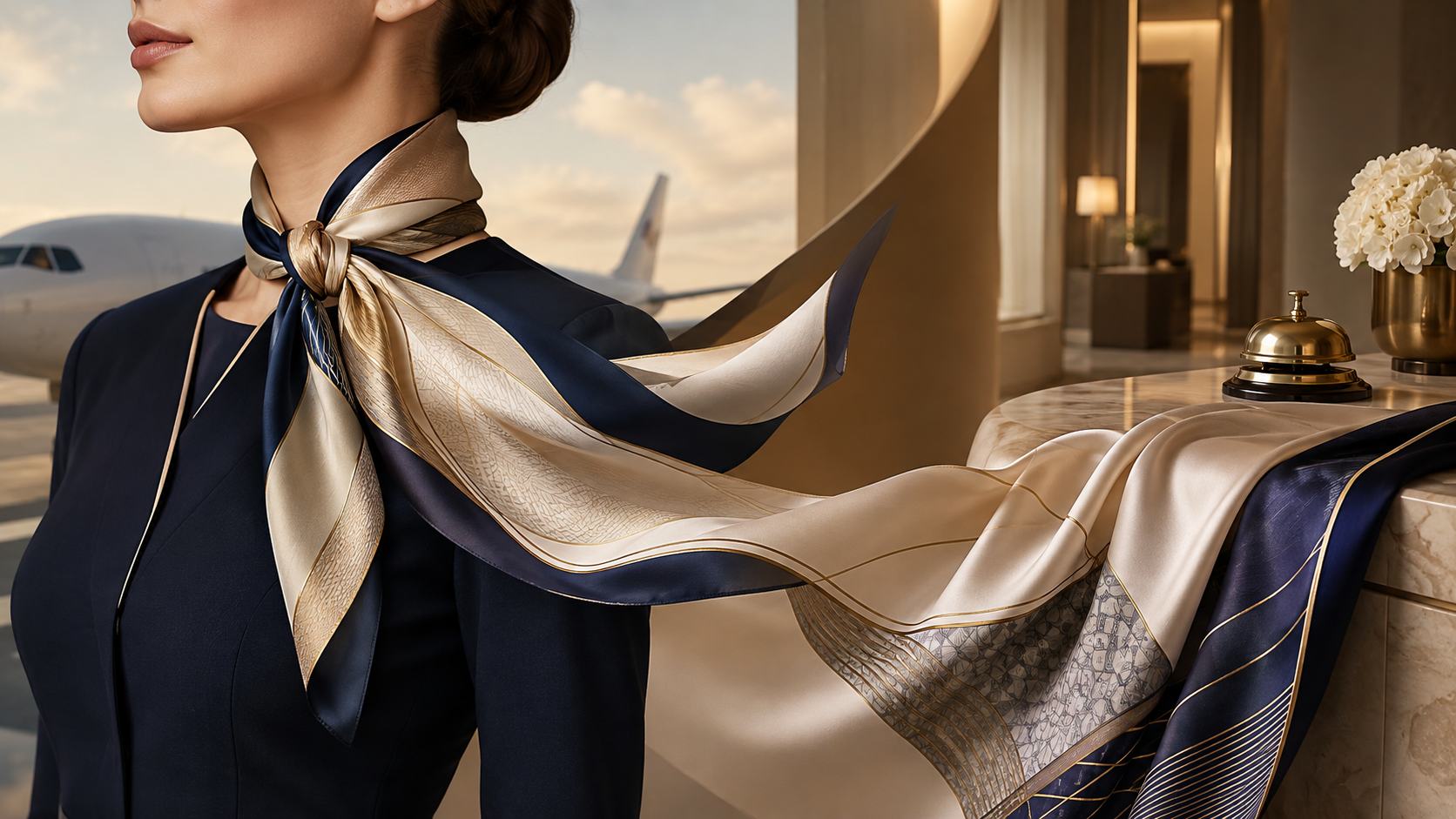
Start with the primary use: head wrap, hairband, ponytail scarf, gift item, or multi-use accessory. This determines how much fabric is needed and how the artwork should appear after folding.
Square scarves are especially flexible because they can be folded into triangles or narrow bands. Rectangular scarves create a different look and may work better for longer wraps, so shape should follow the intended styling rather than a generic market standard.
Choose Dimensions Through Wear Testing
A scarf may look large enough when laid flat but feel too small once tied around the head. Buyers should test several dimensions before approving the specification.
The current Women’s Floral Printed Square Scarf Lightweight Satin Feel Fashion Scarf can serve as one reference for a square scarf used for hair, head, and neck styling. Its dimensions should not be treated as a universal standard for every custom project.
Build a Complete RFQ
A sourcing brief should include the following information:
| Item | Buyer Should Confirm |
|---|---|
| Main use | Head wrap, hairband, ponytail, multi-use |
| Материал | Silk, polyester, or approved alternative |
| Finished size | Width × length |
| Artwork | Pattern, color, logo, orientation |
| Edge | Approved finishing method |
| Branding | Logo, woven label, care label |
| Упаковка | Standard or customized |
| Quantity | Units per design or color |
Using the same specification for every supplier makes quotation comparison more reliable.
Which Material Works for Beauty and Haircare Brands?
Material choice should follow positioning, intended use, care requirements, and target price. Silk and polyester can both work, but they create different product experiences.
When Does Silk Make Sense?
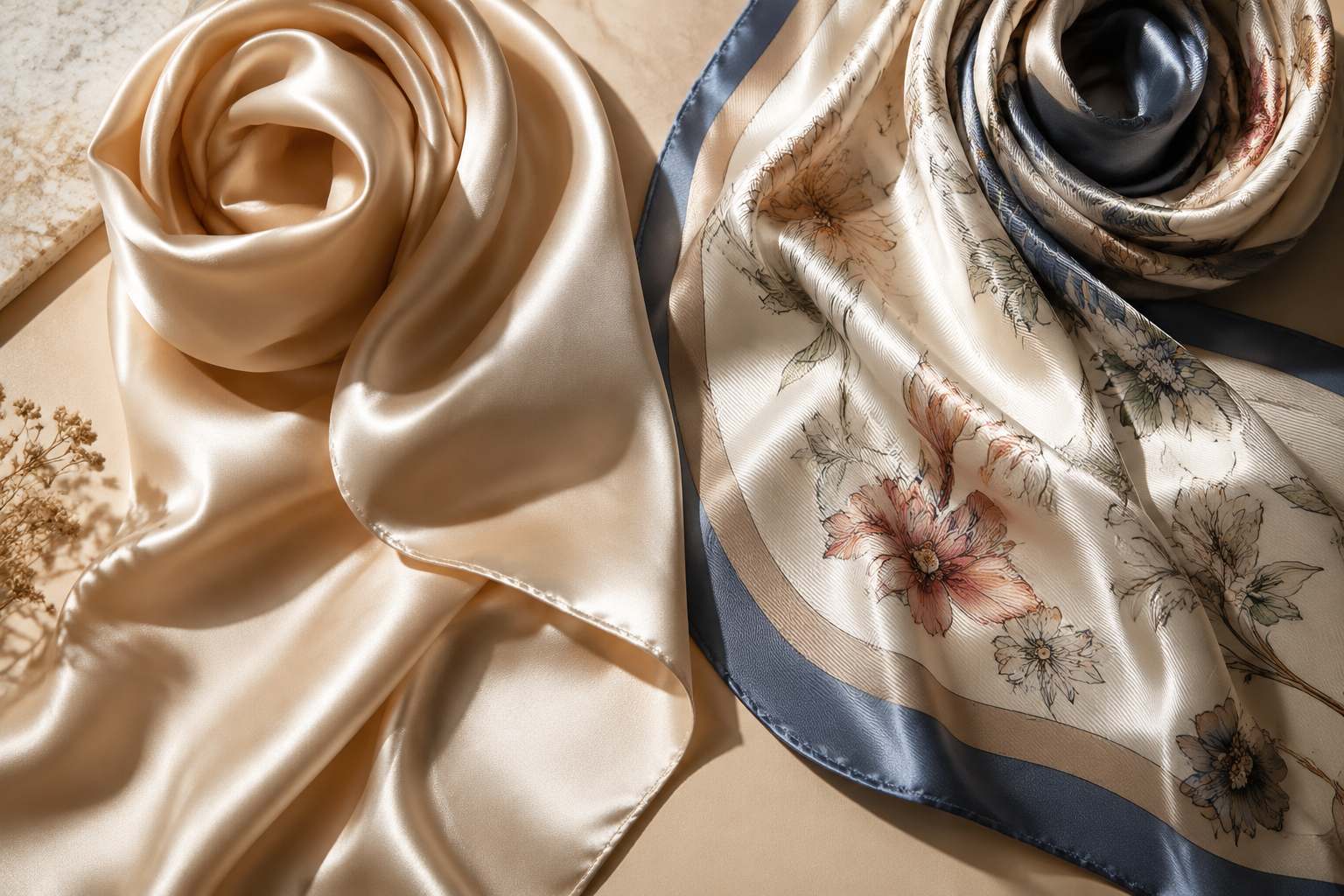
The supplied material documentation describes silk as smooth and skin-friendly, with natural luster and temperature-regulating characteristics. These qualities can suit premium beauty or lifestyle products where presentation and hand feel matter.
Brands developing this type of range can review the broader Шелковый шарф category for product references. However, silk should not be selected only because it sounds more luxurious; care requirements and target retail price also need to fit the project.
When Is Polyester More Practical?
Polyester offers good shape retention, resistance to wrinkles and wear, relatively low shrinkage, quick drying, and generally stable color performance according to the supplied material information. These characteristics may suit promotional programs or larger lifestyle collections.
Its lower moisture absorption and different hand feel should also be considered. Buyers should therefore compare actual fabric samples rather than deciding from fiber names alone.
Avoid Unsupported Haircare Claims
Beauty brands should separate textile characteristics from marketing claims. A smooth surface may support a certain product position, but statements such as “prevents hair breakage” or “retains moisture” require appropriate evidence and should not be assumed from the material alone.
The related article Why Gen Z Is Wearing Summer Scarves as Hair Accessories Again is useful for styling trends, while the sourcing specification should remain focused on measurable textile features.
How Should Artwork and Branding Be Developed?
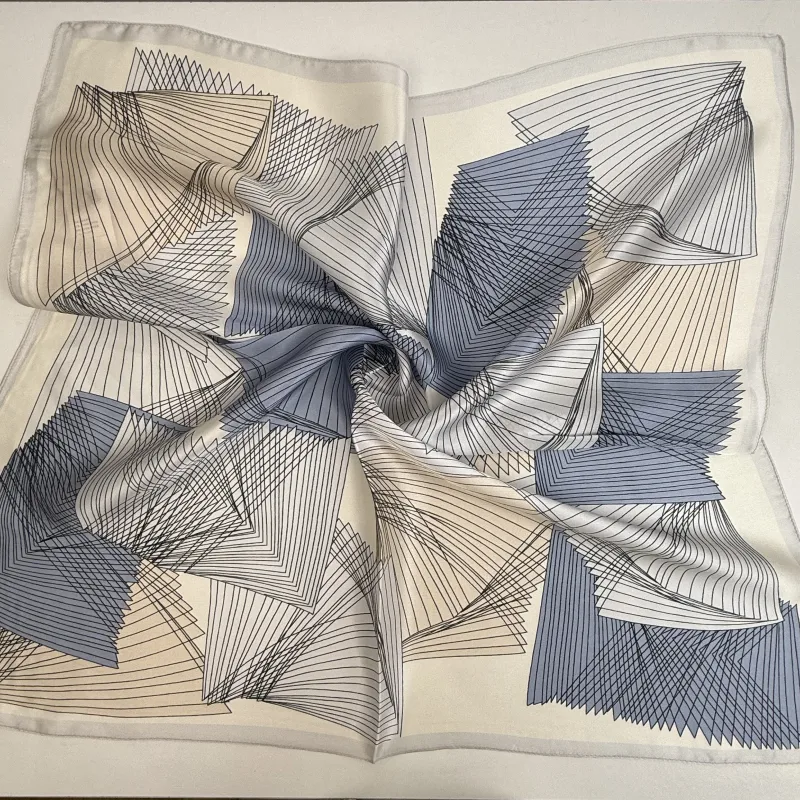
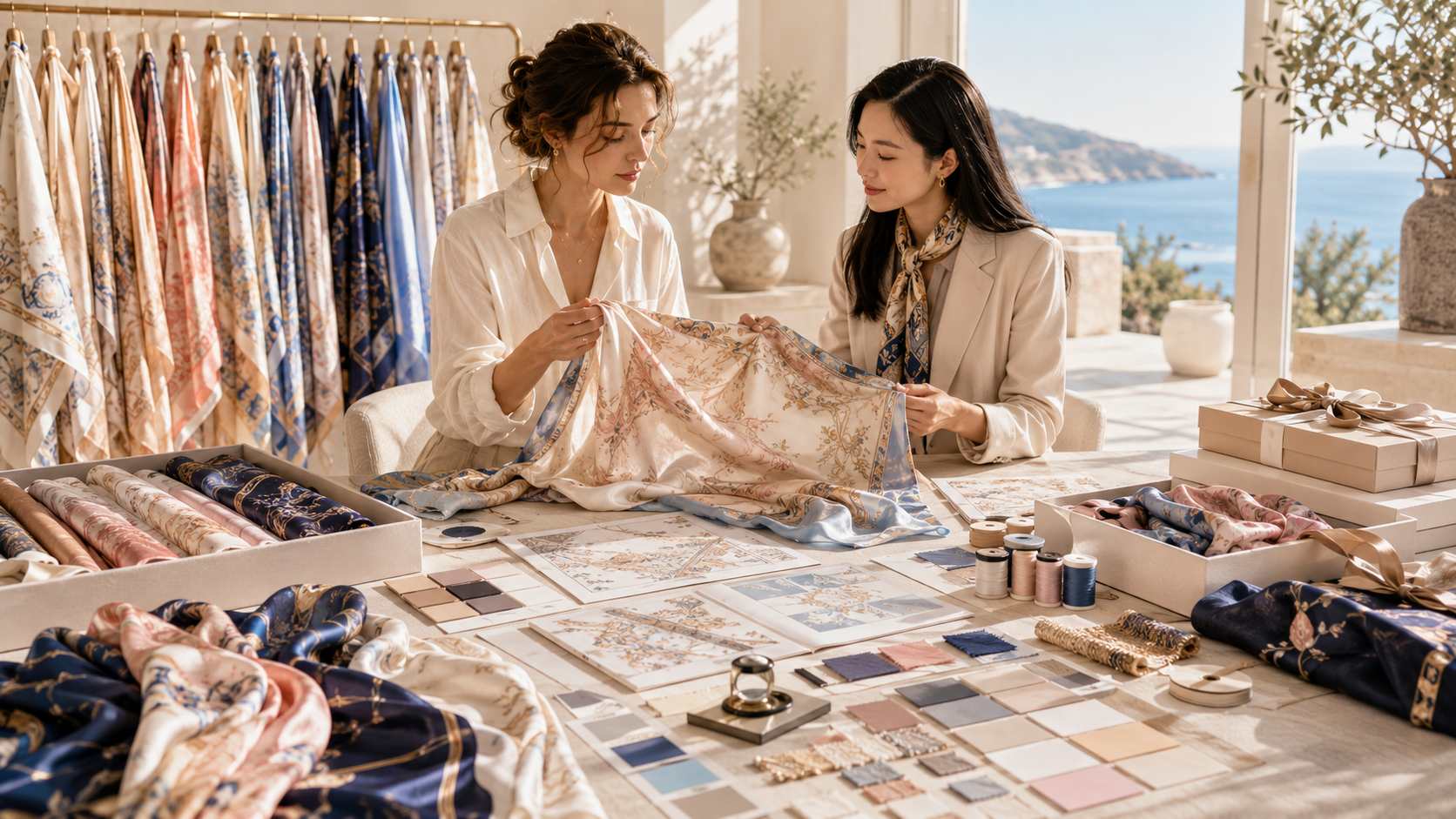
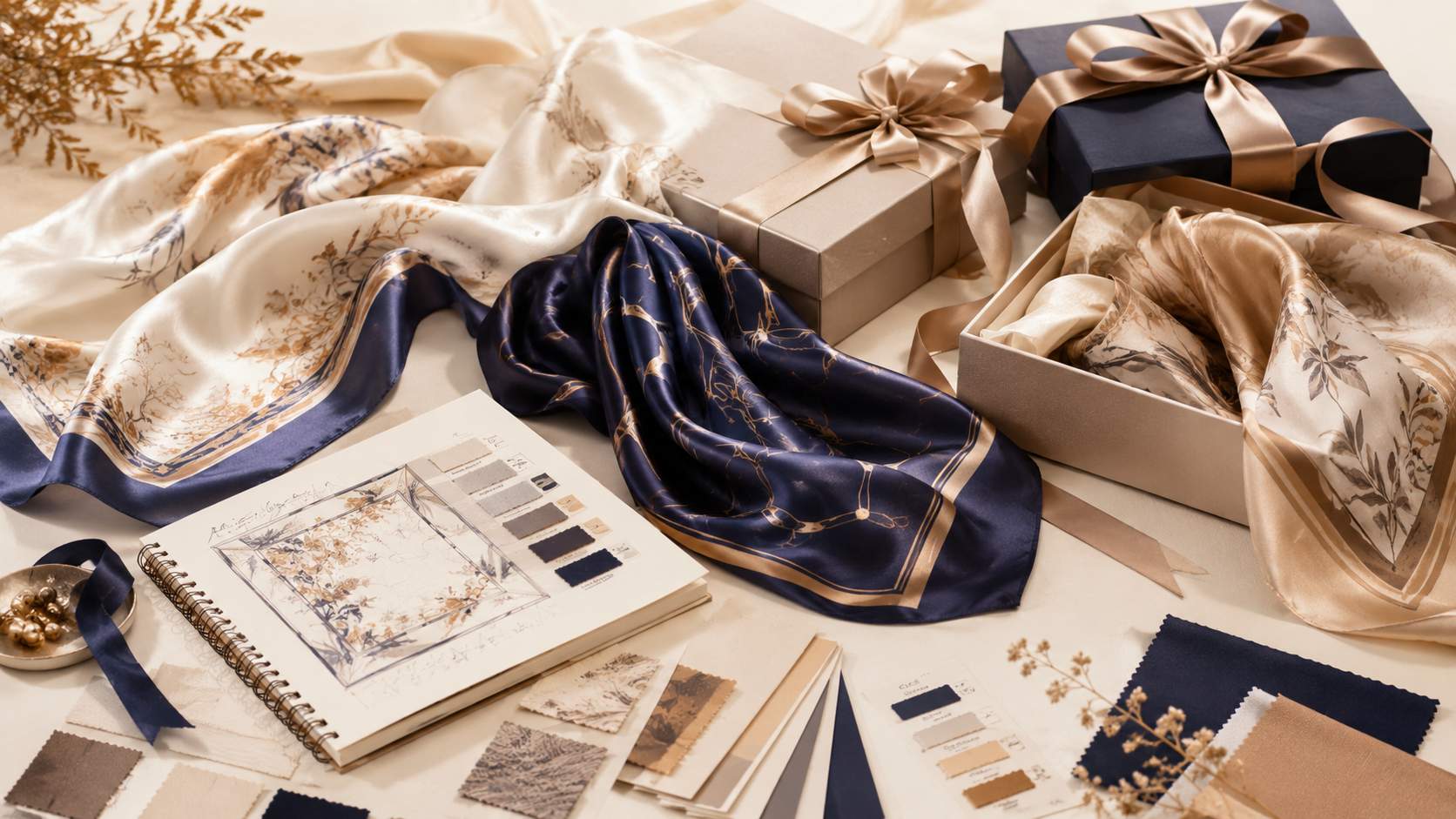
Artwork needs to work when the scarf is folded, tied, and partially hidden. A design that looks attractive on a flat screen may fail once turned into a wearable product.
Design for Folded Positions
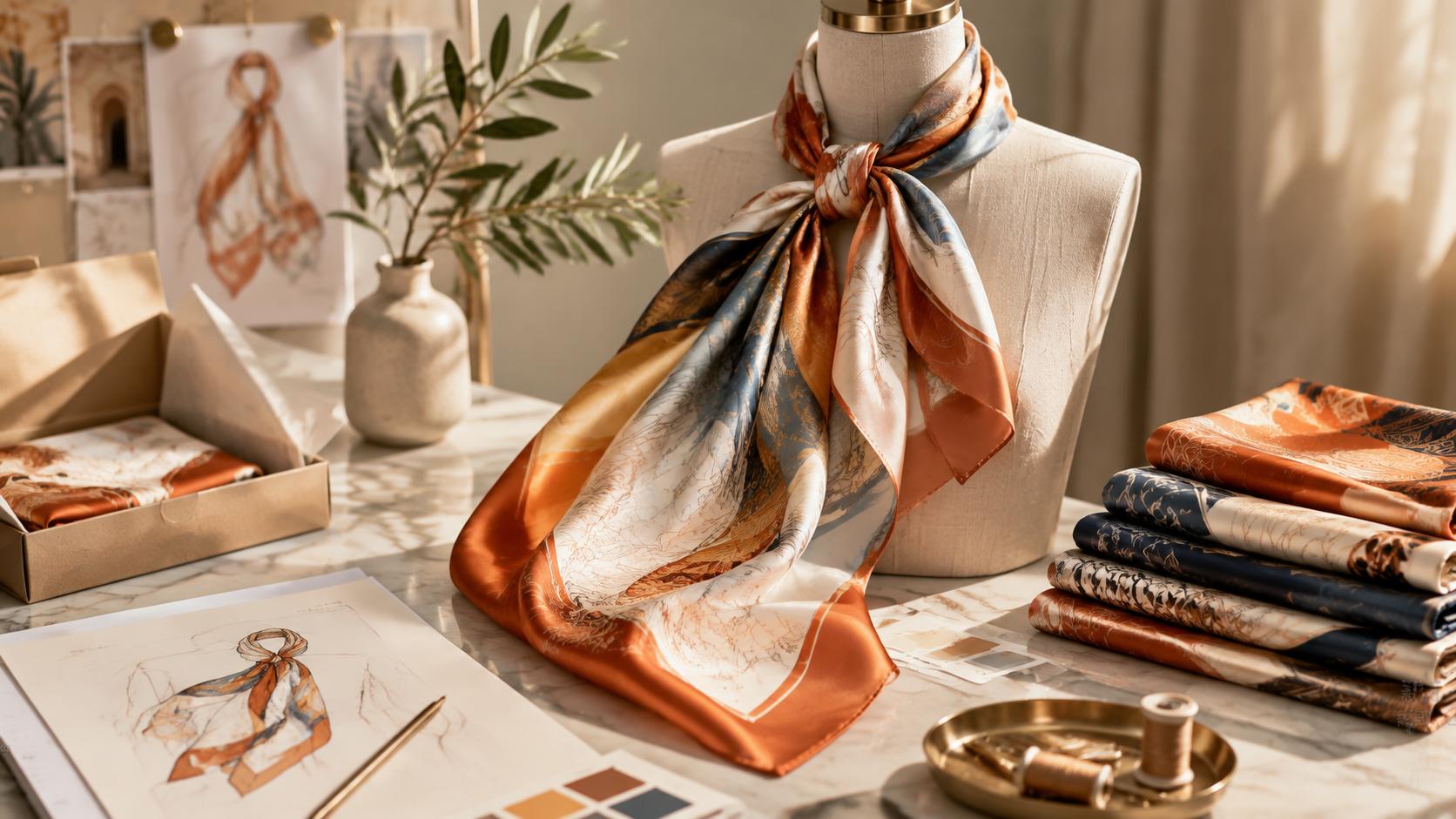
A large central logo can disappear after diagonal folding, while border graphics, corner motifs, or repeating patterns may remain more visible. Before sampling, designers should review the scarf fully open, folded, and shown in its main wearing position.
Match the Process to the Artwork
The supplied production documentation identifies digital printing as suitable for detailed imagery and complex gradients. Embroidery can add texture, although dense embroidery may change the drape of a lightweight scarf.
The process should therefore follow the artwork instead of being selected because one method appears more premium.
Include Labels and Packaging Early
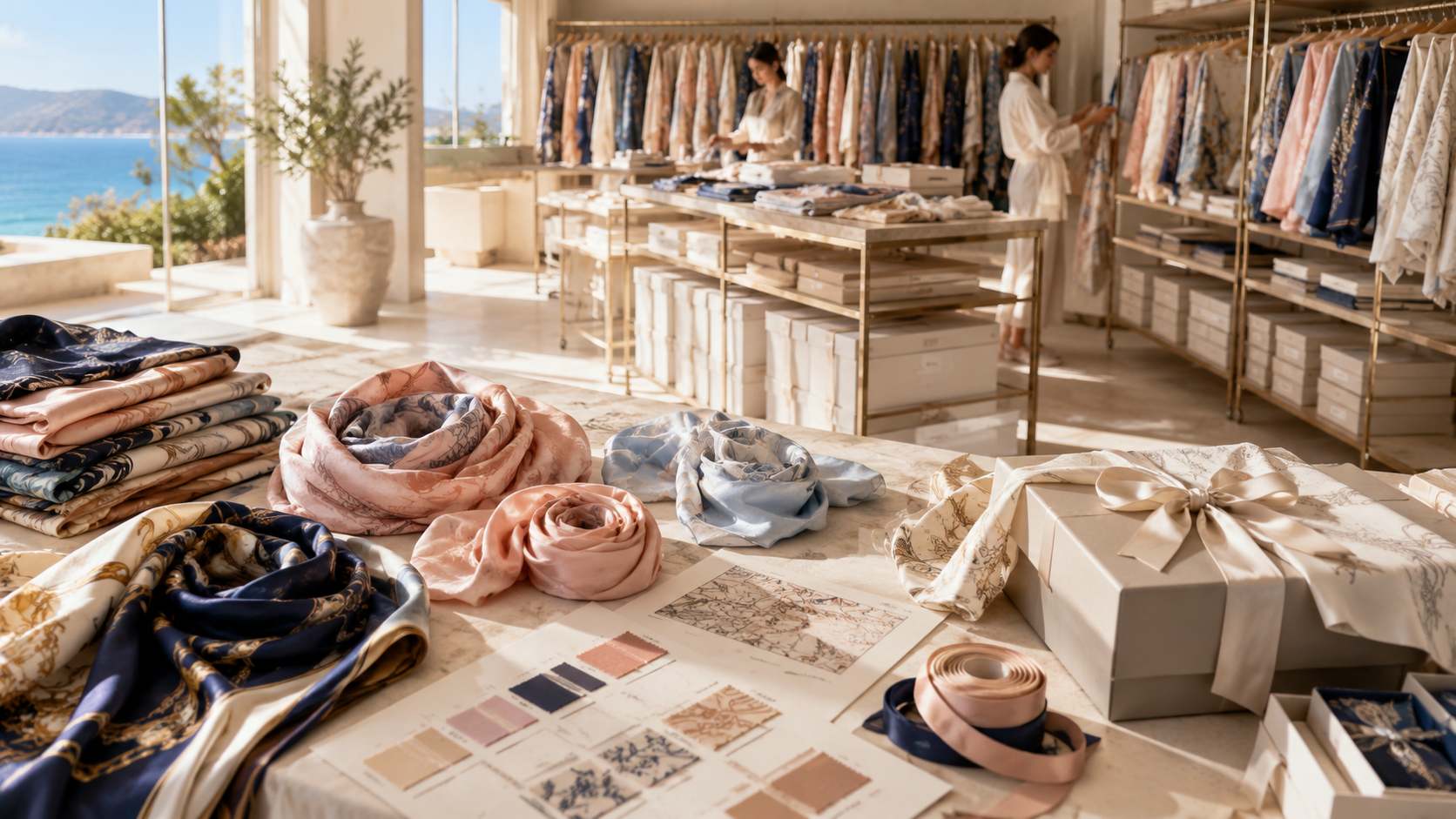
Woven labels, care labels, hangtags, and packaging should be defined before sampling. A large label can interfere with head styling, while complex packaging may introduce additional MOQ or cost.
Buyers can review the ODM/OEM customization process to understand how material, artwork, labels, and packaging can be incorporated into a custom project.
What Should Buyers Check During Sampling?
Sampling should confirm more than appearance. It should show whether the scarf works as intended and whether the supplier can reproduce the approved specification.
Test Real Wearing Positions
Lay the sample flat, then fold and tie it in every planned way. Check whether there is enough fabric, whether the knot is too bulky, whether the material slips excessively, and whether important artwork remains visible.
Create Measurable Approval Points
Record material composition, dimensions, artwork position, color, edge finishing, labels, and packaging. Comments such as “make it more premium” are difficult to inspect during production, while measurable specifications provide a clear reference.
Use a Practical QC Checklist
Before bulk production, confirm:
-
Material and composition
-
Finished dimensions
-
Artwork position and orientation
-
Approved color on actual fabric
-
Edge finishing
-
Labels and care information
-
Main tying methods
-
Упаковка
The approved physical sample should remain the production reference.
How Should Brands Compare MOQ, Lead Time, and Suppliers?
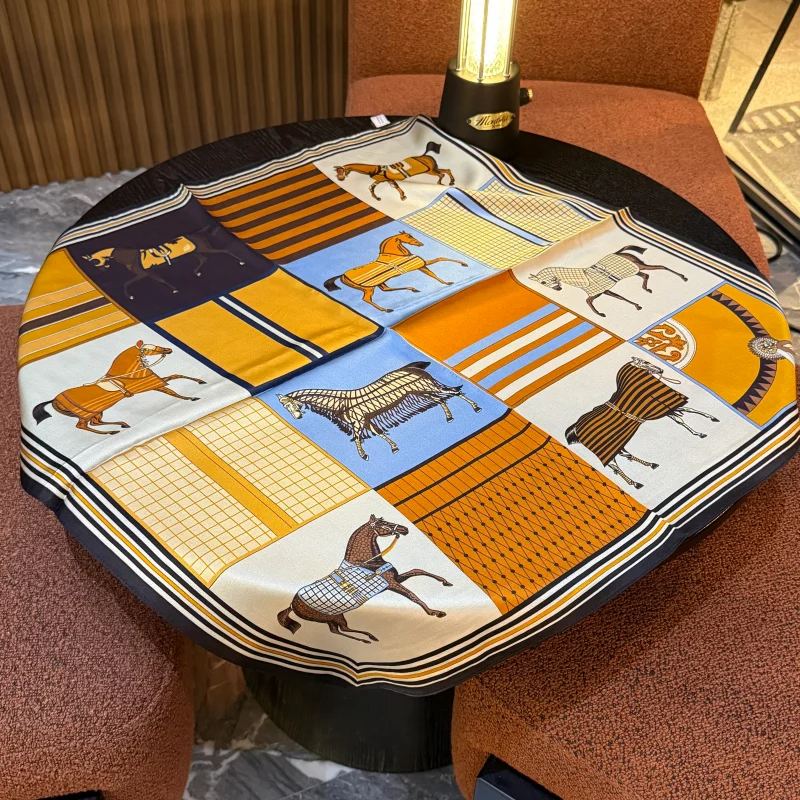
MOQ and lead time should only be compared after the product specification is reasonably stable. Material, size, printing method, branding, labels, packaging, and quantity can all affect production requirements.
Compare the Same Product
Ask each supplier to state exactly what the quotation includes. If one price is substantially lower, check whether it covers the same fabric, printing, finishing, labels, and packaging.
Confirm the Project Schedule
The supplied customization documentation gives an approximate sampling period of 7–10 business days and generally describes mass production as taking 15–25 days depending on quantity and process complexity. Buyers should still confirm a project-specific schedule before fixing launch dates.
Decide Between OEM and ODM
Brands with complete artwork and specifications may mainly need OEM production, while teams starting with a concept may require ODM development support. The article OEM vs ODM Scarf Manufacturing: Which Is Better for Your Brand? explains the difference in more detail.
Who Can Support Custom Head Scarf Development?
Она верит works with B2B buyers on custom scarves and shawls and provides OEM and ODM development, material matching, printing and embroidery options, sampling, labels, packaging, and production quality control.For a new head scarf project, buyers should send the intended use, material, dimensions, artwork, quantity, branding requirements, packaging, and target launch date together. This allows the supplier to evaluate the actual product rather than quote against a vague description.
Вывод
Successful custom head scarf sourcing starts with use, not decoration. Buyers should define the wearing scenario, material, dimensions, artwork, labels, and packaging before sampling, then use the approved physical sample as the reference for production.The next step is to prepare a one-page RFQ containing these specifications and send the same version to shortlisted suppliers for comparison.
Часто задаваемые вопросы
1. What material is suitable for custom head scarves?
Silk can support a refined appearance and smooth hand feel, while polyester may offer advantages in wrinkle resistance, maintenance, and cost.
2. What size should a head scarf be?
There is no universal size. The correct dimensions depend on the intended tying method and should be confirmed through wear testing.
3. Can one scarf work for hair, neck, and bag styling?
Yes, particularly with square formats, but size, material, and artwork should be developed for those intended uses.
4. What should a buyer send to a scarf supplier?
Send material, dimensions, artwork, colors, quantity, labels, packaging, intended use, and target launch date.
5. What should be approved before bulk production?
Approve material, dimensions, artwork, color, finishing, labels, packaging, and the scarf’s appearance in its intended wearing positions.
可能是 AI 生成