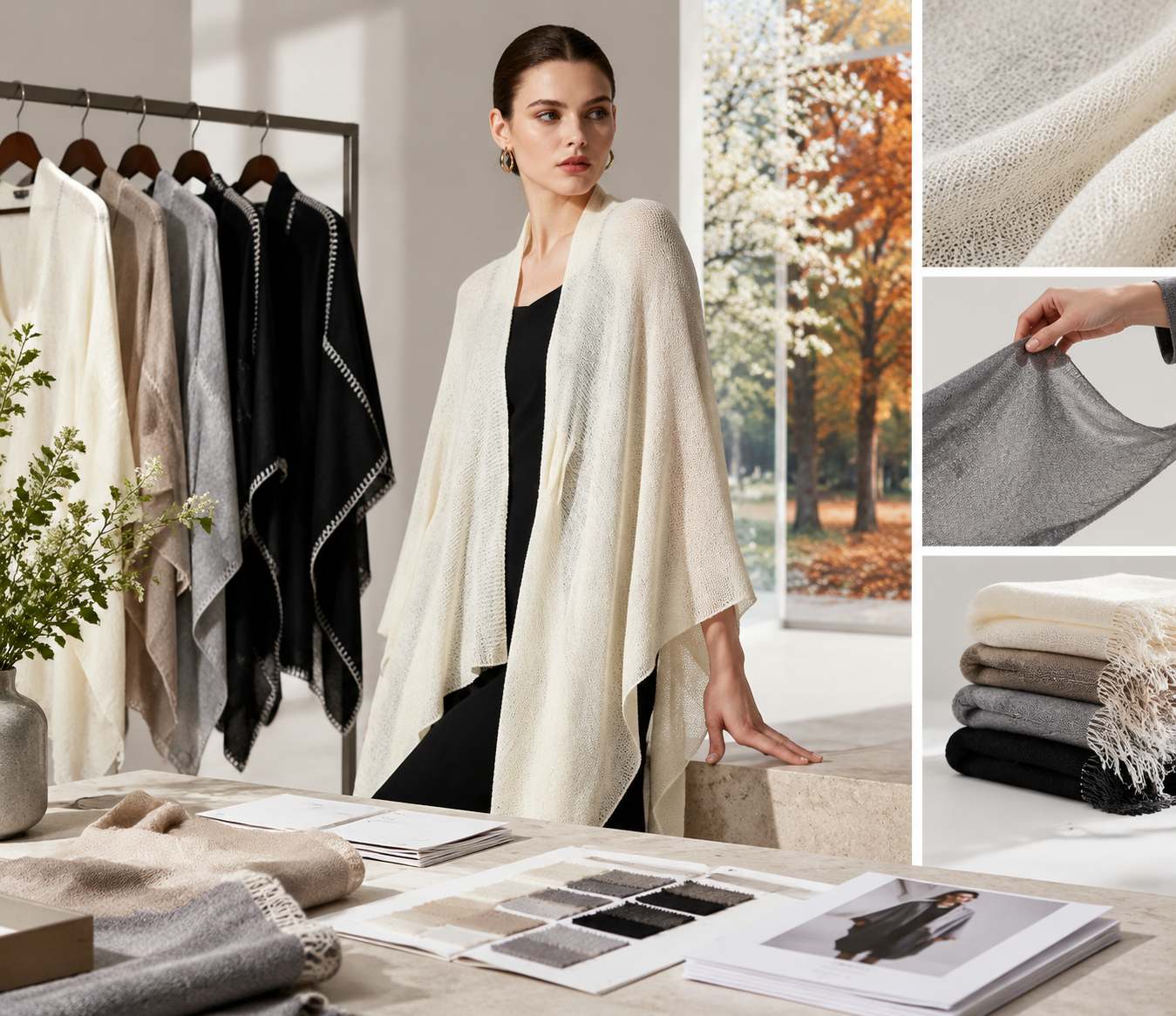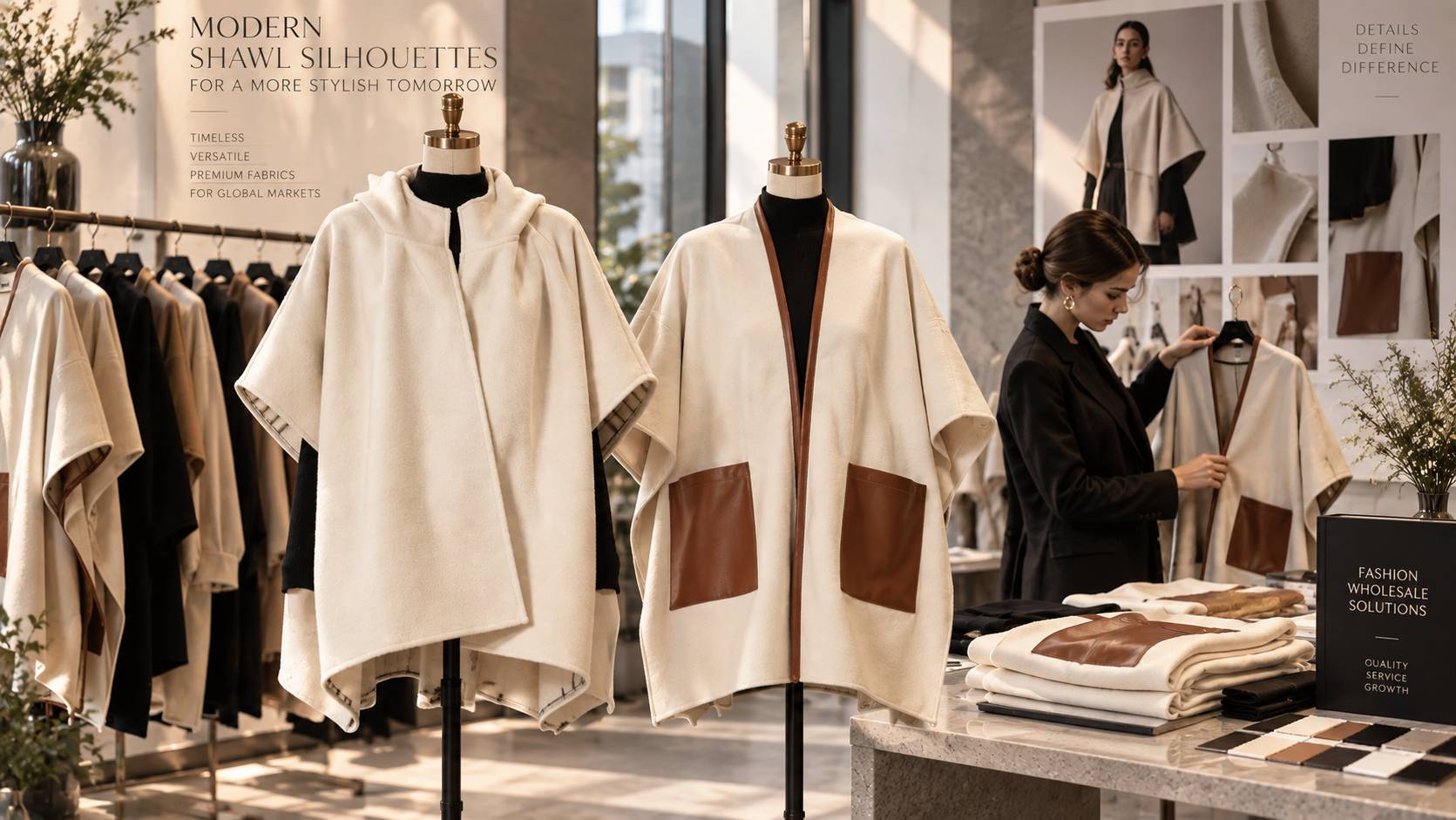
How Retail Buyers Can Source Cape Shawls for Holiday and Winter Occasion Collections

Cape shawls tend to look straightforward during line review. The problems usually appear later, when somebody actually puts one on. A style that seemed elegant on a hanger may slide forward after a few minutes, cover more of the outfit than expected, or feel noticeably heavier once the whole garment is resting on the shoulders. For holiday and winter retail, that matters because customers may expect the same piece to work for dinners, travel, gifting, office events, and ordinary cold-weather dressing. A useful buying decision therefore starts with the way the cape behaves in use, then moves into material, assortment depth, sample approval, and the production details needed for a repeat order.
When Does a Cape Shawl Actually Earn a Place in a Winter Assortment?
The first question is not whether the cape looks seasonal. Plenty of styles do. The harder question is whether customers can wear it easily with clothes they already own.
A buyer can learn more from ten minutes in a fitting room than from a long discussion around a sample table.
Try it over the clothes customers are likely to wear
Start with a lightweight knit. Then try the same sample over a dress and, if relevant, over a heavier winter layer.
Watch what happens around the shoulders and arms. Some capes sit naturally when very little is worn underneath but become crowded over thicker clothing. Others have enough room for layering but feel oversized with an evening dress.
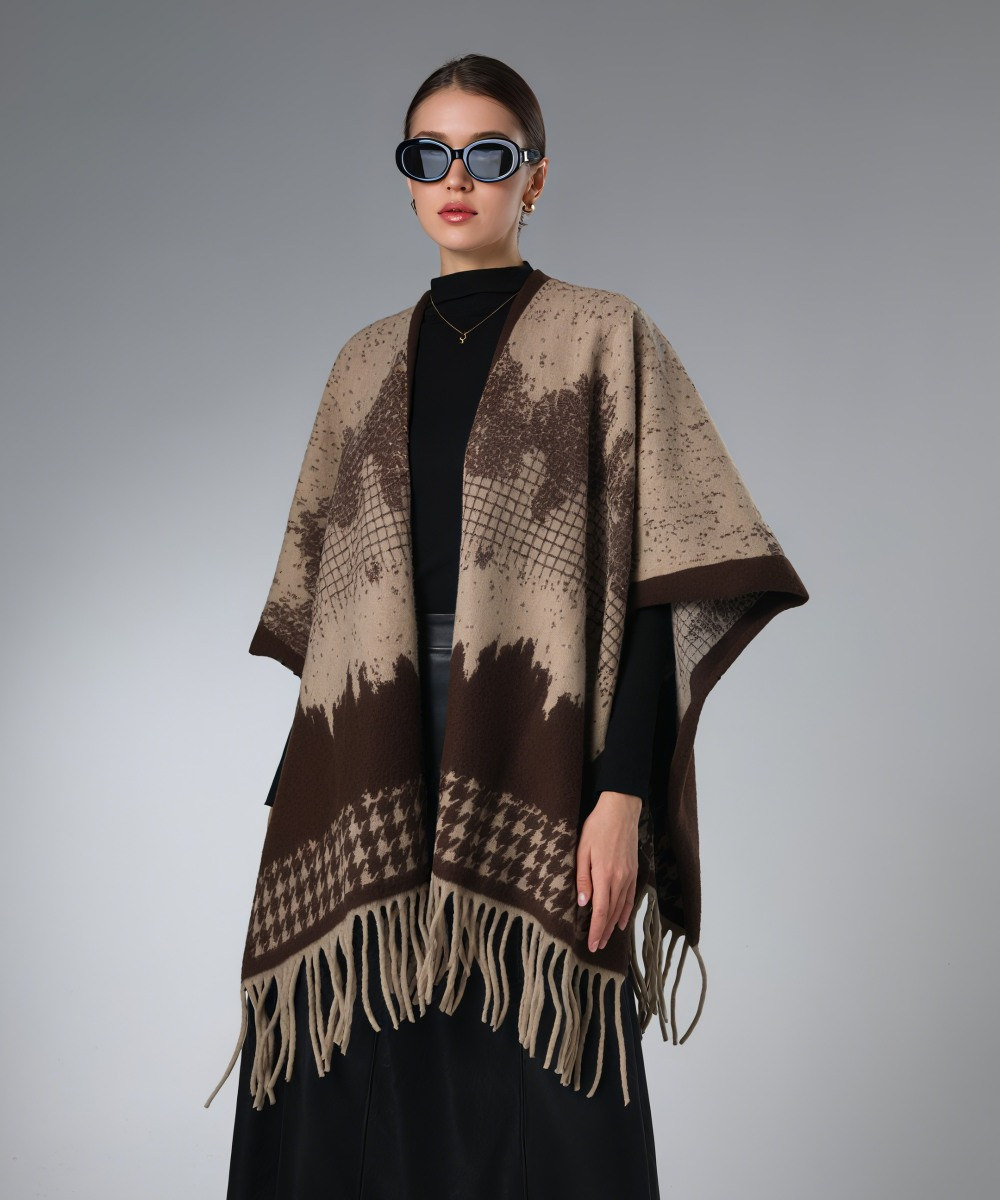
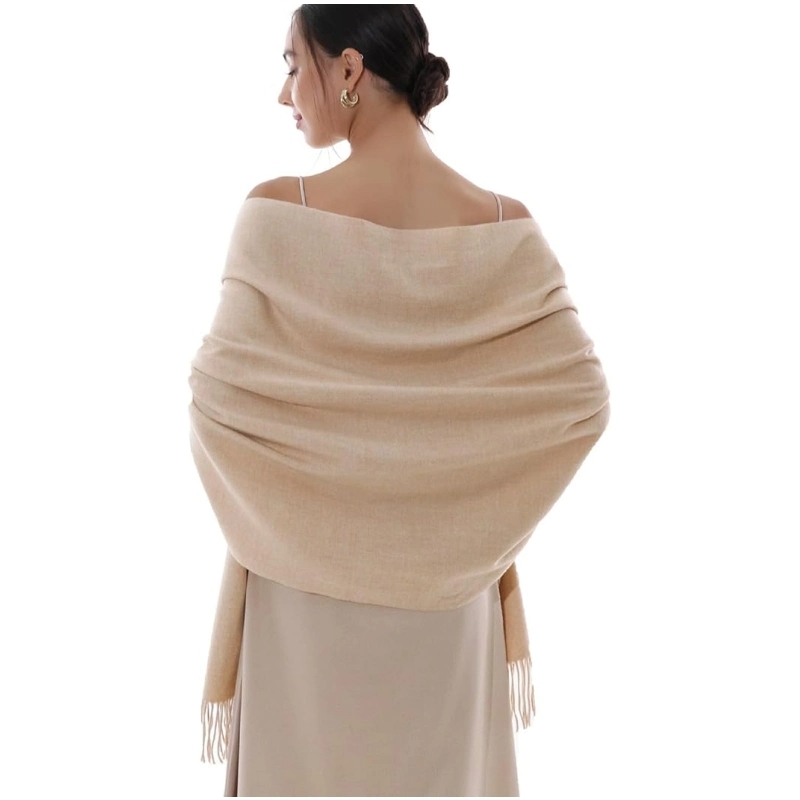
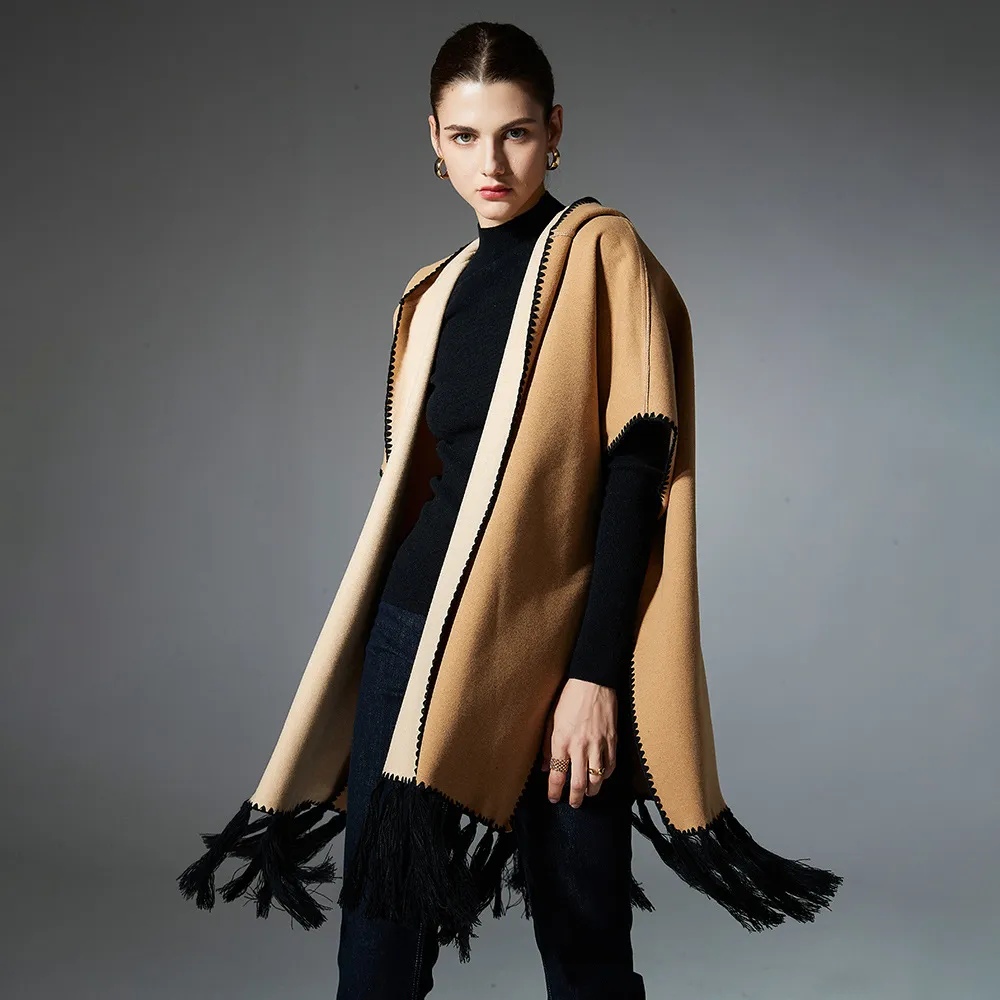
The cape shawl collection gives a useful reference for cape-style shapes before a buyer narrows the seasonal range.
It is also worth asking the wearer to reach for a phone, carry a handbag, and sit down. Those small movements reveal much more than standing still in front of a mirror.
Be specific about the occasion
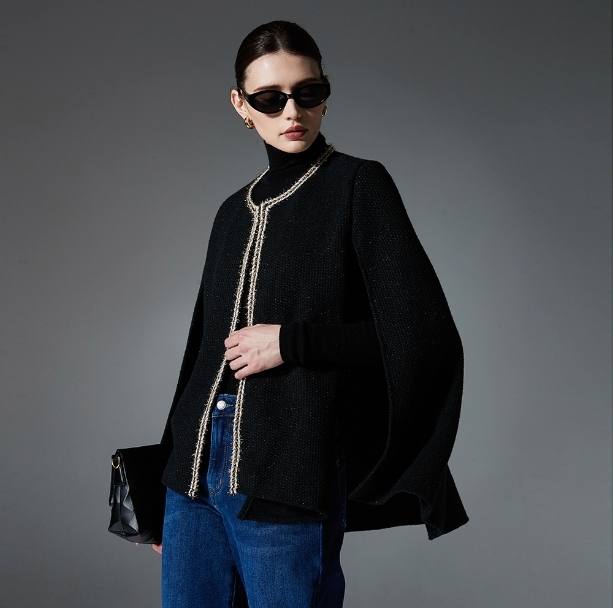
“Holiday cape” is still a broad description. A piece intended mainly for restaurant dinners has a different job from one bought for winter travel.
Indoor occasion wear may allow a lighter material and a more decorative shape. A style expected to work outdoors needs a different balance of coverage and substance.
If the buying team cannot agree on the main use, the product often ends up too formal for everyday wear and not refined enough for an occasion collection.
How Can Buyers Judge Fabric Without Being Misled by a Small Swatch?
A swatch is useful for checking texture and color. It is much less useful for understanding how a cape will feel once a large amount of fabric is distributed across the body.
This is one reason material decisions should stay open until the full sample has been worn.
Weight feels different when the garment is complete
Pick up a folded cape and it may seem perfectly light. Wear it for several minutes and the impression can change.
The relevant question is not simply whether the material is heavy. It is whether the complete garment remains comfortable after settling on the shoulders.
A softer material can still feel substantial if the cape is large. A denser fabric may feel manageable when the silhouette is shorter or more open.
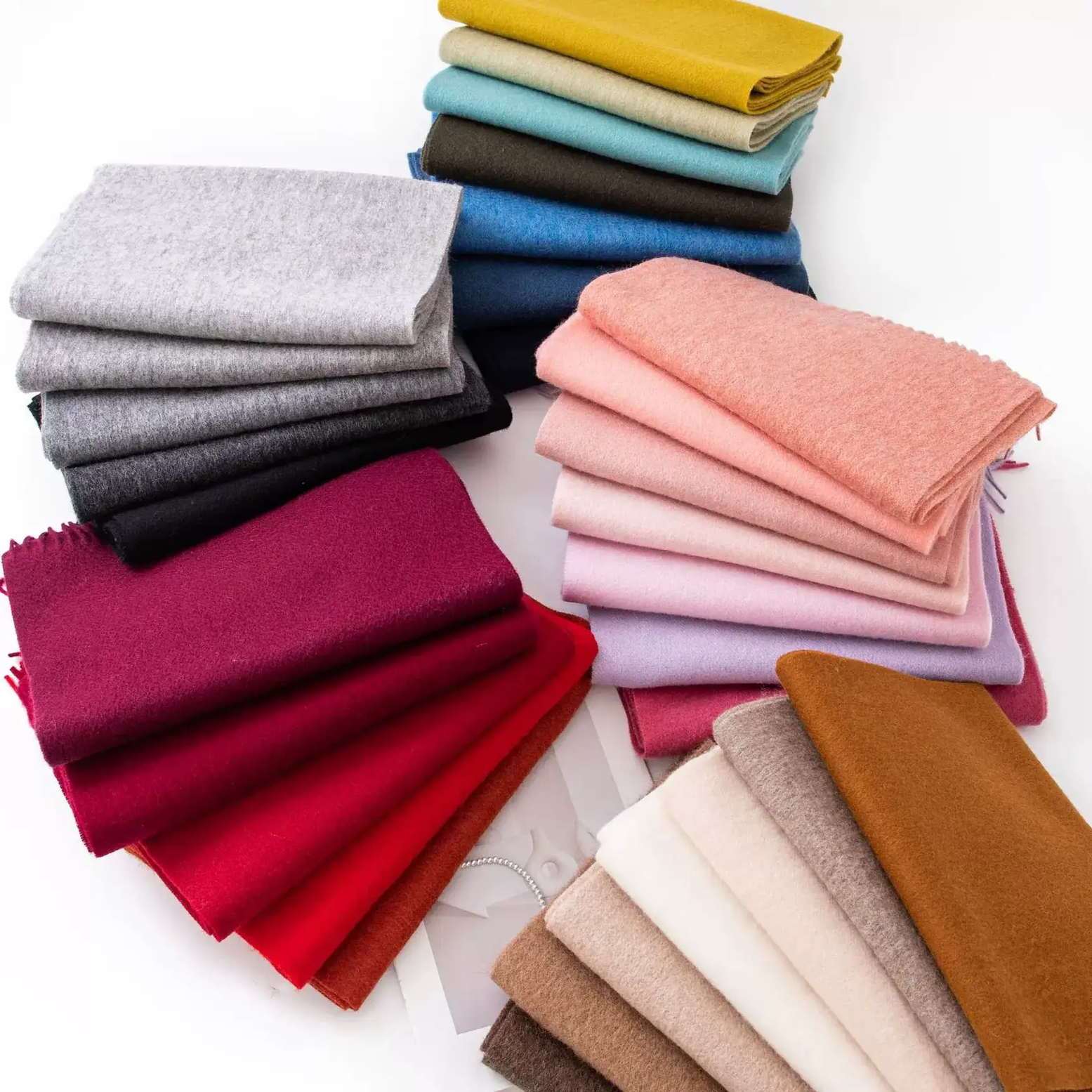
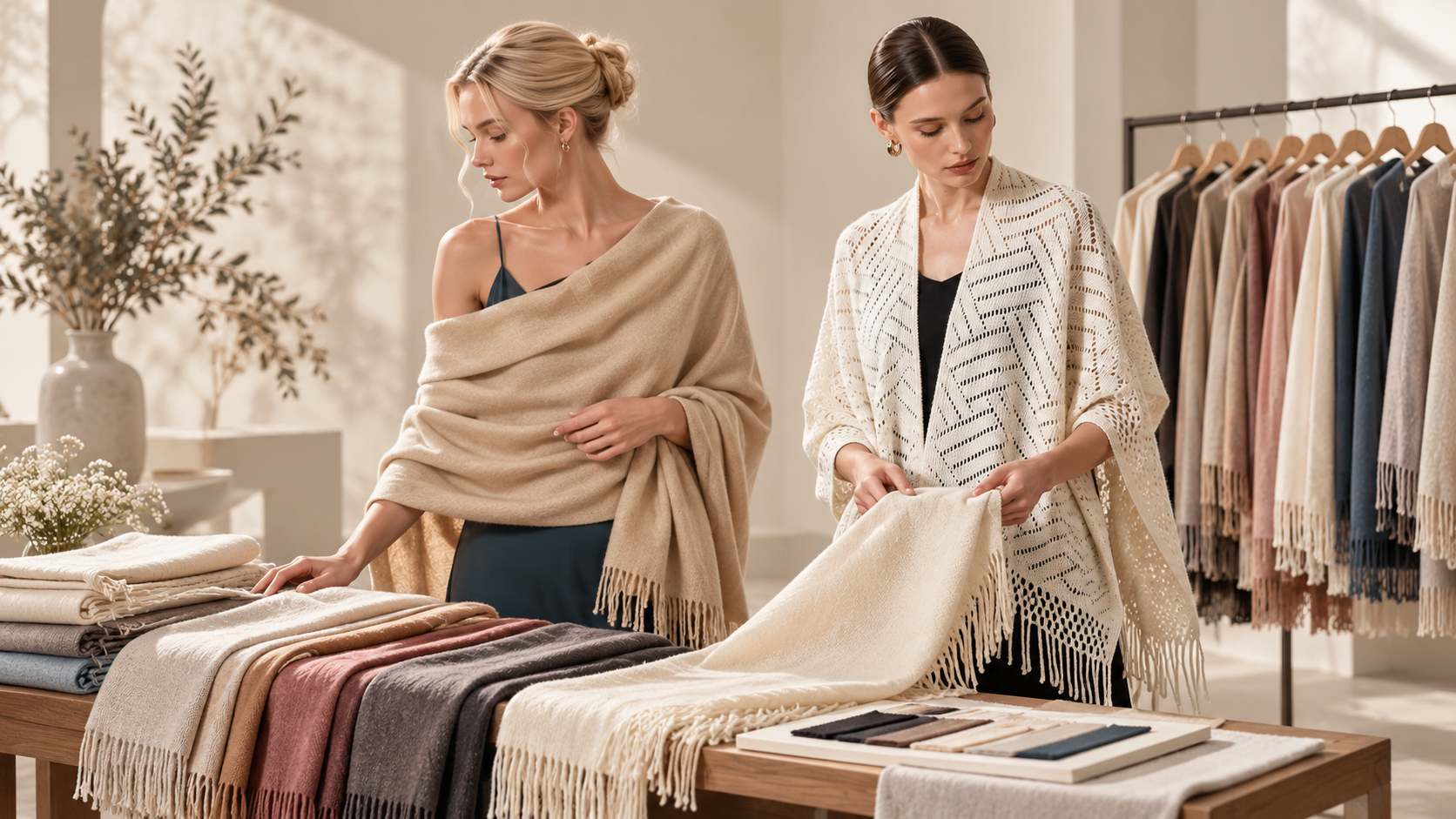
Buyers comparing different fabric directions can review the shawl material range before requesting final samples.
Repeat the kind of handling that happens on the sales floor
Cape shawls rarely remain perfectly folded after delivery. They are picked up, tried on, rehung, folded again, and occasionally left over the back of a chair during a fitting.
Do some of that during sample review.
After repeated handling, check whether the surface still looks presentable. Look at the edges, fringe, seams, and areas that have been folded several times. If the piece needs constant steaming to regain its shape, that becomes a retail issue rather than merely a production detail.
Holiday merchandise also has a gifting component, so the way the product looks after handling can affect perceived value.
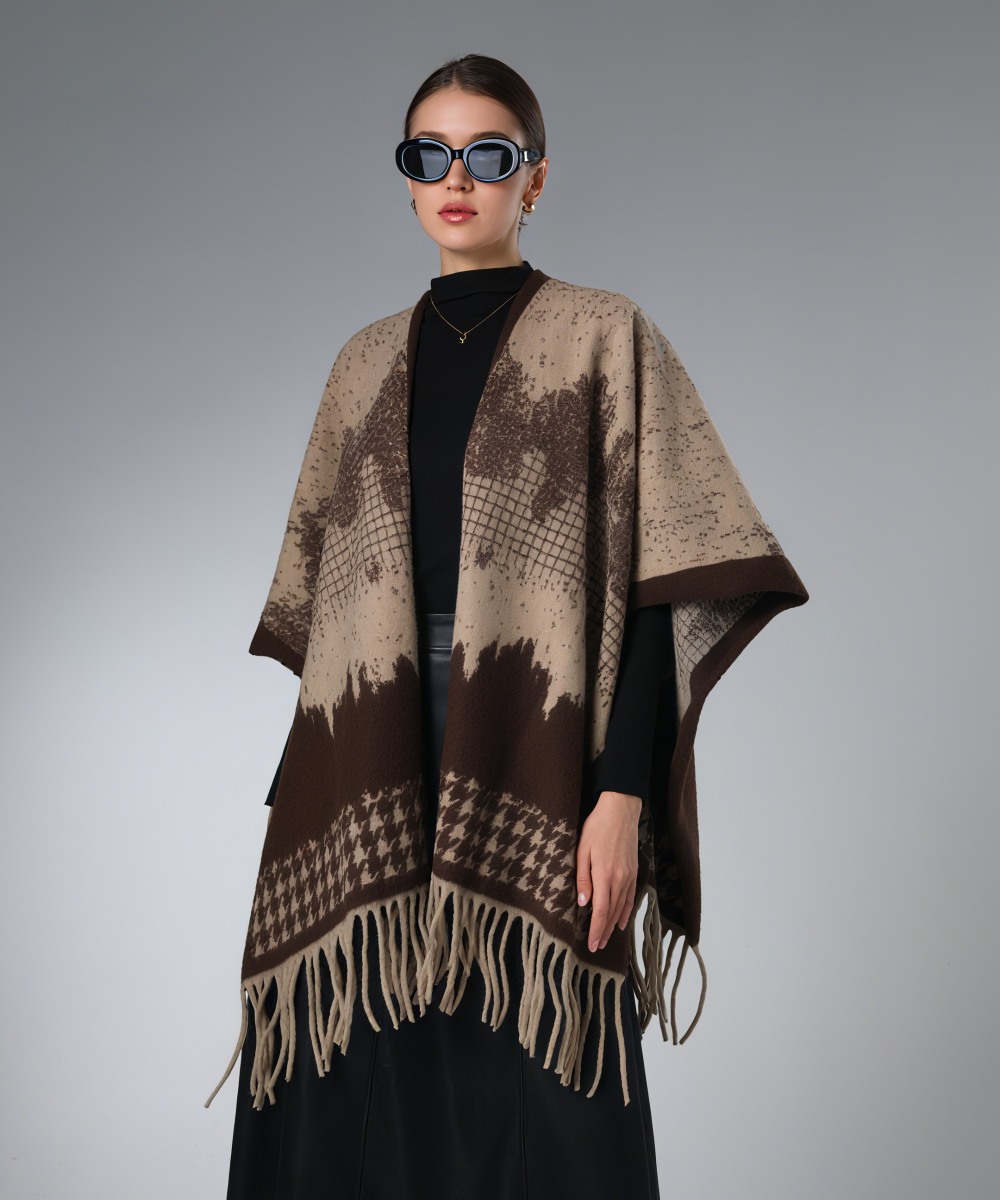
What Does a Useful Cape Shawl Sample Review Look Like?
Sample approval often becomes too casual once the color and pattern are correct. That is risky with a cape because small proportion changes can affect how the whole item sits.
The first sample should be treated as something to investigate rather than something the team expects to approve immediately.
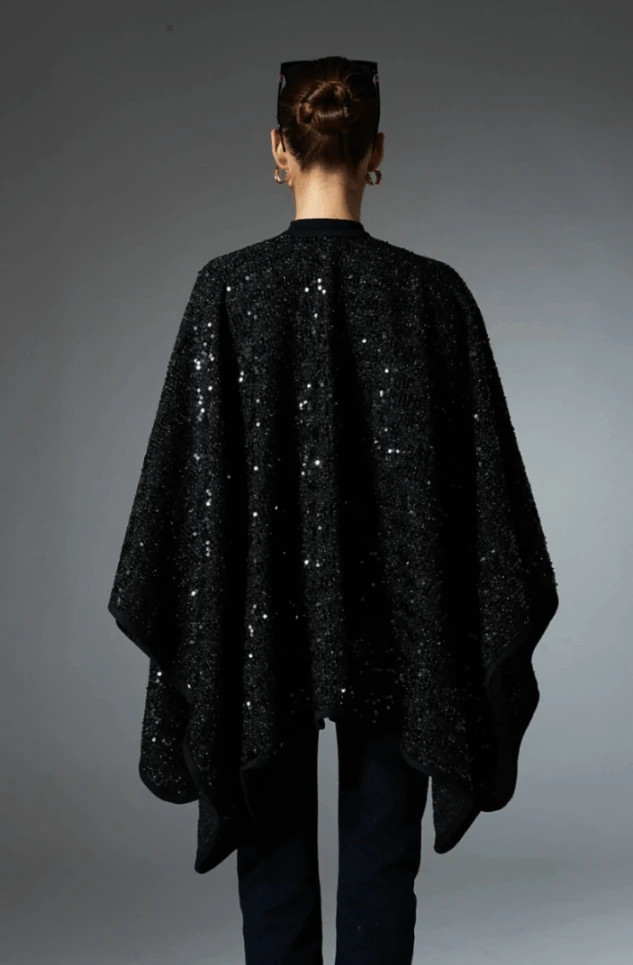
Look at the garment from the side and back
Front-view photographs hide a surprising amount.
Check whether the cape pulls backward or forward, whether the side length feels awkward, and whether the back hangs evenly. Then ask the wearer to move both arms and turn around.
A simple review record can keep the comments practical:
| Area | Question to Ask |
|---|---|
| Shoulder | Does the cape settle without constant adjustment? |
| Front | Does the opening stay balanced while walking? |
| Side | Is the length appropriate for the intended outfit? |
| Movement | Can the wearer sit and lift the arms comfortably? |
| Surface | Does the material still look clean after handling? |
| Edge | Is the finishing consistent around the garment? |
The point is not to create paperwork. It is to avoid comments such as “make it hang better,” which are difficult for a supplier to act on.
Treat the second sample as a new reference
Suppose the first version feels too long, so the sides are shortened. The second version is approved.
From that moment, the earlier dimensions should no longer remain in the active specification. Otherwise the supplier may have an approved physical sample and an outdated measurement sheet describing two different products.
This kind of mistake is especially easy to make when several colors or patterns are being developed at once.
How Much Variety Does a Holiday Cape Shawl Range Really Need?
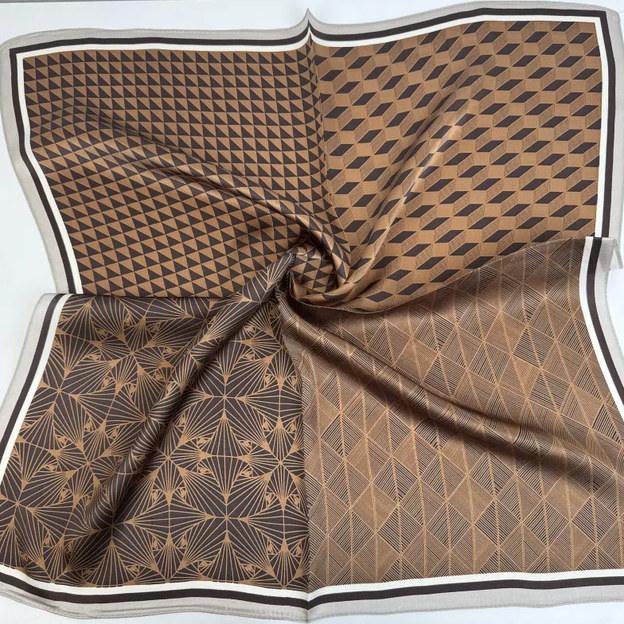
Holiday buying encourages expansion. A black cape feels necessary, then camel, grey, burgundy, plaid, geometric patterns, and perhaps a brighter seasonal color start to look equally reasonable.
The result can be an attractive range with very little stock behind each style.
Give the most wearable styles more room
A neutral cape that works over dresses and knitwear has a different commercial role from a statement pattern intended mainly for parties.
They do not need the same opening quantity.
Instead of dividing the order evenly, identify which styles can solve several customer needs. Those are the pieces that may justify greater depth. Seasonal colors and patterns can still add interest, but smaller quantities give the buyer room to see what customers actually respond to.
That information becomes valuable halfway through the season, when the team has to decide whether to reorder one proven style or continue supporting the entire original range.
Finalize the assortment before arguing about MOQ
Custom MOQ is influenced by the actual project: material, construction, dimensions, labels, packaging, branding, and the way quantities are divided across colors or styles.
That makes an early question such as “What is your minimum for cape shawls?” less useful than it sounds.
First reduce the range. Then discuss quantity against the finished program.
The ODM/OEM customization process is relevant at this point because the production discussion depends on the specifications that have actually been selected.
A range with two core colors and one seasonal pattern may lead to a very different conversation from eight colorways ordered in equal quantities.
What Should Be Left on the Production File After the Sample Is Approved?
Several weeks can pass between sample approval and bulk production. By then, informal decisions that seemed obvious during development are easy to forget.
The production file should make it unnecessary for anybody to reconstruct those conversations.
Remove old versions instead of adding another note
Keep one final record covering material, construction, finished dimensions, color or pattern, edge treatment, labels, packaging, quantity by color, and the approved sample.
If a measurement changed, replace the old measurement. If a color was dropped, remove it from the active order. If sample three replaced sample two, identify sample three as the reference.
This sounds basic, but version confusion is one of the easiest ways for an otherwise successful sample process to produce the wrong bulk result.
The broader shawl style collection can also help buying teams separate cape, stole, poncho, and other wrap silhouettes before the final product description is fixed.
Keep enough information to reorder quickly
Holiday retail has a short window. A strong-selling style may need replenishment while there is still enough of the season left to sell it.
Keep the approved sample instead of sending every development piece back into storage without identification. Store the final specification with it.
When a reorder is considered, check material, color, finishing, quantity, and production timing again. The original reference saves time, but it should not be treated as proof that nothing has changed.
Need Help Matching Cape Shawl Details to a Seasonal Retail Collection?
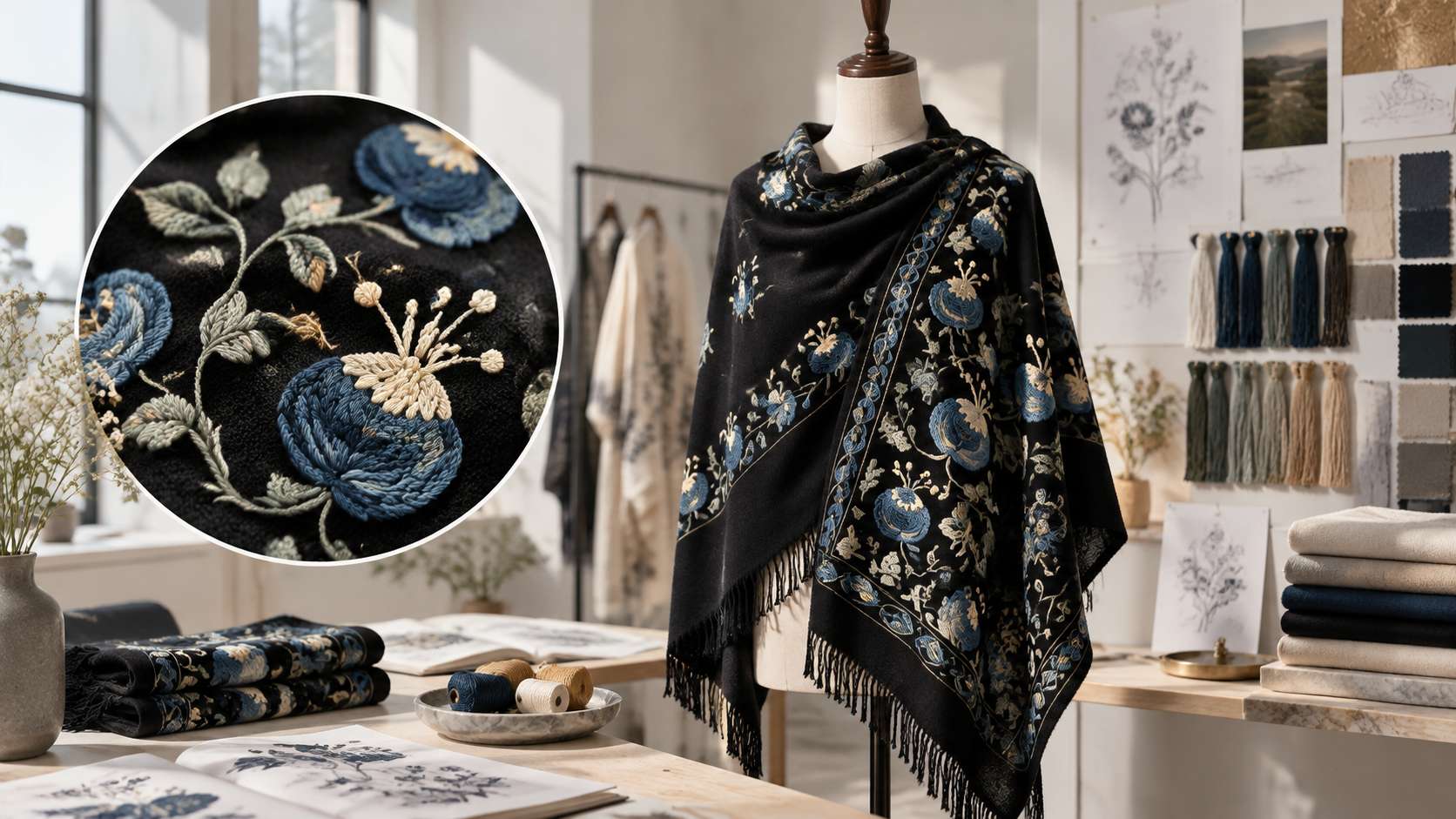
After the fitting, material, color range, and sample revisions are settled, the remaining job is to turn those decisions into one production reference. She Believes works with customized scarves and shawls involving material selection, knitting, weaving, embroidery, sampling, inspection, labels, and packaging. For a cooler-season formal direction, buyers can also review the Custom Sleeveless Black Shawl For Formal Dress. Rather than treating a winter cape as a generic category, a custom project can define its material, dimensions, construction, finishing, labels, and packaging around the intended retail use before bulk production begins.
Conclusion
Cape shawl sourcing becomes much clearer once the sample is treated as something customers will move around in rather than something buyers only need to admire on a hanger. Fit, weight, handling, and versatility determine how useful the style will be on the sales floor, while color and pattern determine how broad the assortment becomes. Once the winning sample is agreed, keeping one clean production specification behind it gives the retailer a firmer basis for both bulk inspection and a time-sensitive winter reorder.
FAQs
1. Why can a cape shawl feel heavier than expected even when the fabric seems light?
A cape uses a relatively large amount of material, so the full garment can feel different from a small swatch or folded sample. Buyers should wear the complete piece for several minutes before approving the material.
2. What is the easiest way to spot fitting problems in a cape shawl sample?
Have someone wear it over realistic outfits and move normally. Walking, sitting, lifting the arms, and carrying a bag quickly reveal whether the shoulder position or front opening needs adjustment.
3. Should holiday cape shawls be ordered evenly across every color?
Not necessarily. Versatile neutral colors may justify more units, while statement patterns or seasonal shades can be introduced in smaller quantities until the retailer sees actual customer demand.
4. Why should old sample specifications be removed after a revision?
Leaving earlier measurements or colors in the active production file can create conflicting instructions. Once a revised sample is approved, the written specification should be updated to describe that version only.
5. What should buyers recheck before placing a cape shawl repeat order?
Reconfirm the material, dimensions, color or pattern, finishing, labels, packaging, quantity, and production timing against the original approved sample instead of relying only on the product name.