How Bridal Boutiques Can Source Wedding Shawls for Fall and Winter Bridal Collections
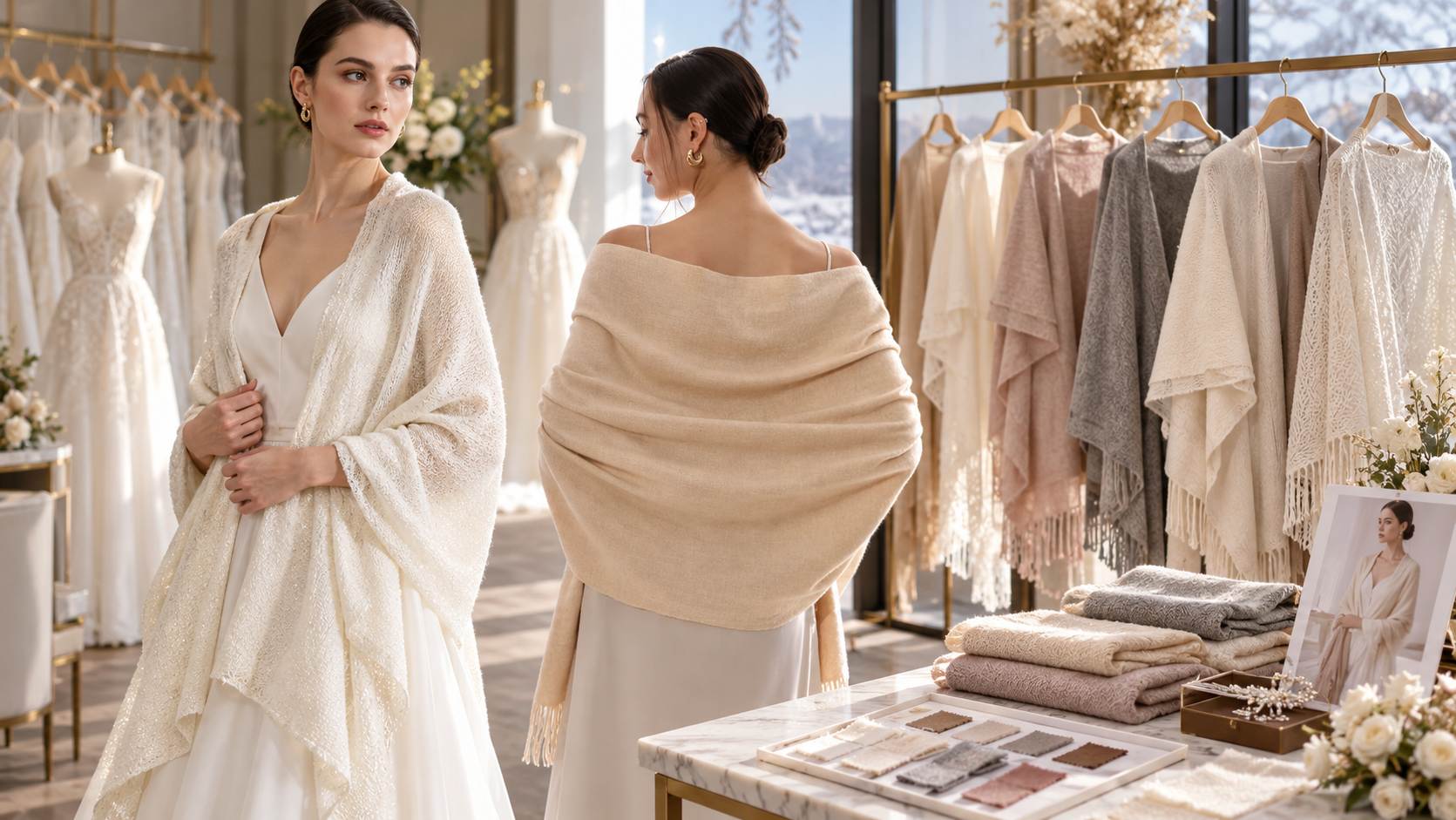
A bridal shawl usually looks easy to buy until it is placed over an actual gown. That is when the differences become obvious. One style may photograph beautifully but bunch around embroidered sleeves. Another may have the right color yet feel too light for an outdoor November ceremony. For boutiques planning fall and winter assortments, the buying problem is therefore less about finding “a warm shawl” and more about matching material, shape, color, stock depth, and sample quality to the dresses already being sold. Those decisions need to be made before the first bulk order, not after customers begin asking for alternatives.
Which Wedding Shawl Materials Actually Work With Fall and Winter Gowns?
A cooler-season shawl has to provide enough coverage without looking like ordinary outerwear. That sounds simple, but the balance changes depending on the gown. A smooth sleeveless dress can handle more volume than a gown with lace sleeves, beading, or a dramatic back.
Start with the dress rail
Before comparing materials, pull several representative gowns from the current collection. Try the shawl over a minimalist dress, a sleeved style, and one with heavier embellishment. The difference in proportion is usually easier to judge on a person than on a table.
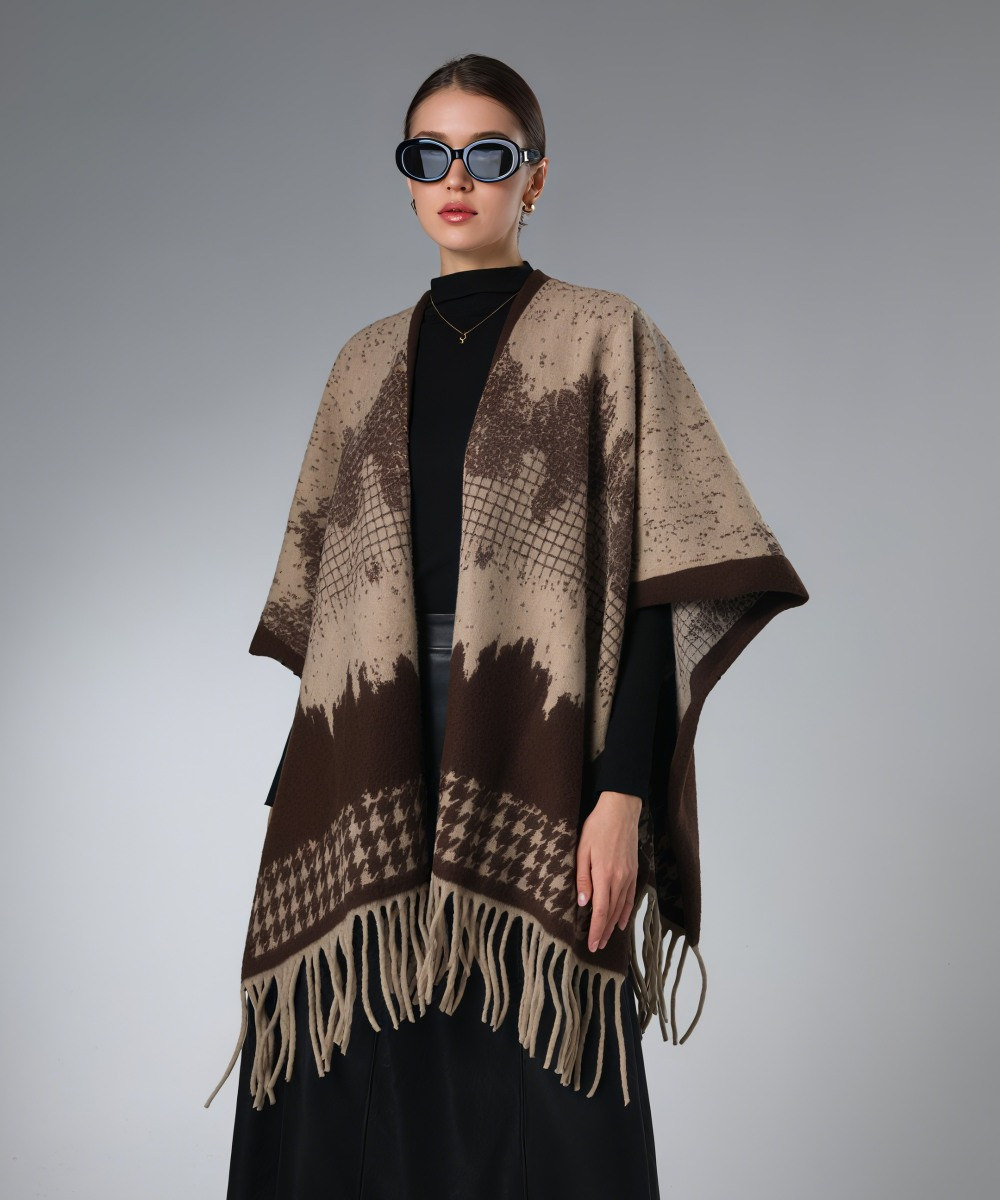
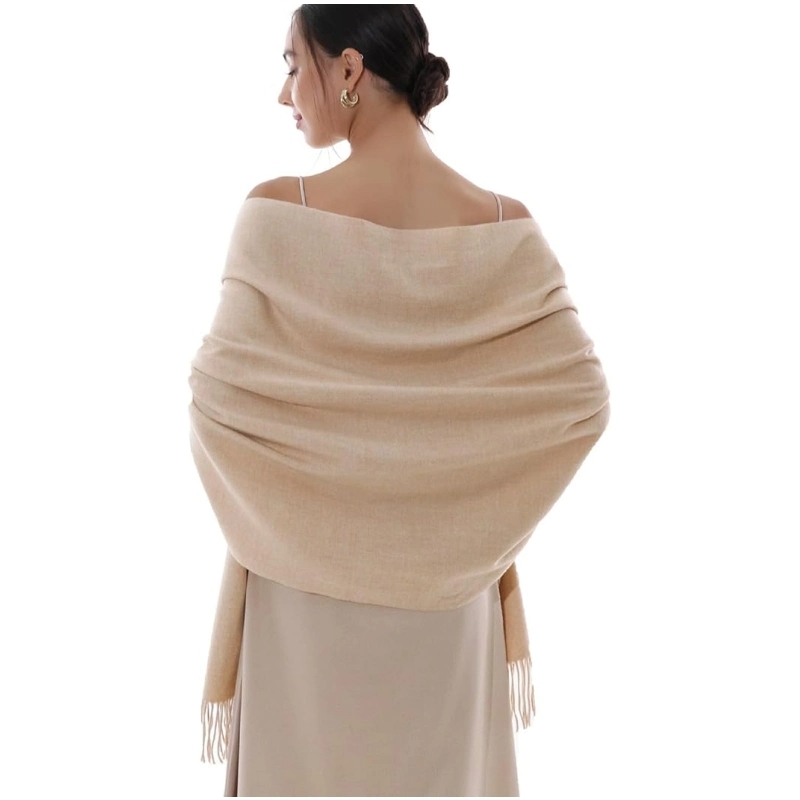
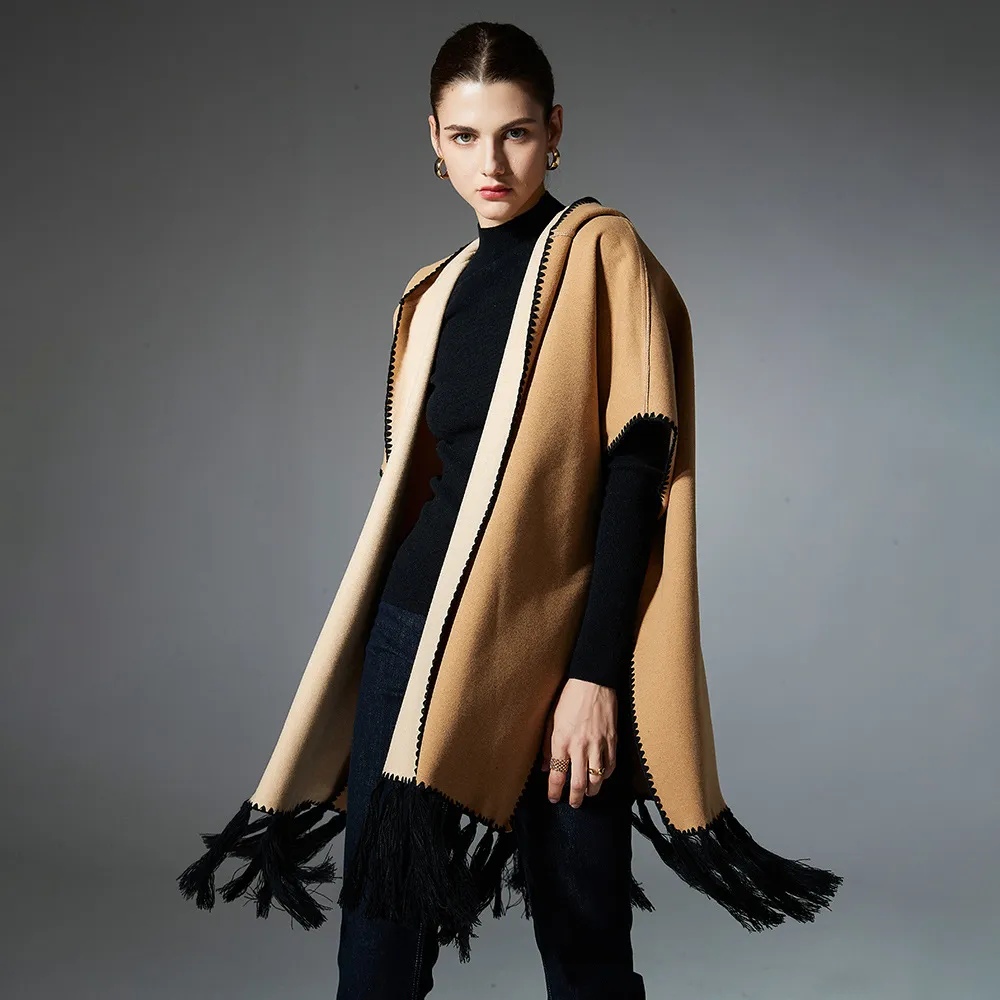
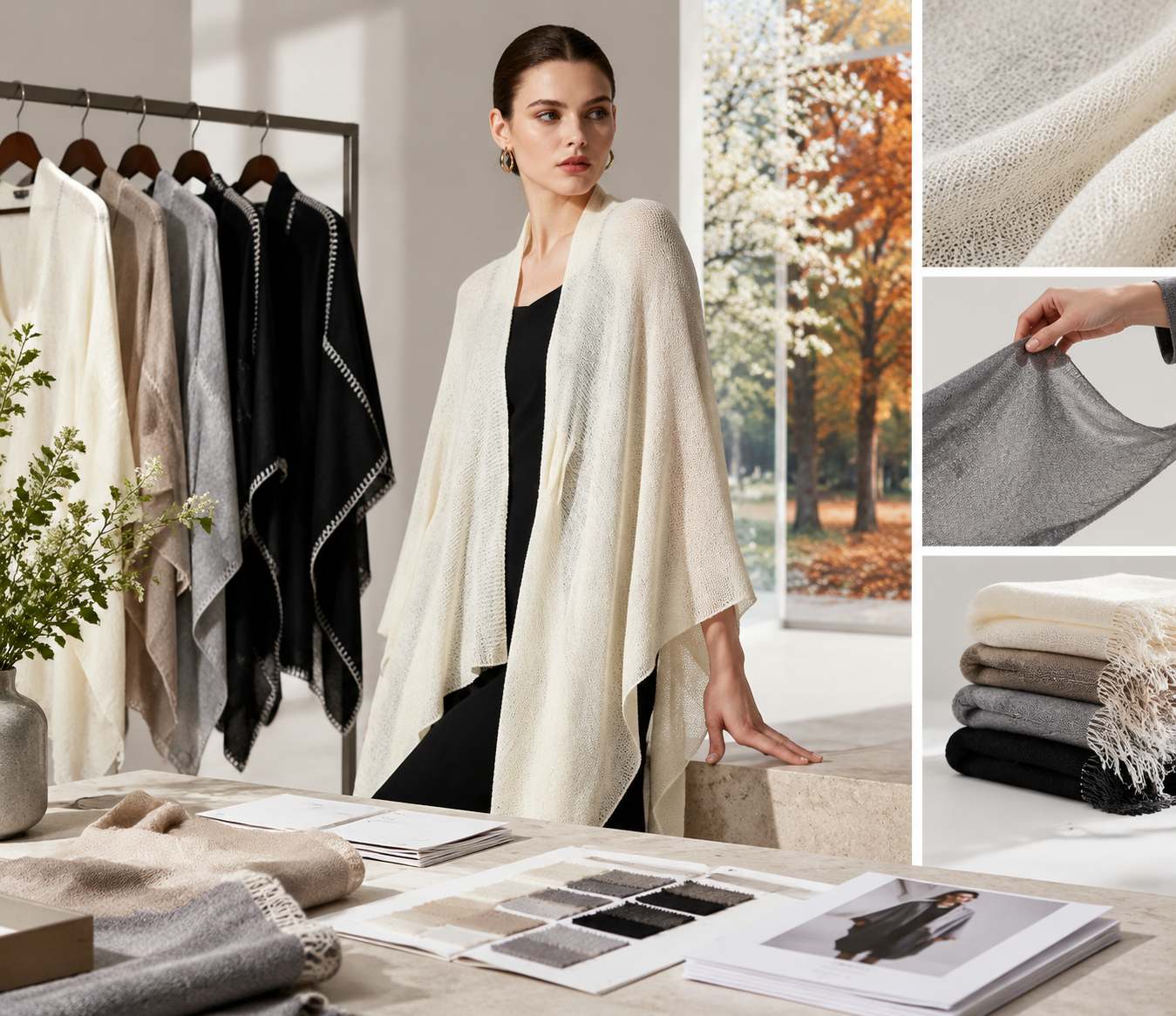
A wedding shawl collection gives a useful starting point because the shapes are already related to bridal use rather than general winter dressing.
Material names do not tell the whole story
A buyer may see wool, faux cashmere, polyester, or another fiber description and immediately form an expectation about warmth or softness. The finished shawl may behave differently once construction, thickness, and finishing are considered.
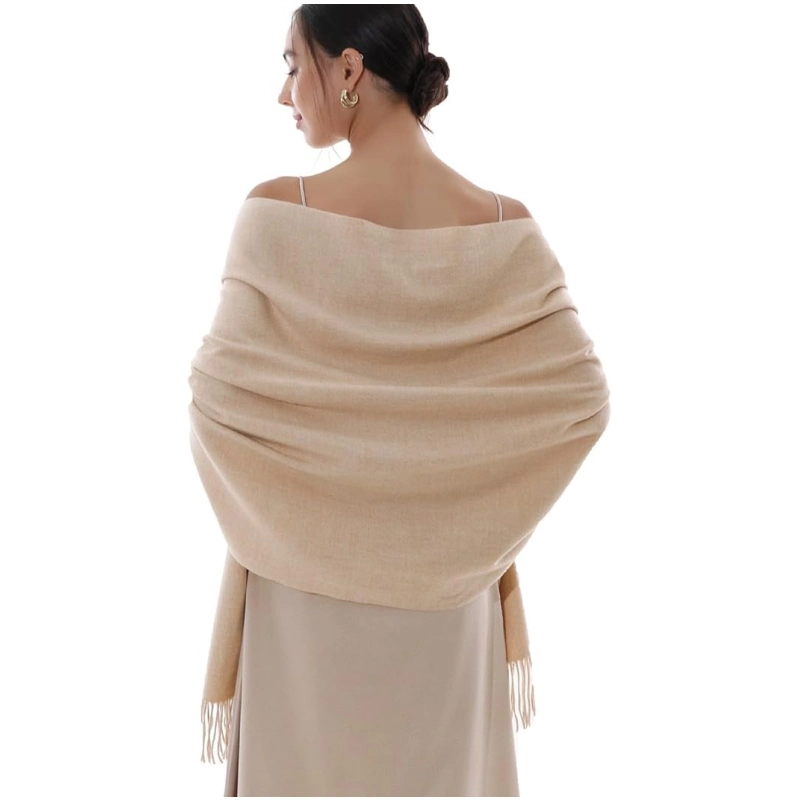
The faux cashmere shawl category is one example of a softer, fuller-looking direction. The final approval should still come from a physical sample. Fold it, drape it across the shoulders, and check whether the fabric settles naturally instead of standing away from the gown.
How Can a Boutique Build a Bridal Color Range Without Buying Too Many Similar Shades?
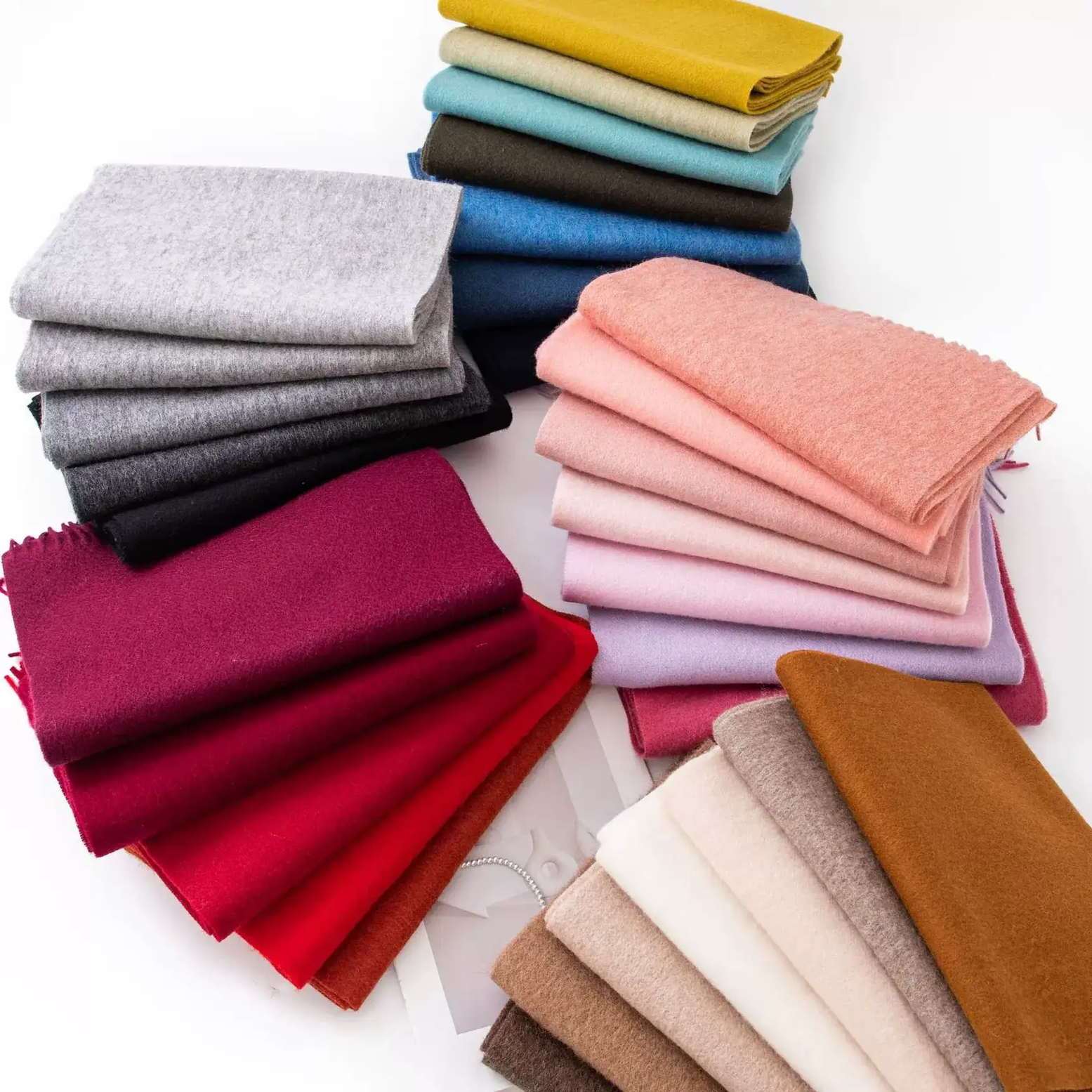
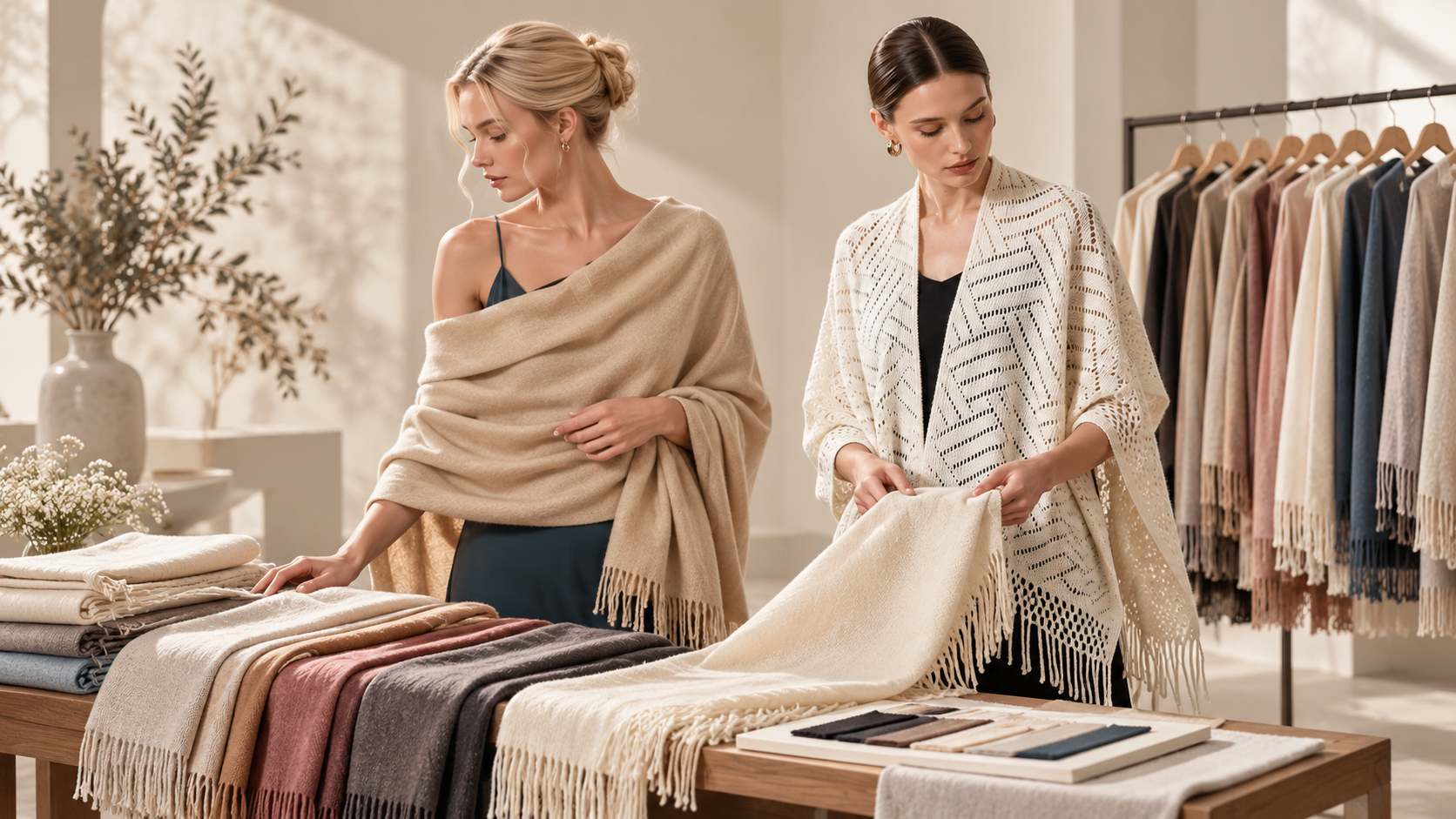
Color causes more inventory problems than many buyers expect. White, ivory, cream, champagne, blush, beige, and soft grey may all sound distinct during range planning, yet several can look almost interchangeable once they are on the shop floor.
The easiest way to avoid that problem is to work backward from the dresses that already sell.
Compare shawls beside real gowns
Supplier photos are useful for shortlisting, but they are not enough for final color approval. The same neutral can look warmer under one light source and cooler under another. Surface texture changes the impression too.
Take the sample into the fitting area and hold it directly beside several gowns. If the boutique photographs customers or uses social media content in-store, check the pairing through a camera as well. Some shade differences become much more visible in photos.
Give core neutrals more depth than seasonal shades
A boutique does not need equal stock in every color. A dependable ivory or soft neutral can justify more units because it works with more appointments. A seasonal tone, bridesmaid shade, or fashion-led color can be tested in smaller numbers.
This keeps the range easier to read. It also prevents money from being tied up in several nearly identical shades that each sell slowly.
When a color performs well, reorder decisions become straightforward because the buyer already knows whether it belongs to the core range or was only introduced for one season.
What Should the Buying Team Look for When the First Samples Arrive?
The first sample is where a bridal accessory stops being a specification and becomes a real product. This is the point to be demanding. Once bulk production begins, even a small design change can become expensive or disruptive.
Use the sample during an actual fitting
Do not judge a wedding shawl only while it is folded on a desk. Put it on someone wearing a gown.
Try it over at least two or three different silhouettes. Ask the wearer to walk, sit, turn, and move the arms. A shawl that looks balanced while standing still may slide, twist, or bunch once the wearer moves.
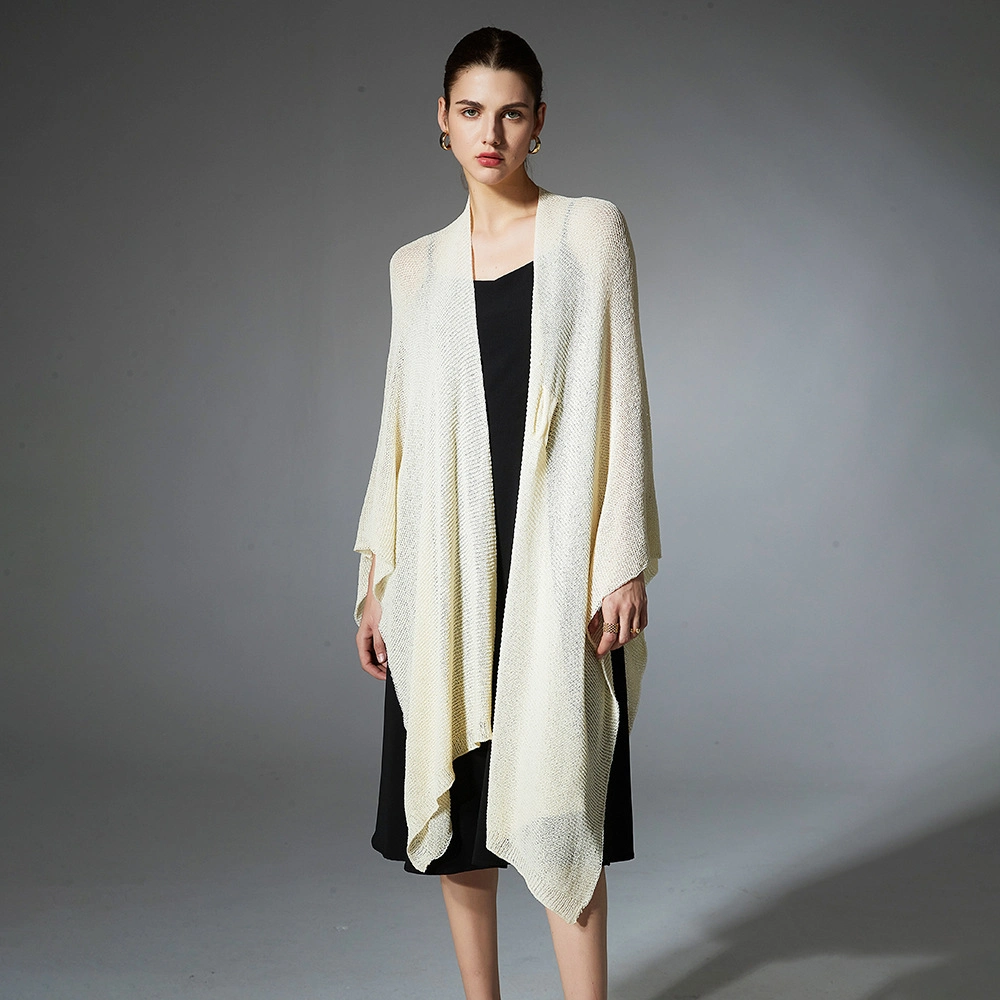
The knitted shawl category can be useful when comparing softer knitted constructions with other shawl structures during development.
Pay attention to what changes between sample rounds
A second sample may be only slightly different from the first: a softer hand feel, a longer finished size, a cleaner edge, or a revised color. Those changes matter.
Write them down. A final sample record should identify material, dimensions, color reference, edge treatment, label position, packaging, and any change made after the previous round. Months later, that note may be more useful than anyone’s memory.
A surprisingly common problem in repeat buying is that everyone remembers the style but not the exact version that was approved.
How Much Wedding Shawl Stock Should a Boutique Carry for Fall and Winter?
Wedding shawls do not sell like ordinary fashion scarves. Demand may be irregular, but customers often need the right piece within a fixed timeline because the wedding date is already set.
That makes inventory planning more about coverage than volume.
Put depth behind the styles that solve the most fitting problems
A neutral shawl that works with several gown shapes and different wedding dates deserves more attention than a highly specific color or construction. One versatile style can often support more appointments than several narrow options.
A sensible starting assortment might include a core neutral, one alternative neutral, a warmer option for colder ceremonies, and a lighter option for indoor or early-autumn weddings. The exact mix will vary by store, but the reasoning is the same: stock the pieces that can serve more than one type of customer.
Discuss MOQ after the range has been reduced
For custom orders, minimum quantity can vary according to material, process, size, labels, packaging, logo treatment, and other requirements. It is better to narrow the range first and then ask the supplier what is workable.
The ODM/OEM customization process is useful at this stage because several project details need to be confirmed together.
This matters especially when a boutique wants five colors but does not need the same quantity in each. A supplier can respond more accurately once the buyer has decided which colors are core and which are experimental.
What Should Be Confirmed Before the Wedding Shawl Order Goes Into Production?
A good sample can still lead to a disappointing bulk order if the final production brief is vague. Phrases such as “same as sample” or “same ivory as before” leave too much room for interpretation.
Make the approved version impossible to confuse
Before production starts, confirm the material, construction, finished dimensions, color, edge finish, labels, packaging, quantity by color, and the exact sample being used as the production reference.
If the product changed during development, earlier versions should not remain active in the production file. The latest approved version needs to be obvious to everyone involved.
Bridal colors deserve particular care because the accessory may be compared directly with a gown during a fitting. The approved color reference should therefore be treated as part of the product specification.
Keep enough information for the next season
A successful shawl may return the following year. Save the approved sample and the final production details rather than relying on the product name.
When the reorder is placed, review material availability, shade, finishing, labels, and packaging again. A repeat order is easier when the original reference is complete, but it should not be treated as automatic.
When Does It Make Sense to Work With She Believes on a Bridal Shawl Program?
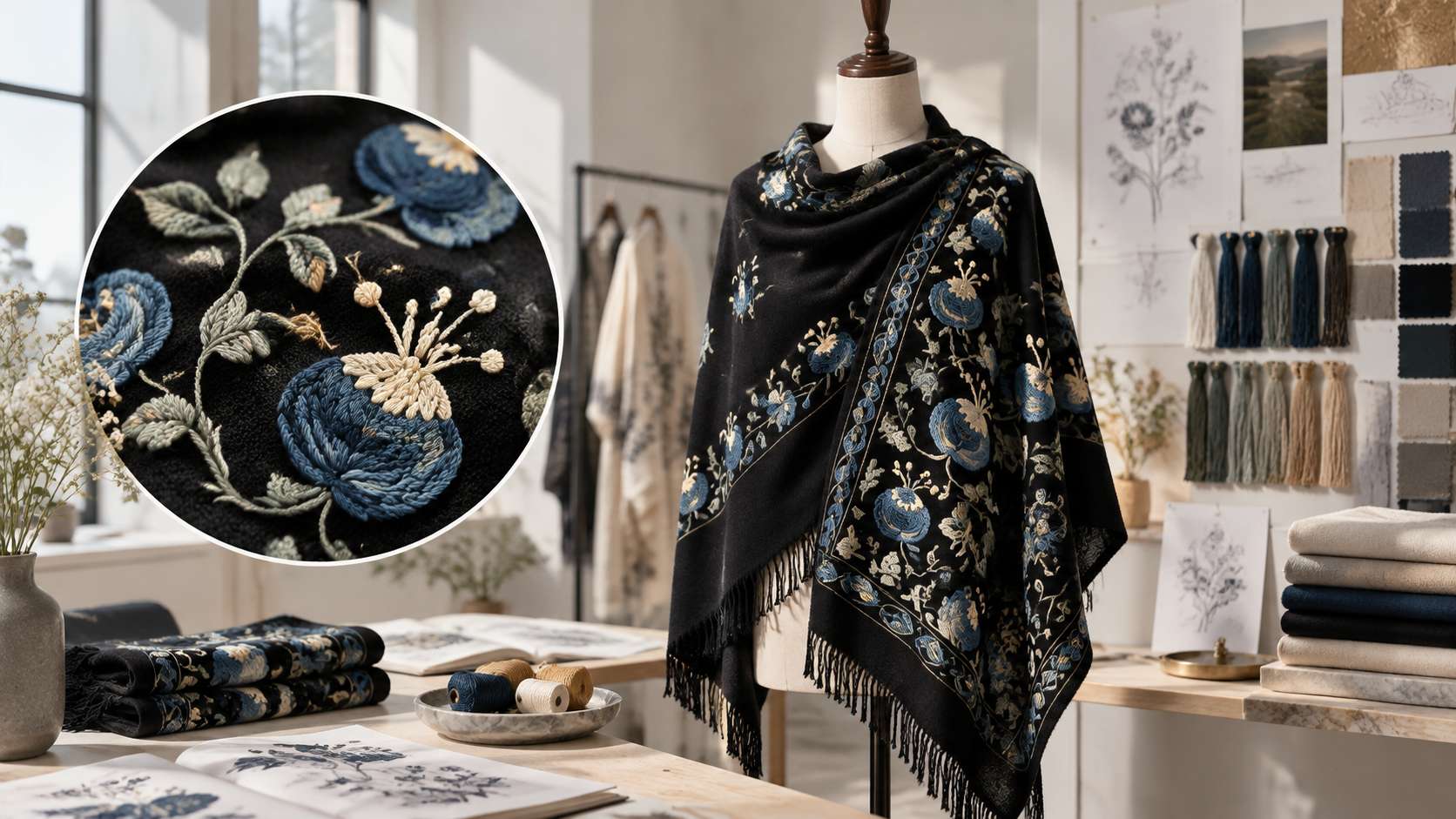
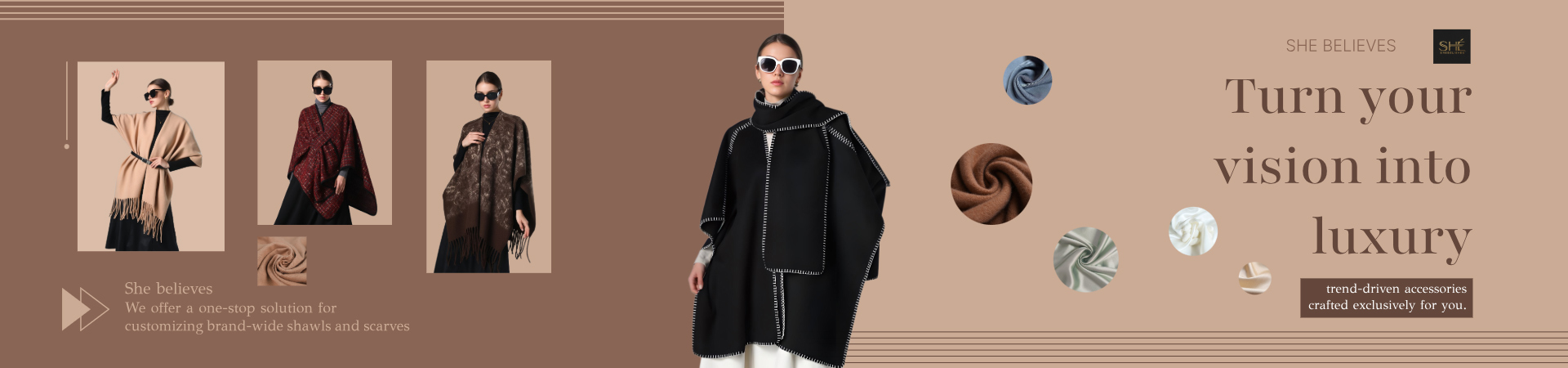
Once the boutique has narrowed its material direction, color range, and fitting requirements, the next task is turning those decisions into a repeatable production brief. She Believes works with customized scarf and shawl projects covering material selection, knitting, weaving, embroidery, sampling, inspection, labels, and packaging. One wedding-related option is the Wholesale Multicolored Faux Cashmere Shawl Wedding Stole Shawl, which is presented on the website as a faux cashmere wedding stole offered in multiple colors. For custom programs, size, fabric, labels, packaging, and other project details can be reviewed during development before the order moves into production.
Conclusion
Buying wedding shawls for fall and winter is easier when the boutique starts with the gowns, not with a long list of accessory options. Material and shape should be tested on real silhouettes, colors should be compared under fitting-room conditions, and stock should be deeper only where the style has broad use. The final sample also needs a written specification behind it. That combination gives the buyer a clearer basis for the first order and a much better reference if the style returns in the next bridal season.
FAQs
1. Should a bridal boutique stock both lightweight and warmer wedding shawls?
Usually, yes. Early-autumn weddings, indoor ceremonies, and winter outdoor events create different needs. Carrying one lighter option and one fuller option gives the fitting team more flexibility without requiring a very large range.
2. Why can an ivory shawl look wrong beside an ivory wedding dress?
“Ivory” covers many undertones. Fabric texture, surface sheen, and store lighting can also change how the shade appears. The safest approach is to compare the actual shawl sample beside representative gowns before ordering.
3. What is the most useful test for a wedding shawl sample?
Put it on someone wearing a gown and ask them to move. Check whether it stays in place, bunches around the arms, covers important dress details, or changes shape while sitting and walking.
4. Should every bridal shawl color be ordered in the same quantity?
No. Core neutrals normally justify more depth because they match more gowns. Seasonal or fashion colors can be tested in smaller quantities until the boutique has enough sales history to plan a larger reorder.
5. What should be reconfirmed when a wedding shawl is reordered next season?
Check the approved material, color reference, dimensions, finishing, labels, and packaging against the original sample. Even when the style name is unchanged, production details should not be assumed to remain identical.